
I noticed the shift on a Tuesday when I caught myself typing a full question into a search bar and then getting mildly annoyed that it returned ten blue links instead of just answering me. That reaction stopped me cold. For twenty years, ten blue links were the entire point. Now I apparently expect an answer, not a reading list, and I only noticed how completely that expectation had changed once it was already the default in my head.
What My Search Habits Actually Looked Like a Year Ago
A year ago my searching was almost entirely link-driven: I’d type a few keywords, scan the results, click into two or three pages, and piece together an answer myself, usually cross-checking a couple of sources without thinking much about it. That process was slow and I complained about it constantly, but I also trusted it in a specific way, because I was the one doing the synthesis and I could see where each piece of information came from as I gathered it.


The Point Where AI Answers Took Over
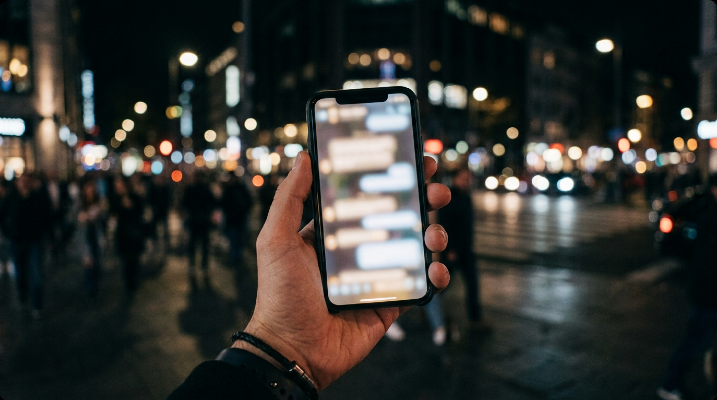
Somewhere in the last several months, AI-generated summaries at the top of search results, and standalone AI search tools, became my actual first stop for most questions, not a novelty I tried occasionally. I catch myself now reading the generated summary, deciding whether it satisfies me, and only clicking through to an original source maybe one time in five. The other four times I just accept the synthesis and move on, which is a completely different relationship to information than the one I had a year ago, and I didn’t consciously choose it. It just became the path of least resistance.
The Specific Habit That Worried Me
What made me actually stop and think about this was a work question about a software licensing detail, where the AI summary gave me a confident, clean answer that turned out to be subtly wrong when a colleague who’d actually read the license pointed out the mistake. The summary wasn’t fabricated nonsense, it was a plausible-sounding simplification that dropped an important condition. I would never have caught that if I hadn’t happened to mention the answer to someone who knew better, and that’s the part that unsettled me: I have no idea how many other subtly wrong answers I’ve already accepted and acted on without anyone around to correct me.
Why This Is Different From Old Search Skepticism
I’ve always known individual web pages can be wrong, and I built habits around that: checking the source, checking the date, cross-referencing a second page. AI-generated answers strip out most of the cues I used to rely on for that kind of skepticism. There’s no visible author, no publication date I can weigh, often no clear single source I can click through to evaluate, just a fluent paragraph that sounds equally confident whether it’s citing well-established fact or quietly smoothing over a gap in the underlying sources. The fluency itself seems to be part of what makes it easier to trust without checking.
What Actually Changed in My Behavior
I did a rough version of an experiment on myself over two weeks: I tracked, informally, how often I clicked through to an original source after an AI summary versus after a traditional link list. With AI summaries I clicked through roughly fifteen percent of the time. With traditional results, even though I no longer default to that format, when I forced myself back to it for the test, I clicked through closer to sixty percent of the time. Same person, same general curiosity level, wildly different verification behavior depending entirely on how the answer was presented to me.
What the Research on Automation Bias Suggests
This tracks with a well-documented pattern called automation bias, studied for decades in fields like aviation and medicine before it ever applied to search engines: people systematically over-trust confident output from an automated system, even when they have the knowledge to catch an error, because the fluency and consistency of automated output reads as a signal of reliability regardless of whether that signal is accurate. Researchers studying AI-assisted decision-making have found this effect holds even among domain experts evaluating answers in their own field, which suggests my licensing-question experience wasn’t a personal failing so much as a predictable outcome of how these systems present information.

A Real Comparison: Two Research Tasks, One Week Apart
I got a clean before-and-after on this by accident. Researching a minor home repair question, I took the AI summary at face value, made a purchase based on it, and the part turned out to be the wrong size because the summary had glossed over a model-year distinction that mattered. A week later, researching a similarly minor question about a different repair, I deliberately clicked through to two original sources instead of trusting the summary, and caught a nearly identical model-year distinction before I ordered anything. Same category of low-stakes question, same amount of time invested, completely different outcome based purely on whether I verified.
Where AI Search Genuinely Helps
I don’t want to overcorrect into rejecting this technology, because for a huge share of what I search, quick factual lookups, unit conversions, basic definitions, straightforward how-to questions, an AI summary is faster and just as reliable as clicking through myself, and demanding I verify every single one of those would be a genuine waste of time. The problem isn’t AI search existing. It’s that I’d stopped distinguishing between questions where a quick synthesized answer is fine and questions where the stakes or the complexity actually warrant checking a real source.
The Rule I’ve Adopted Since Noticing
I’ve settled on a deliberately simple filter: if a wrong answer would cost me money, time, or a decision I can’t easily undo, I click through to at least one original source before acting, regardless of how confident the AI summary sounds. If it’s genuinely low-stakes curiosity, I let the summary stand. This isn’t a sophisticated system, but it’s forced me to actually notice which category a given question falls into before I act on the answer, instead of treating every AI-generated response as equally trustworthy by default.
The Time an AI Answer Was Confidently Wrong
The moment that actually shook my trust wasn’t abstract. I asked an AI search tool a fairly specific question about whether a prescription medication interacted with a supplement I was considering, expecting either a clear yes, a clear no, or an honest “check with your pharmacist.” Instead I got a confident, fluent paragraph saying the combination was generally considered safe, written with exactly the same tone of authority as every other answer it had given me that week. Something about the specificity of the medical claim made me pause before acting on it, and I called my pharmacist instead of trusting the screen.
She told me, within about thirty seconds, that the combination was not something she’d recommend without more context, and that the interaction risk depended on dosage in a way a general answer couldn’t responsibly capture. The AI hadn’t lied exactly. It had summarized something plausible-sounding from sources it didn’t show me, stripped of the nuance a professional would have insisted on including. If I’d been in a hurry, or less habitually cautious about medical claims specifically, I would have acted on an answer that a licensed pharmacist considered incomplete at best.
That single experience recalibrated how much weight I give these answers for anything with real consequences attached. The fluency is the trap. A wrong answer delivered in confident, well-formatted prose reads as more trustworthy than a hedge-filled, honest one, and these systems are optimized to sound confident regardless of how solid the underlying information actually is.
How I Now Split My Questions Into Two Categories
After that scare, I started sorting my searches, almost unconsciously at first and now deliberately, into two buckets. The first is low-stakes and easily verifiable: what time zone is a city in, how many tablespoons in a cup, what year a movie came out. For these, a wrong answer costs me nothing beyond a moment’s confusion, and I’ll happily take the instant AI summary over five tabs and a scroll through ad-cluttered recipe blogs.
The second bucket is anything with a real consequence attached if I’m wrong: medical questions, financial decisions, anything I’d need to defend to another person, legal or contractual language, home repairs involving electricity or gas. For that bucket, I’ve made a rule that the AI answer is a starting point at best, never a stopping point. I still read it. It’s often useful for figuring out what questions I should even be asking a professional. But I don’t act on it directly, and I try to trace at least one specific claim back to an actual source before I trust it.
This sorting habit took real conscious effort to build, because the interface doesn’t nudge you toward it at all. Every answer, trivial or consequential, arrives in the same clean, confident box, with the same font, the same tone, no visual signal that distinguishes “this is a fact I’m quite sure of” from “this is a plausible-sounding synthesis of things I found.” Building that distinction myself, question by question, has been the single most useful adjustment I’ve made to how I use these tools, and I don’t think it’s optional anymore. The tools aren’t going to start doing it for me.
I’ve also started paying closer attention to whether an AI answer cites anything I can actually check. Some tools now link to source pages alongside the summary, and I’ve made a habit of clicking through on at least one before repeating a claim to someone else. It adds maybe thirty seconds to a search that used to take five. That seems like a reasonable price for not accidentally spreading something confidently wrong.
What This Shift Actually Taught Me
The uncomfortable realization wasn’t that AI search is unreliable, it’s usually quite good. It was that I’d let a genuinely useful tool quietly retrain my verification habits downward without ever deciding to do that. My search behavior didn’t change because I evaluated the tradeoffs and chose convenience. It changed because the path of least resistance shifted under me, and I only noticed months later when a wrong answer happened to have a witness.
