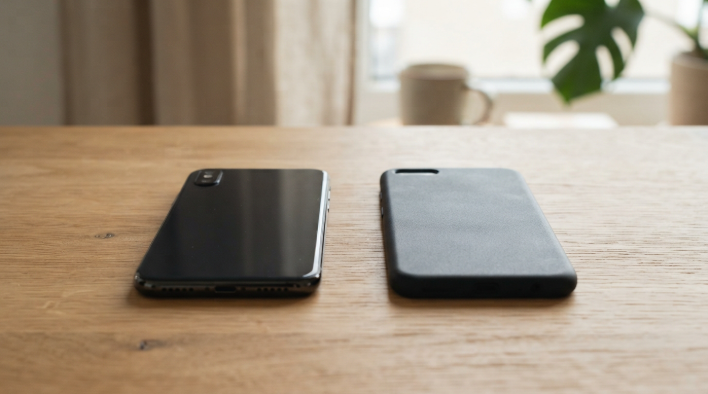
When my flagship phone slipped out of my jacket pocket and cracked across the middle of the screen, the repair quote was almost half of what a brand-new mid-range phone would cost. I stood in the shop doing the mental math, and for the first time in about eight years, I decided not to buy the most expensive phone I could reasonably justify. I walked out with a budget phone that cost roughly a quarter of what my previous one had.
I expected to regret it within a week. I assumed I would miss the camera, the speed, the premium feel, and that I would quietly start saving for a flagship again. Six months later, I am still using the cheap phone, and my assumptions have mostly turned out to be wrong. Here is what the gap between budget and premium phones actually looks like in daily life, at least for someone like me.
The speed difference I thought I would notice
The thing I worried about most was performance. My old phone was fast in a way I had stopped noticing, and I expected the cheaper model to feel sluggish. For the first day or two, I did notice small differences. Apps took a fraction of a second longer to open. Scrolling through a very long, image-heavy feed occasionally stuttered.
But by the end of the first week, I had stopped seeing it. Human perception adjusts quickly, and the difference between very fast and fast enough turns out to be smaller in daily use than it looks in benchmark charts. I check messages, browse, use maps, pay for things, listen to podcasts, and watch videos. None of those tasks push a modern mid-range processor anywhere near its limits.
Where I do feel the difference is in heavy tasks. Editing longer videos is slower, and the phone warms up during extended gaming. If those are central to how you use your phone, a flagship still makes sense. For me, they are occasional, and waiting a few extra seconds once a week is not worth hundreds in extra cost.
The camera is the real compromise, sometimes
Cameras are where manufacturers put a lot of their flagship marketing, and this is where the gap is most real. In good daylight, honestly, I struggle to tell the difference between photos from my budget phone and my old flagship when viewed on a phone screen. Colors are pleasant, details are sharp enough, and the portrait mode does a decent job.
The gap appears in the hard situations. Low light, fast-moving subjects, and zoom. Photos taken in a dim restaurant are noticeably noisier and softer. Pictures of my nephew running around at a birthday party are more often blurry. And the zoom, which on my old phone let me get surprisingly close to distant things, is limited to mostly digital cropping that falls apart quickly.
What surprised me is how little those limits bothered me in practice. Most of my photos are of ordinary things in reasonable light: food, friends, documents, a nice view on a walk. For the handful of moments each year where a great camera really matters, like a wedding or a special trip, I have found that the photos from other people, or even a borrowed camera, cover the gap.


Battery life was better, not worse
This was the biggest surprise of all. My budget phone has better battery life than my flagship did. It regularly finishes the day with a comfortable amount of charge left, and on lighter days I sometimes skip charging overnight.
The reasons make sense once you think about them. Budget phones often have lower-resolution screens and less power-hungry processors, both of which use less energy. Many also come with large batteries because it is a relatively cheap way to make a phone more appealing. Premium phones tend to prioritize slimness and powerful components, which sometimes works against endurance.
For daily life, battery confidence matters far more to me than a slightly sharper screen. Not having to think about where my next charger is has removed a small but constant source of background worry. That is one of those improvements that does not show up in marketing but shows up every single day.
The things that actually feel cheaper
It would be dishonest to say there are no downsides beyond the camera. A few things do feel noticeably budget. The body is plastic rather than glass and metal. It is perfectly solid, but it does not have the same satisfying weight in the hand. The vibration motor is buzzy rather than crisp, which is a small detail I did not expect to notice.
The screen, while bright enough outdoors, is not quite as vivid, and the speakers are thinner. Watching a film on it is fine; it is just not as immersive as before. There is also no wireless charging, which I had grown used to, and I had to go back to plugging in a cable at night. That took about a week to stop feeling like a downgrade.
Software updates were my main worry going in. Historically, cheaper phones received fewer years of security updates. Before buying, I checked how long the manufacturer promised to support the model, and the answer was more reasonable than I expected. This is one of the most important things to check with any budget phone, because an unsupported phone becomes a security risk long before it physically wears out.
Why the gap has narrowed so much
Looking into it, the narrowing gap is not an accident. Smartphone technology has matured. The major leaps of the early years, like dramatically better cameras, huge jumps in speed, and new features every generation, have slowed down. Innovations that used to be exclusive to expensive models, like high refresh rate screens, multiple camera lenses, and fast charging, have gradually moved down to cheaper phones.
At the same time, the flagship phones have kept rising in price. So the question buyers face has changed. It is no longer “is the expensive phone better?” because it clearly is. It is “is the expensive phone better enough to justify paying three or four times as much?” For a growing number of people, the honest answer is no.
What six months of real use revealed
The first few weeks with any new phone are a kind of honeymoon, so I deliberately waited before deciding how I felt. The real test was whether the phone would still feel fine after months of daily wear, app updates, and a slowly filling storage. Cheaper phones have a reputation for aging badly, and I wanted to see whether that was still true.
So far, the phone has held up well. It is not quite as snappy as the day I unboxed it, but the slowdown is small and mostly shows up when storage gets close to full. Clearing out old videos and unused apps brings most of the speed back. The battery has lost a little capacity, as every battery does, but it still comfortably lasts a full day.
The biggest change over those months was in my own attitude. At first I kept comparing everything to my old phone, noticing each tiny difference. Somewhere around the second month, I simply stopped comparing. The phone became invisible in the way a good tool should be. I pick it up, it does what I need, and I put it down again. That, more than any spec sheet, is what convinced me the switch was the right call.
What I did with the money I did not spend
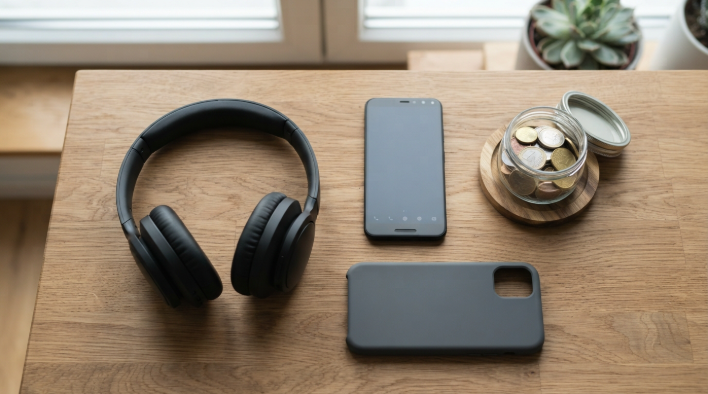
Part of what makes me happy with this decision is what the savings turned into. The difference between the budget phone and a new flagship was enough to buy a good pair of headphones, a proper case and screen protector, and still leave a meaningful amount in savings. It also means that if this phone breaks, replacing it would not feel like a financial disaster.
That last point changed how I use my phone in a subtle way. With my expensive phones, I was always slightly anxious: careful where I put it, nervous in crowds, worried about drops. With a cheaper phone, that anxiety has mostly gone. I still take care of it, but I no longer feel like I am carrying around a small, fragile fortune everywhere I go.
Who should still buy a flagship
I do not think budget phones are right for everyone. If you are a keen photographer who relies on your phone for serious pictures, the camera gap is real and worth paying for. If you play demanding games, edit video regularly, or use your phone as your main work computer, the extra power will genuinely improve your experience.
People who plan to keep a phone for five years or more might also benefit from a flagship, because longer software support and more powerful hardware can help a phone age more gracefully. And some people simply enjoy premium hardware, which is a perfectly valid reason to buy something. Not every purchase has to be justified by pure practicality.
But if you mainly use your phone for messaging, browsing, social media, maps, and everyday photos, it is worth at least trying something cheaper before automatically reaching for the most expensive option. The phone that you think you need may be a lot more phone than you actually use.
How to choose a budget phone well
After six months, I have a short checklist I share with friends who ask. First, check the promised software update period, and treat it as seriously as any other feature. Second, look at battery capacity and real-world battery reviews, not just the numbers on the box. Third, make sure there is enough storage, because cheaper models sometimes come with very little, and running out of space makes any phone feel slow.
Beyond that, read reviews that focus on daily use rather than just benchmarks. A phone that scores a little lower in tests but has clean software and good battery life will usually feel better to live with than one that looks impressive on paper but is loaded with unnecessary apps.
The upgrade habit I did not know I had
The most useful thing this accidental experiment taught me was how much of my previous phone buying was driven by habit and marketing rather than need. Every couple of years, I upgraded to the new flagship because that is simply what I did. I rarely stopped to ask what problem the new phone was solving.
A cracked screen forced me to ask that question, and the answer surprised me. My budget phone does almost everything I need, lasts longer on a charge, and costs a fraction of the price. I miss the camera sometimes. I do not miss the price tag at all. When this phone eventually needs replacing, I will look at budget options first, and I will need a very good reason to go back.
