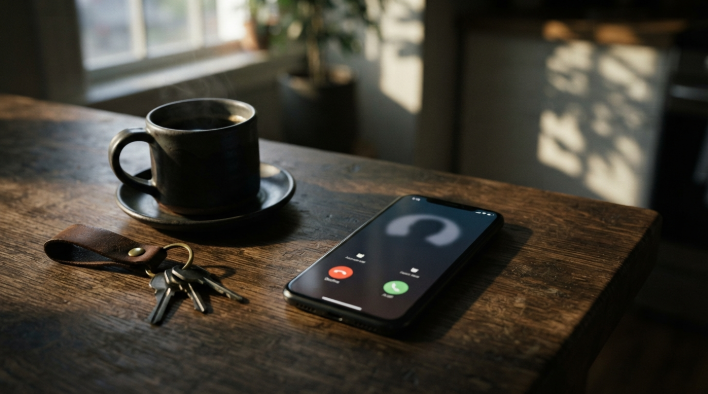
My uncle got the call on a Sunday afternoon. The voice on the other end sounded exactly like his son: the same slightly rushed way of speaking, the same habit of starting sentences with “Look.” The voice said he had been in a car accident, that he was fine but in trouble, and that he needed money sent quickly. My uncle was reaching for his banking app when something small felt off. His son never called him “Dad.” He always said “Pops.” So my uncle hung up and called his son directly. His son was at home, watching football, completely unaware that a copy of his voice was out there asking for money.
Nobody lost anything that day, but the story went through our family group chat like an electric shock. Within an hour, we had decided on something I would have laughed at a few years ago: a family safe word. I wanted to understand how we got here, how these voice-cloning scams actually work, and whether a simple word is really enough protection. Here is what I learned while looking into it.
How a voice gets copied in the first place
A few years ago, making a convincing synthetic voice required hours of clean recordings and serious technical skill. That is no longer true. Modern voice-cloning tools can produce a believable imitation from surprisingly short samples, sometimes just a few seconds of clear speech. Many of these tools were built for legitimate uses, like dubbing videos, helping people who have lost their voice to illness, or creating narration. But the same capability that helps a patient speak again can help a scammer impersonate a grandson.
The raw material is easy to find. Most of us have left our voices scattered across the internet without thinking about it. Videos posted on social media, voice notes forwarded in group chats, podcast appearances, recorded presentations, even the greeting on a voicemail box. My cousin, whose voice was copied, had posted several short videos of himself talking about a fishing trip. That was probably enough.
What makes these calls effective is not just the voice. It is the combination of a familiar voice with urgency and emotion. Scammers design the call so that you do not have time to think. An accident, an arrest, a hospital, a kidnapping. The goal is to trigger panic, because panic switches off the part of us that notices small inconsistencies.
Why our instincts are not built for this
For most of human history, recognizing a voice was a reliable way to know who you were talking to. We learned to trust it deeply, and for good reason. Voices carry identity and emotion in a way that text never does. When you hear someone you love sounding scared, your body reacts before your brain has a chance to evaluate anything.
That is exactly the weakness these scams exploit. We have spent years learning to be skeptical of suspicious emails and text messages, with their odd spelling and strange links. But a phone call from a familiar voice bypasses all that training. It does not look like a scam. It sounds like family.
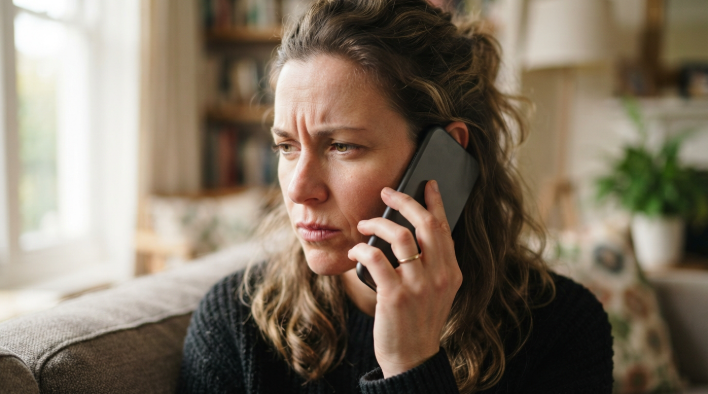
Talking to my relatives afterwards, I was struck by how many of them said some version of “I would know my own child’s voice.” My uncle thought so too, and he was right there on the edge of sending money. The honest truth is that under pressure, most of us would not reliably tell the difference, especially over a slightly crackly phone line where some distortion is expected anyway.

The safe word idea, and why it works
The concept is simple. Your family agrees on a word or short phrase that everyone knows but that has never been posted, typed in a group chat, or said on a recording. If anyone ever calls asking for money or help in a way that feels urgent, you ask for the word. A real family member will know it instantly. A cloned voice, no matter how convincing, will not.
What I like about it is that it moves the question away from “does this sound like them?” which is exactly what the technology is designed to fool, and toward “do they know something only we know?” which the technology cannot fake. It is a low-tech answer to a high-tech problem, and those are often the most durable kind.
We had a surprisingly fun family debate about choosing ours. The rules we settled on were that it should be easy to remember, impossible to guess from social media, and not something anyone would say by accident. So no pet names, no birthdays, no favorite football teams. We ended up with an inside joke from a family holiday that nobody outside the family would ever connect to us. I will not say what it is, obviously.
The part people forget: actually using it
Agreeing on a word is the easy part. The harder part is remembering to use it in a moment of fear. A safe word only works if asking for it feels normal rather than insulting. If your daughter calls sounding terrified, it feels cold to say “what is the password?” So we talked about that directly. We agreed that asking for the word is an act of love, not suspicion, and that nobody in the family would ever be offended by being asked.
We also agreed on a backup rule for anyone who forgets the word in the moment: hang up and call the person back on the number you already have saved. Not the number that called you, which can be spoofed, but the one in your contacts. That one step alone would have protected my uncle even without a safe word, and it is worth practicing until it becomes automatic.
For the older members of the family, we did something slightly more practical. We wrote the backup rule on a small card near the phone. It feels a bit old-fashioned, but in a panicked moment, having a simple instruction in front of you is far better than trying to remember advice from a group chat three months ago.
Other small habits that make a real difference
While researching, I found a handful of other precautions that are simple enough that people actually stick to them. The first is to be a little more thoughtful about where our voices live online. That does not mean never posting a video again, but it might mean setting some accounts to private, or thinking twice before posting long clips of clear speech publicly.
The second is to treat any request for money through unusual channels as a red flag, regardless of who seems to be asking. Gift cards, cryptocurrency, wire transfers to unfamiliar accounts, or requests to keep the call secret from other family members are classic signs of a scam. No real emergency requires you to tell nobody else about it.
The third is to slow down on purpose. Scams depend on speed. If you pause, even for two minutes, and involve someone else, the pressure breaks. Many of the stories I read ended well simply because the person being targeted called another relative before doing anything.
This is not only a family problem
Once I started paying attention, I noticed the same kind of risk showing up at work. There have been reported cases of employees receiving calls or even video meetings from someone who sounded and looked like a senior executive, asking for an urgent payment. Some businesses now use a similar idea to the family safe word: verification steps that happen outside the call itself, like confirming requests through a separate, known channel before any money moves.
Banks are also adjusting. Some have started warning customers specifically about voice impersonation and encouraging them to hang up and call back on official numbers. Telecom companies and regulators in various countries are working on better ways to flag spoofed caller IDs. These efforts help, but none of them are perfect, and none of them work as quickly as a family member who simply knows to ask one question.
Living with voices we cannot fully trust
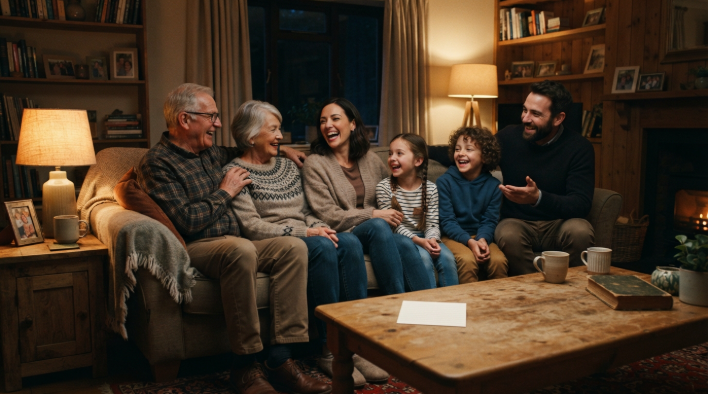
There is something a little sad about all of this. A voice used to be one of the most personal things about us, and now we have to treat it like a password that can be stolen. When I first explained the safe word to my grandmother, she asked, quite reasonably, “So now I cannot even trust my own grandchildren on the phone?” It was a fair question, and I did not have a perfect answer.
What I told her was that the safe word is not about distrusting us. It is about protecting the trust we already have. Just like we lock our doors not because we distrust our neighbors, but because we know not everyone who walks by is a neighbor. The technology changed, so the lock changed. The relationship behind it did not.
I also think the conversation itself was valuable. Talking openly as a family about scams, pressure, and how to respond made everyone a little more alert, not just to voice cloning but to fraud in general. My younger cousins, who are online all the time, taught the older relatives a few things. The older relatives, who have seen plenty of old-fashioned scams, reminded the younger ones that urgency is always the first warning sign. Everyone learned something.
What I would tell any family starting today
If you take one thing from my uncle’s story, let it be this: you do not need to understand the technology to protect yourself from it. You do not need special software or expert knowledge. You need one agreed word, one simple rule to hang up and call back, and a family culture where checking is never considered rude.
It took us about fifteen minutes in a group chat to set up, followed by a phone call to make sure the word itself was never written down there. That is a very small investment against a very real risk. My uncle still tells the story at family dinners, usually ending with the same line: “It sounded exactly like him.” That sentence is the whole reason the safe word exists.
