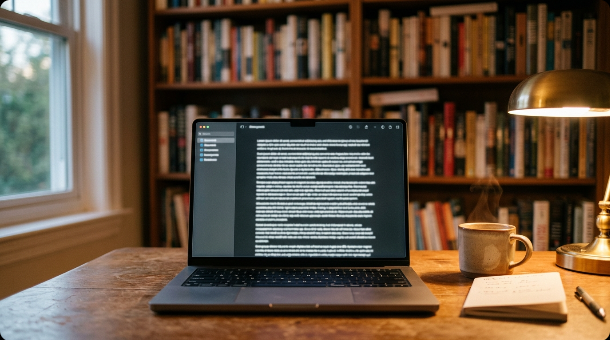
I have kept a personal blog, in one form or another, for longer than I have kept most friendships. It has moved between platforms, survived a few years of total neglect, and outlasted every social network I joined with more enthusiasm at the time. Almost nobody I know still does this. When I mention it in conversation, the reaction is usually a kind of gentle, curious surprise, as though I had mentioned keeping a fax machine in working order out of principle. In a sense, that reaction is fair. The personal blog, as a widespread cultural habit, is largely gone, and understanding why says something real about how the internet itself has changed underneath us.
This is not really a story of nostalgia, though nostalgia is part of it. It is an attempt to understand why a format that once felt like the internet’s natural home for personal expression quietly became a niche practice, kept alive mostly by people who, for one reason or another, never fully made the switch to whatever replaced it. And it is an attempt to explain, honestly, why I am one of those people, and what I still get from a habit that most of the internet has moved past.
What the Blog Actually Was, Before It Became Old-Fashioned
In its earlier years, a personal blog functioned as something closer to a standing invitation than a broadcast. It was a space you owned outright, formatted however you wanted, updated on whatever schedule suited you, read by whoever cared enough to bookmark it or subscribe to its feed. There was no algorithm deciding who saw a given post. There was no character limit forcing a complicated thought into a compressed fragment. The format rewarded patience, both in the writing and in the reading, in a way that increasingly feels foreign to how most people now consume anything online.
That structure produced a specific kind of writing, longer, more considered, often meandering in ways that would never survive a modern platform’s engagement metrics. Posts did not need to perform well in the first three seconds to justify their existence. They could simply exist, findable by anyone willing to look, valuable regardless of how many people actually read them on the day they were published. That patience is, I think, the single quality that has become hardest to find anywhere else on the contemporary internet.



Why Social Platforms Won the Attention War So Decisively
The shift away from personal blogging was not really a mystery, even if it happened gradually enough that most people did not experience it as a single decision. Social platforms offered something blogs never could, an audience that did not require you to build one yourself, delivered instantly and continuously through a feed that rewarded frequent, low-effort posting far more reliably than infrequent, high-effort writing ever could. Why spend three hours on a considered essay that a few hundred people might eventually read, when a thirty-second thought could reach thousands within minutes.
This is not a criticism of anyone who made that switch, because the switch made obvious sense given what these platforms were optimized to deliver. Attention is the actual currency of the internet, and personal blogs, for all their qualities, were never competitive in that specific economy. Social platforms did not kill blogging through any single decisive blow. They simply out-competed it for the resource that mattered most, one scroll at a time, across millions of people making the same individually reasonable choice.
What Got Lost in That Migration
What I think got lost, and what I notice most acutely now, is a particular kind of ownership over one’s own words and their permanence. A post on a social platform lives inside that platform’s rules, subject to whatever algorithm currently governs visibility, vulnerable to a policy change, a company acquisition, or a service shutdown in ways that a self-hosted blog simply is not. I have watched entire archives of writing I valued disappear when a platform folded, taking years of other people’s thinking down with it, permanently, without warning.
A blog, even an unfashionable one, does not have that particular vulnerability, at least not in the same way. It exists on infrastructure I control, in a format I chose, accessible for as long as I choose to keep paying a small hosting fee, regardless of whatever platform happens to be culturally dominant in a given year. That durability felt like a minor technical detail when I started writing one. It now feels like one of the format’s most underrated qualities, precisely because so much of what has replaced it turned out to be far more fragile than anyone using it at the time seemed to expect.
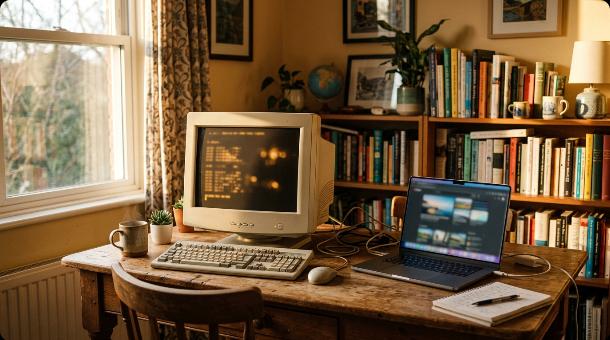
Why I Never Fully Stopped
I would like to say my continued blogging reflects some principled resistance to the direction the internet took, but the honest explanation is less impressive. I kept writing mostly because the format still does something for my own thinking that shorter, faster platforms never quite managed to replicate. Working through a genuinely complicated idea across a few thousand words, with no algorithm rewarding me for cutting it short, forces a kind of clarity that a quick post never demands. I write to figure out what I actually think, and the blog format, unfashionable as it has become, remains the best tool I have found for doing that in public.
There is also something valuable in writing for an audience small enough that I never have to perform for it in the way that larger platforms subtly encourage. Nobody is reading my blog because an algorithm surfaced it into their feed at exactly the right emotionally charged moment. The people who read it chose to, deliberately, which changes the relationship between writer and reader into something closer to a conversation between people who actually want to be there, rather than a broadcast competing for a stranger’s fragmented attention.
What a Small Blogging Community Still Offers
The people I know who still blog, a genuinely small group at this point, tend to know each other, reading and occasionally linking to one another’s writing in a way that has quietly preserved something like the earlier internet’s original spirit, a loosely connected web of individual voices rather than a handful of centralized feeds. It is a much smaller world than it used to be, but the quality of connection within it feels, if anything, more genuine than what most social platforms currently offer, precisely because nobody involved is chasing scale.
I do not expect personal blogging to make any kind of broad cultural comeback, and I am not sure it should, given how well other formats now serve the quick, casual sharing that blogs were never really built for in the first place. But I think the format’s near-disappearance from mainstream use has quietly cost the internet something specific, a space built for patience, ownership, and considered thought rather than speed and reach, and I suspect that a few of us keeping that space alive, however unfashionably, matters more than the small, shrinking audience numbers would suggest.
The Comment Section That Used to Matter
One specific loss I did not fully anticipate was what happened to the comment section underneath a blog post. In the format’s earlier years, comments functioned as a genuine extension of the writing itself, a place where readers pushed back, added context, or occasionally corrected something the original post had gotten wrong, all attached permanently to the piece they were responding to. That conversation had a kind of durability and coherence that reactions scattered across a dozen different social platforms simply cannot replicate.
Now, when someone responds to something I have written, it usually happens somewhere else entirely, a screenshot shared on a social platform, a reply buried in a feed I never see, a conversation happening at one remove from the actual piece of writing that started it. The response still exists, technically, but it is disconnected from the original context in a way that comments never were, and something genuine about the shape of that conversation has been lost in the fragmentation, even though the total amount of engagement, measured crudely, might actually be higher than it ever was on the blog itself.
The Economic Reality Behind the Shift
It is worth being honest about the economic incentives that accelerated this shift, because they were never neutral. Social platforms profit directly from keeping attention inside their own walls, and every structural decision, from algorithmic feeds to the friction involved in linking outward, reflects that underlying incentive. A personal blog generates no advertising revenue for any platform, which means no platform has ever had a business reason to make blogging easier, more discoverable, or more rewarding relative to posting directly on their own service.
This is not a conspiracy so much as a predictable outcome of how these companies make money. But understanding it clarifies why the decline of personal blogging was never simply a matter of changing taste. It was also, in a very real sense, an engineered outcome, the natural result of a business model that has no incentive to preserve a format explicitly designed to route attention away from any single platform’s own walls.
What I Would Tell Someone Curious to Start One
Every so often, someone hears that I still keep a blog and asks, half-jokingly, whether they should start one too. My honest answer has become simpler over time than it used to be. Start one if the appeal is the writing itself, not the audience it might eventually attract, because the audience, by any modern comparison, will almost certainly stay small. The value is in the specific kind of thinking the format forces, patient, unhurried, accountable to nothing except your own sense of whether an idea has been worked through properly.
I would also say, honestly, that the platforms making this easiest today are better than anything available when I started, simpler to set up, cheaper to maintain, more resistant to the kind of neglect that used to kill so many blogs within their first few months. The format itself has not become harder to practice. It has only become less culturally visible, which, depending on what you are actually looking for from writing online, might not be a downside at all.
