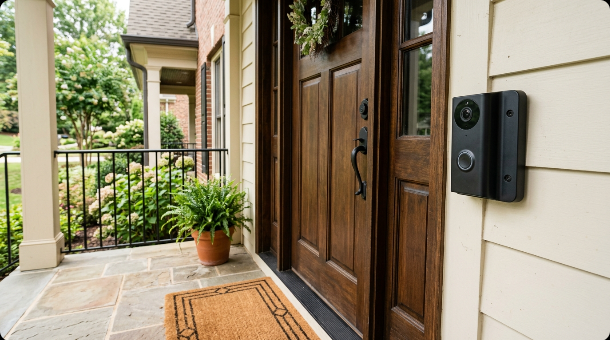
I installed a video doorbell for the reason most people do, a vague sense that it would make the house feel safer, a way to see who was at the door before opening it, a record in case a package went missing. What I did not expect, and what nobody really warns you about, is how quickly that small camera turned me into a person who checks a phone app throughout the day simply because someone, or something, moved near my front step. I did not set out to become a nosier neighbor. The doorbell did that on its own, one notification at a time.
This is not a story about a security disaster or a dramatic incident that justified the purchase. It is a story about a slow, almost imperceptible shift in attention and curiosity, one small camera quietly rewiring a habit I did not know I was capable of forming. I think a lot of people who own these devices have gone through some version of this same drift, and most of us do not talk about it honestly, because on the surface it just looks like being a responsible homeowner. Underneath, it is something a little stranger.
The First Few Weeks Felt Purely Practical
In the beginning, the doorbell did exactly what I expected. A delivery arrived, I got a notification, I saw a person in a uniform drop a package and walk away, and that was that. It felt genuinely useful, a small quality-of-life improvement that solved a real, specific problem I had been annoyed about for years, namely never knowing whether a package had actually arrived without walking outside to check.
The shift happened slowly enough that I cannot point to a single moment where it changed. At some point, the motion notifications started including things that were not packages, a cat crossing the yard, a car parking briefly across the street, a neighbor walking their dog past my house at the same time every morning. None of this was information I needed. All of it was information I now had, delivered directly to my phone, and having it turned out to change how I related to my own street in ways I had not anticipated.

Curiosity Is Not the Same as Concern, But It Behaves the Same Way
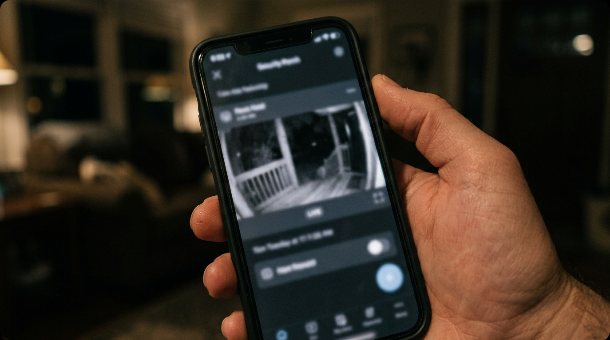
I want to be honest that most of what pulled me back to the app repeatedly was not fear or suspicion. It was plain curiosity, the same impulse that makes people glance out a window when they hear a car door close outside. The doorbell simply gave that impulse a permanent, always-available outlet, one that did not require me to be home, or even awake, to indulge it. I found myself checking the app during meetings, during dinner, during moments that had nothing to do with home security at all, purely because a notification told me something had moved.
What surprised me most was how normal this started to feel. I did not experience the checking as anxious or invasive in the moment. It felt more like habit, closer to checking any other app out of reflex than to genuine concern about safety. But looking at the accumulated pattern over a few months, the amount of attention I was quietly spending on footage of an empty street was hard to justify by any practical standard. I was not protecting my home more effectively. I was simply watching it more.
The Neighbors I Never Meant to Start Watching
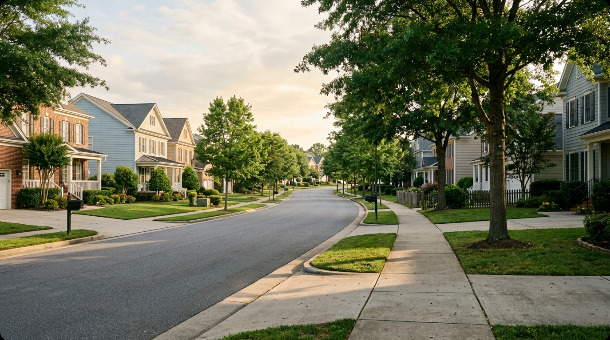
The part of this that sits least comfortably with me is how much of that footage inevitably included neighbors who never agreed to be recorded, walking past my house on their own ordinary errands, entirely unaware that a camera was quietly logging their movement and, in a small way, becoming part of my daily observation of the block. I never watched with any specific person in mind. But the camera does not discriminate between a stranger and a familiar face, and over time I noticed myself accumulating a low-level awareness of my neighbors’ routines that I had never had before and had not consciously decided to acquire.
This is, I think, the genuinely new thing that these devices introduce into a neighborhood, not surveillance in the dramatic sense most people imagine when they hear the word, but a diffuse, mutual, low-grade awareness that spreads across a block one doorbell camera at a time. Nobody sat down and agreed to this. It simply accumulated, house by house, as more of these cameras went up, until an ordinary residential street quietly became a place where a meaningful amount of everyone’s outdoor movement is captured by someone.
The Neighborhood App Made It Worse, Not Better
Connecting the doorbell to a local neighborhood social app, something I did almost reflexively because the setup process nudged me toward it, amplified this effect considerably. Suddenly the mild curiosity I felt about my own footage was joined by a stream of other people’s clips too, strangers posting videos of unfamiliar cars, unfamiliar faces, ordinary activity reframed with captions implying suspicion that, on closer inspection, usually had a completely mundane explanation.
I noticed this pull toward suspicion happening in my own thinking too, a tendency to interpret an unfamiliar car parked nearby as vaguely concerning rather than simply unremarkable, a shift in default assumption that I do not think served me well and that I do not think reflects how safe my neighborhood actually is. The doorbell did not just make me more watchful. It nudged my baseline interpretation of ordinary street activity toward suspicion, a framing I had to consciously notice and correct for once I recognized what was happening.
What I Have Actually Changed Since Noticing This
I still have the doorbell, and I still think it serves a genuinely useful purpose for package deliveries and the rare moment when knowing who is at the door actually matters. But I have deliberately turned off most of the ambient motion notifications, keeping only the ones tied to the doorbell being pressed or a package being detected near the door itself. That single change cut my checking behavior dramatically, because it removed the constant low-level bait that kept pulling my attention back to footage that, in hindsight, almost never contained anything worth seeing.
I also unfollowed the neighborhood app entirely, not because every post on it was unreasonable, but because the format itself seemed to reward suspicion over context, and I did not like what that was doing to how I thought about people simply walking down my own street. None of this required getting rid of the technology. It required getting more honest about what the technology was actually doing to my attention, and adjusting the settings to match the person I actually wanted to be, rather than the mildly nosy, low-grade suspicious version of myself the default settings had quietly nudged me toward becoming.
The Package Theft Video That Changed My Calculus, Briefly
About four months in, the doorbell caught something that felt like vindication for the whole purchase, a person walking up, taking a package from my porch, and walking away within seconds. Watching that clip, I felt a genuine jolt of the exact justification I had used to buy the device in the first place. For about a week afterward, my checking behavior intensified considerably, every notification suddenly carrying a weight it had not had before, every unfamiliar car treated as a possible repeat threat.
That spike faded eventually, the way most heightened vigilance does once enough uneventful days pass. But it taught me something important about how these devices actually shape behavior over time. A single genuinely useful catch, the kind of event the doorbell was ostensibly purchased for, can justify months of otherwise unnecessary monitoring in a way that feels completely rational in the moment, even though the statistical reality is that one incident in many months does not actually warrant checking a camera feed several times a day for the other hundred and nineteen of them.
What Actual Security Researchers Say About This Pattern
Reading more about how these devices are studied, I found that the behavior I noticed in myself is well documented, sometimes described as a kind of low-grade vigilance creep, where the mere availability of continuous monitoring data produces checking behavior disproportionate to any actual security benefit. Researchers who study neighborhood-level camera adoption have also noted the same suspicion-amplifying effect I experienced through the neighborhood app, where footage shared without context tends to get interpreted more negatively than the same event witnessed in person would be.
None of this means the technology is without value. Doorbell cameras do solve real problems, and the package theft clip I caught was a genuinely useful piece of evidence. But understanding the documented behavioral pattern helped me feel less alone in noticing it, and less like something was uniquely wrong with my own habits. It is, apparently, simply what this category of device tends to do to the people who own it, unless they deliberately intervene against the default settings designed to maximize engagement rather than genuine security.
A Small Experiment in Turning It Mostly Off
Curious how much of my checking was habit versus genuine value, I ran a two-week experiment where I disabled every notification except the doorbell press itself, no motion alerts of any kind. The first two days felt strange, a phantom itch to check an app that had nothing new to show me. By the end of the first week, I had mostly stopped thinking about it altogether, and by the second week, checking the doorbell app had returned to something closer to my relationship with any other rarely used utility, opened only when I had an actual reason.
Nothing bad happened during those two weeks. No missed package, no unnoticed incident, nothing that the constant ambient monitoring would have meaningfully prevented. That result was, honestly, a little deflating, since it confirmed that most of what I had been doing for months was not protecting anything. It was simply feeding a habit the device itself had trained into me, one notification at a time, until checking felt indistinguishable from actual vigilance.
