I canceled cable almost a decade ago with the smug satisfaction of someone who had figured out the system, tired of paying for hundreds of channels I never watched and a bill that crept upward every year for reasons nobody ever fully explained. Streaming felt like liberation, a chance to pay only for what I actually used. Recently, out of pure curiosity, I sat down and added up every streaming subscription currently running on my account. The number was higher than my old cable bill ever was, and I had somehow not noticed it happening.
This is not a story about regretting the switch to streaming, because in most ways it was still the right decision. It is a story about how a system explicitly designed to feel cheaper and more flexible than cable quietly reassembled most of cable’s worst qualities, a large recurring monthly cost and a pile of content I rarely watch, just spread across enough small, easy-to-ignore charges that the total became invisible until I finally sat down and actually added it up.
The Math I Had Been Avoiding
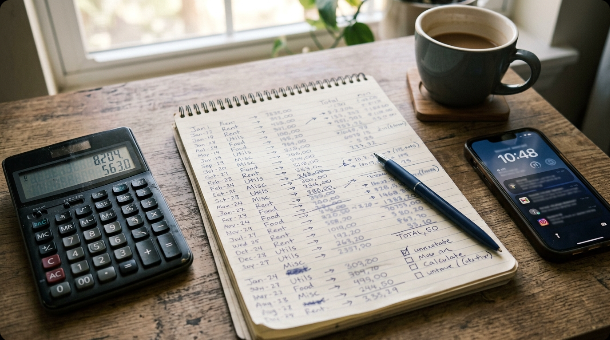
Doing the actual accounting was uncomfortable in a specific way. Each individual subscription, taken on its own, felt entirely reasonable when I signed up for it. A video service here, a music service there, a specialized streaming app for a show everyone was talking about, each one justified in isolation by a specific show or a specific need at a specific moment. None of these decisions felt wasteful when I made them. It was only in aggregate, staring at a spreadsheet listing every recurring charge in one place, that the total became impossible to ignore.
What struck me most was how few of these subscriptions I had actually canceled once the show or season that prompted the signup had ended. Nearly every service I tested for what I assumed would be a temporary reason had simply kept running, month after month, because canceling required active effort and remembering that the subscription existed at all, while staying subscribed required nothing but continued, passive inattention. Cable’s monthly bill was at least visible and singular. My streaming costs had become distributed and, in a very real sense, designed to be forgotten.


Why This Sneaks Up on Almost Everyone
Part of what makes streaming costs so easy to lose track of is architectural rather than accidental. Cable bundled everything into one bill that arrived once a month, impossible to overlook, itemized in a way that at least gave you a fighting chance to notice when a price increased. Streaming services, by contrast, each bill separately, on different days, through different payment processors, with different notification habits about price changes. No single moment forces you to see the full picture, because there is no full picture anywhere except the one you have to manually assemble yourself.
This fragmentation is not incidental to how these services are priced. A single monthly fee that feels small in isolation, five or ten or fifteen dollars, is psychologically much easier to accept than the same amount folded into a larger, more visible number. Splitting a household’s total entertainment spending across five or six separate, individually modest charges takes advantage of exactly this asymmetry, and it does so in a way that a single company using an all-in-one bundle simply could not, because a bundle by definition forces the total to be visible in a single place.
The Price Increases I Had Genuinely Not Noticed
Beyond the sheer number of subscriptions, I found that several individual services had quietly raised their prices multiple times since I first signed up, increases small enough in any given month that I had never consciously registered them, but substantial in aggregate once I looked at what I had actually been paying two or three years ago compared to now. A service that cost a modest amount when I subscribed had crept upward gradually enough that no single increase felt worth acting on, even though the cumulative change was significant.
This pattern mirrors, almost exactly, the complaint I originally had about cable, a bill that grew steadily for reasons that were never clearly explained and that I never had a strong enough reason, in any single month, to actually do something about. I left cable specifically to escape that dynamic, and streaming, through a slightly different mechanism, delivered me right back into a version of the same experience, just with better content and a friendlier interface layered on top of the same underlying pattern of gradual, hard-to-track cost creep.
The Content I Was Not Actually Watching
Once I had the full financial picture in front of me, I cross-referenced it against my actual viewing history on each service, and the results were humbling. Two of the subscriptions I was paying for had not been opened in over three months. A third I had genuinely forgotten I still had, discovered only because I recognized the charge on my bank statement and had to actively think about what it corresponded to. This is not a minor oversight. It is close to a third of my total streaming spending going toward services I was not meaningfully using at all.
I think this happens because canceling a subscription requires a small but real amount of deliberate effort, logging in, finding the right settings page, sometimes navigating a deliberately inconvenient cancellation flow designed to make you reconsider. Staying subscribed requires nothing. That asymmetry, tiny at any individual moment, compounds over months and years into real, avoidable spending that most people, myself very much included, simply never get around to correcting until something forces the full picture into view.
What I Actually Did About It
Once I saw the real number, the fix was straightforward, if slightly embarrassing in how obvious it should have been all along. I canceled the two services I had not used in months, immediately cutting a meaningful chunk off the total. I also set a recurring calendar reminder, once a quarter, to actually review every active subscription against what I had genuinely watched or used since the last check, rather than relying on memory or vague intention to eventually get around to it.
I have not gone back to cable, and I do not think most people should, because the actual content and flexibility streaming offers remains genuinely better for how I actually watch things. But I no longer assume that streaming is automatically cheaper simply because each individual bill looks small. It is cheaper only if you actually track it the way you would have been forced to track a single consolidated cable bill, and it turns out that most of us, without quite meaning to, stopped doing exactly that the moment the total got split into pieces small enough to stop noticing.
The Ad Tiers Made the Comparison Even Stranger
What complicated my sense of savings even further was discovering that several of my subscriptions had, at some point, quietly shifted me onto a plan that included advertising, either through a default change I never actively agreed to or through a renewal that defaulted to a cheaper, ad-supported tier without clearly flagging the change. I was, in effect, paying a subscription fee and watching advertisements, the exact combination that streaming’s early marketing promised to eliminate entirely.
Sitting with that realization made the comparison to cable even less flattering than the raw dollar total suggested. Cable, for all its faults, generally included ads as a known, upfront condition of a lower-tier price. Several of my streaming services had reintroduced that same tradeoff quietly, sometimes raising the price at the same time they added advertising, a combination that would have generated real public backlash if a cable provider had tried it, but that arrived in my case as a routine email I barely skimmed before archiving.
The Household Sharing Crackdown Added Its Own Cost
A separate factor that pushed my total higher without me fully registering it was the wave of password-sharing restrictions that rolled out across several services over the past couple of years. Accounts I had previously shared informally with family members suddenly required either everyone to get their own separate subscription or an additional monthly fee to add an extra household member officially. Multiplied across two or three services, that change alone added a meaningful amount to my monthly total, arriving as a policy shift rather than a price increase in name, even though the effect on my actual spending was identical.
I do not think these restrictions are unreasonable from the company’s perspective, since informal sharing genuinely did cut into their revenue. But from my side of the ledger, it meant another quiet, incremental cost increase layered on top of the base subscription price hikes, arriving through a mechanism different enough from a straightforward price change that it did not register the same way in my head, even though my bank statement did not care about the distinction at all.
What I Would Tell My Past Self
If I could go back to the moment I canceled cable, I would not undo that decision, but I would tell myself to treat streaming subscriptions with the same seriousness I once treated a single monthly bill, rather than as a scattering of small, forgettable charges. Setting up one simple tracking habit from the very beginning, a single spreadsheet or even just a recurring reminder to review what I was actually paying for, would have caught the creeping total years before I finally noticed it on my own.
The broader lesson, I think, is not really about streaming specifically. It is about how any cost that gets split into small enough pieces, billed separately enough and infrequently discussed enough, can quietly grow past a threshold you would never have accepted if it had arrived as a single, visible number. Cable’s single ugly bill was, in its own strange way, more honest than the current system, if only because it made the actual cost of entertainment impossible to avoid seeing every single month.
