
It happened on a Tuesday morning, the kind of morning where nothing dramatic is supposed to happen. I was refilling my coffee and glancing at my banking app out of habit rather than curiosity when a number caught my eye: $214.47. That was what had quietly left my checking account in automatic charges over the previous 30 days, and not one of those charges was rent, groceries, or a bill I could immediately explain. It was subscriptions. All of it.
A streaming app I barely opened, a meal-kit trial I forgot to cancel, a fitness app I hadn’t touched since February, and a cloud storage plan I upgraded eighteen months ago and never bothered to downgrade. I sat down right there at the kitchen counter and did something I had been avoiding for years: I counted every single subscription I was paying for. What I found didn’t just surprise me. It genuinely unsettled me, and I think it should unsettle you too.
The Spreadsheet That Ruined My Morning Coffee
I opened a blank spreadsheet, and for the next forty minutes I went through every bank and credit card statement from the last three months, line by line. I wasn’t looking for fraud. I was looking for the small, recurring charges that have become so normalized in our lives that we stop registering them as spending at all. By the time I finished, I had listed nineteen separate subscriptions. Nineteen. I could name maybe seven of them off the top of my head before I started.
This is the part nobody warns you about when a company switches from selling you a product to renting you a service. A one-time purchase announces itself. You feel the price when you pay it. A subscription, by design, is engineered to disappear from your attention the moment you sign up. It renews itself, adjusts itself, and quietly outlives your actual interest in the product. That is not an accident. It is the business model.
Where the Money Actually Goes
Here is the exact breakdown I found in my own accounts, because I think specific numbers matter more than vague warnings:
- Video streaming (two services): $27.98/month
- Music streaming: $11.99/month
- Cloud storage (upgraded tier I no longer needed): $9.99/month
- A meal-kit “pause” that was never fully paused: $59.94/month
- A fitness app I opened twice in six months: $19.99/month
- An AI writing assistant subscription duplicated across two accounts: $40.00/month
- A smart home security app subscription: $10.00/month
- Cloud backup for a laptop I no longer own: $8.99/month
- A news site paywall I forgot I still had: $6.99/month
Add it up and you get roughly $195.87 a month, or about $2,350 a year. For context, that is close to the price of a new mid-range laptop, gone every twelve months, replaced by another twelve months of the exact same charges. I want to be clear that I am not an irresponsible spender. I have a budget. I check my accounts. And I still missed this, because subscription fatigue doesn’t look like overspending in the moment. It looks like nineteen invisible decisions you made once, years apart, that never got revisited.
Why We Don’t Notice Subscription Creep
There’s a specific psychological reason this keeps happening, and it isn’t a lack of discipline. Behavioral economists call it “payment decoupling.” When you pay for something once, the pain of paying and the pleasure of using it happen close together, so your brain forms a clear cost-benefit judgment. A subscription severs that link entirely. You pay on the 3rd of the month whether you used the product zero times or thirty times, so there is no moment where your brain naturally asks, “was this worth it?”
Layer on top of that what I’d call subscription creep: the slow, almost polite way prices increase. Streaming services raise prices by a dollar or two a year. Software companies bump you to a new “essential” tier during a redesign. A free trial converts to a paid plan with a single email you don’t open in time. None of these moments feel big enough to cancel over, and that is exactly the point. Nobody quits a service because it went from $8.99 to $10.99. But do that six times across six services and you’ve built an entire annual subscription budget out of increases you never actively agreed to.
The Psychology Behind “It’s Only $9.99”
The other trap is framing. $9.99 a month sounds trivial next to a $600 tablet or a $1,200 laptop. But that framing only works if you evaluate it in isolation, which is exactly how these products are priced and marketed. Nobody frames it as “$120 a year for an app I open when I’m bored,” even though that’s the honest math. I’ve started doing something simple with every new subscription prompt I see: I multiply the monthly number by 24, because that’s roughly how long the average person keeps a subscription they don’t actively track. $9.99 becomes $240. Framed that way, a lot fewer “yes, sure, why not” moments happen.


A Real Comparison: Subscriptions vs. One-Time Purchases
Take the meal-kit example from my own list. At $59.94 a month even when “paused,” that service cost me $719 over a year. For that amount, I could buy a genuinely good stand mixer, a full set of kitchen knives, and a slow cooker, and still have money left over for actual groceries. None of that is a knock on meal-kits as a category. It’s a reminder that the subscription model works by trading a large, memorable expense for a small, forgettable one that ends up costing more over time. That trade isn’t automatically bad. But it should be a decision you make consciously, not one that happens to you by default.
The North American Subscription Trap in 2026
If you live in the United States or Canada, you are arguably the single most subscribed-to consumer on the planet. Streaming alone has fragmented into a dozen competing platforms, each betting that you’ll forget you’re paying for the other eleven. Add grocery delivery memberships, cloud gaming, ad-free tiers on apps that used to be free, AI tool subscriptions that multiply as new ones launch every few months, and even software your car or your smart thermostat now requires a subscription to fully use. Price increases also tend to hit U.S. and Canadian subscribers first, since these markets are treated as the testing ground for new tiers and bundles. A service that costs $12.99 in the U.S. might be several dollars cheaper elsewhere, and price hikes announced quietly in a support article often show up on North American cards before anywhere else. None of this is a conspiracy. It’s simply where the market is most mature, which means it’s also where the fatigue is most advanced.
Free Trials: The Quiet On-Ramp to Subscription Creep
Almost none of my nineteen subscriptions started with me deliberately deciding to pay for something. Nearly every one of them started as a free trial: seven days, fourteen days, sometimes a “special” thirty-day offer tied to a new phone or a loyalty program. Free trials are not a courtesy. They are a conversion funnel, engineered by product teams whose entire job is to maximize the number of people who forget to cancel before the billing date arrives. The math works in the company’s favor even if only a fraction of trial users convert, because the ones who do often stay for years without a second thought.
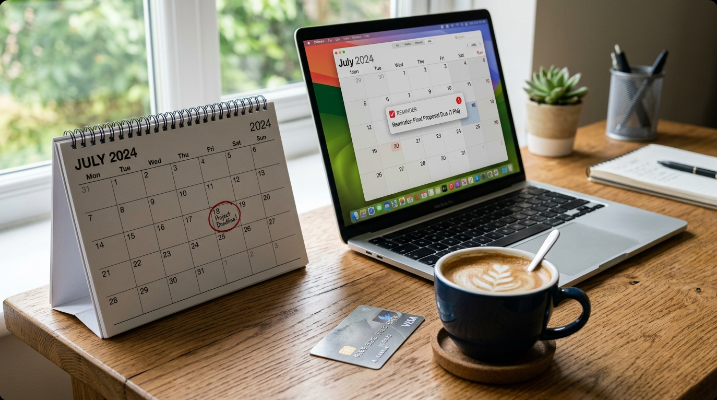
I’m not suggesting you avoid free trials altogether. Some are genuinely useful ways to test a product. But I now treat every single one the same way: the moment I start a trial, I put a reminder on my calendar for two days before it ends, not the day it ends. Two days gives you a buffer if the cancellation flow turns out to be deliberately confusing, which, in my experience, it usually is. Companies rarely make it hard to subscribe. They make it easy to forget, and hard to leave.
What the Industry Doesn’t Want You to Notice
Subscription businesses talk a lot about “customer lifetime value,” which is a polite way of describing exactly what happened to me. The entire model is optimized around the assumption that most subscribers won’t audit their spending regularly. Retention teams are measured on how few people cancel, not on how satisfied active users are. That’s why cancellation flows are buried three menus deep, why “pausing” a subscription so often means “still charging you a reduced amount,” and why price increases are announced in an email you’re statistically unlikely to open. None of this makes these companies uniquely villainous. It makes them rational actors in a system that rewards your inattention. The only real countermeasure is attention itself, applied on a schedule instead of by accident.
How I Audited My Own Subscriptions (Step by Step)
Here’s exactly what I did, and what I’d genuinely recommend to anyone reading this before their next credit card statement arrives:
- Pull three months of statements, not one. A single month can hide annual or quarterly charges.
- List every recurring charge in one place, even the ones under $5. Small charges are where creep hides best.
- Next to each one, write the last date you actually used it, not the date you signed up.
- Separate the list into three categories: actively used, occasionally used, forgotten entirely.
- For anything in the “forgotten” column, cancel it that same day. Not next week. Cancellation pages are designed to be annoying enough that delay usually means you never do it.
- For “occasionally used,” ask what a one-time or pay-per-use alternative would cost instead.
- Set a recurring calendar reminder every 90 days to repeat this exact process, because new subscriptions will creep back in.
What I Cancelled, What I Kept, and Why
I cancelled six of my nineteen subscriptions that day: the duplicate AI assistant account, the unused fitness app, the old cloud backup, the forgotten news paywall, the oversized cloud storage tier, and the meal-kit plan. I kept the two streaming services, because I genuinely use them most evenings, and I kept the music subscription and the smart home app, because pricing them out individually would have cost more than the bundle. That’s the actual goal here, and it’s worth saying plainly: this isn’t about becoming a person who owns nothing and subscribes to nothing. It’s about making sure every recurring charge on your statement is there because you chose it recently, not because you forgot about it eighteen months ago.
Try Your Own 15-Minute Version This Week
You don’t need a spreadsheet obsession to get most of the benefit here. Pull up your last two bank statements, highlight every recurring charge, and ask one honest question about each: would I sign up for this again today, at this price, knowing what I know now? If the answer is a clear yes, keep it without guilt. If you hesitate, that hesitation is the answer. Subscription fatigue isn’t a character flaw, and it isn’t really about willpower. It’s what happens when dozens of businesses are quietly optimized to make you forget you’re a customer at all. The fix isn’t complicated. It just requires actually looking, the way I finally did on an ordinary Tuesday morning over a cup of coffee that, it turns out, was one of the few things in my budget I hadn’t automated.
