The notification was small and easy to ignore, the kind of thing that shows up buried two menus deep in a settings app: “Maximum Capacity: 80%.” My phone was two and a half years old, well within the range where I’d assumed I still had plenty of runway before battery health became a real problem. Eighty percent sounded fine on paper. In practice, by early afternoon most days, I was already reaching for a charger, and I hadn’t connected the two facts until I actually went looking.
What 80% Actually Means, Once I Looked Into It
The number itself is simpler than the anxiety around it suggests. Maximum capacity compares your battery’s current ability to hold a charge against its capacity when it was new. Eighty percent means the battery now holds roughly four-fifths of the charge it did on day one, which sounds worse than it necessarily feels day to day, because the decline isn’t linear and it isn’t sudden. It’s the accumulation of hundreds of charge cycles, each one degrading the battery’s chemistry by a tiny, mostly invisible amount, until eventually the total adds up to something you notice.
What I hadn’t understood before checking was that 80% is generally treated as a rough threshold, not a cliff edge. Manufacturers commonly warranty battery capacity down to 80% for a set period, which tells you something about where the industry considers “still basically fine” ending and “probably time to think about it” beginning. My phone wasn’t dying. It was just old enough that the battery had quietly become the weakest link in an otherwise still-functional device.



The Options I Actually Weighed
I looked at three paths seriously: replace the battery, replace the whole phone, or just live with it and change my charging habits. Living with it was tempting mostly out of inertia, but the actual daily friction, carrying a charger everywhere, watching the percentage anxiously during anything that kept me away from an outlet, was a real cost I was already paying without having named it as a battery problem specifically.
Replacing the whole phone was the option every notification and every ad seemed to nudge me toward, and it’s worth saying plainly: for a battery problem alone, that’s usually the most expensive solution to the smallest actual issue. Everything else about my phone worked. The camera was fine, the storage was fine, the processor handled everything I threw at it without complaint. Replacing the entire device to fix one degraded component felt, once I actually laid it out like that, wildly disproportionate.
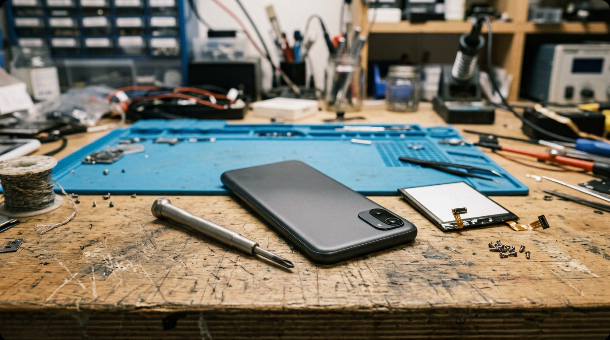
Battery replacement was the option I hadn’t seriously considered before, mostly because I didn’t know it was straightforward. It turned out to be a same-day service at an authorized repair location, at a fraction of the cost of a new phone, and it came with a fresh warranty period on the new battery itself. Once I actually priced it out against a new phone, the math wasn’t close.
What the Replacement Actually Involved
I want to be honest about the parts that weren’t perfectly smooth, because most accounts of this kind of repair make it sound frictionless in a way that sets unrealistic expectations. I had to back up the phone first, which took longer than I budgeted for, mostly because I hadn’t actually checked how much of my storage was backed up automatically versus sitting only on the device. I’d assumed everything synced. Some of it did. Some of it very much didn’t, and I spent an uncomfortable hour manually confirming photos and a few specific app data folders before I felt safe handing the phone over.
The actual repair took under an hour. When I got the phone back, the difference was immediate and honestly a little startling, given how gradually the old battery had declined. A day that used to end around 20% with careful rationing now ended around 50% with completely normal use. I hadn’t realized how much low-grade anxiety I’d been carrying around battery percentage until it was gone, replaced by the simple, boring confidence that the phone would just last.
What I’d Actually Recommend Checking First
Before assuming a battery problem means a new phone, check the actual battery health number in your settings, not just how the phone feels day to day, because the feeling is a lagging indicator and the number is precise. If it’s above roughly 85%, the decline you’re noticing might have a different cause entirely, a specific app draining power in the background, an operating system update that changed behavior, a case blocking heat dissipation. Below 80%, the battery itself is a much more likely explanation, and it’s worth ruling that in or out before spending money on anything bigger.
Second, actually price the replacement against a new device before deciding. I went in assuming a battery swap would be a modest expense relative to a full upgrade, but I hadn’t actually run the numbers until I was standing at the counter, and seeing the gap in writing made the decision much easier than it would have been on vibes alone. Third, back up properly and deliberately before any repair, don’t assume automatic sync has caught everything, because finding out it hasn’t is a genuinely bad moment to discover that.
The Environmental Angle I Hadn’t Thought About
The part that surprised me most, after the fact, was how much better a battery replacement felt than a phone replacement once I thought about what actually happens to a working phone I no longer want. Trading in or recycling a phone that still works in every way except battery life is still, in the best case, an entire device’s worth of materials and manufacturing being set aside for the sake of one degraded component. Extending the life of a phone I already own by fixing the one thing wrong with it is a genuinely small, unglamorous form of the kind of consumption reduction that gets talked about in the abstract far more than it gets practiced. I didn’t do it for that reason initially. It’s just been a nice, unexpected bonus to notice afterward.
Where I’ve Landed
The phone I was seriously considering replacing eight months ago is still the phone in my pocket right now, and it works like new because, in the one way that mattered, it basically is new. I’ve started checking battery health proactively now instead of waiting for the daily frustration to build to the point where I finally go looking for a cause. It’s a two-tap check in settings, it takes less time than reading this paragraph, and it would have saved me months of quietly rationing power on a problem that had a same-day, inexpensive fix the whole time.
The Charging Habits I Changed Afterward
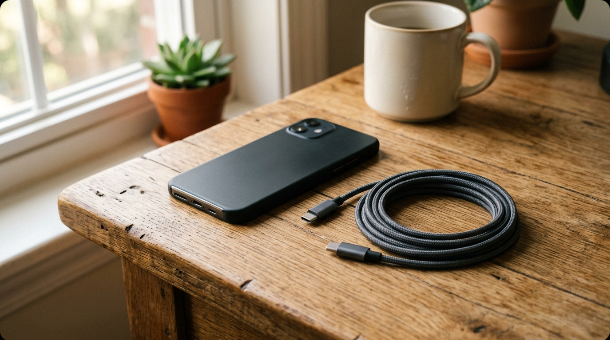
The repair technician mentioned a few habits that supposedly slow future degradation, and I went looking into the reasoning afterward rather than just taking it on faith. Keeping the battery between roughly 20% and 80% for daily use, rather than habitually running it down to near zero or leaving it plugged in at 100% overnight, reduces the chemical stress that causes capacity loss over time. I’d been doing almost the opposite for years, routinely draining to single digits before charging, then topping up to full overnight out of habit rather than necessity.
I also hadn’t known that heat is a bigger factor in long-term battery degradation than most people assume, worse in a lot of ways than the charge-cycle count itself. Charging a phone in direct sun, leaving it in a hot car, or charging it inside a thick case that traps heat all accelerate the same underlying chemical wear. None of these individually make a dramatic difference on any given day, which is exactly why they’re easy to ignore, but the same logic that got my old battery to 80% capacity in two and a half years applies going forward too, and small daily habits compound over that timescale in a way a single day never reveals.
I’ve adjusted, not obsessively, but consistently: I don’t let the case sit on the phone while it’s fast charging if I can help it, I try not to leave it charging on a nightstand where it also gets direct morning sun, and I’ve stopped treating 100% as some kind of default target every single night. None of this is difficult once it’s habit. It just required actually understanding why it mattered instead of vaguely knowing it was “good for the battery” in the same unexamined way I know flossing is good for me.
What This Taught Me About Repair Versus Replacement Generally
The bigger lesson, beyond the phone itself, was about how automatically I’d defaulted to “replace the whole thing” as the solution to “one part of this thing is wearing out.” That’s not really a rational default, it’s a cultural one, reinforced by how relentlessly new-device upgrades get marketed relative to how quietly repair options exist in the background, easy to not know about unless you go looking. I don’t think this applies to everything, some repairs genuinely do cost more than replacement once you factor in labor and parts, and some devices are old enough that a repair just buys a few more months on borrowed time. But I’d stopped even checking which category a given problem fell into, and that’s the habit I actually want to keep from this whole experience, more than any specific charging tip.
One Thing I’d Do Differently
If I were starting over, I’d have checked battery health the moment I first noticed the phone feeling less reliable, instead of the several months later when I finally looked. The lag between “something feels off” and “I actually diagnosed why” was almost entirely avoidable, and it cost me nothing except the ongoing low-grade inconvenience of a phone that needed babying. Now it’s a habit I’ve built into my calendar, a quick check every few months, less because I expect a problem and more because catching it early turns a potential expensive decision into a quick, cheap one.
The phone in my pocket now is proof that “still works, just needs one part fixed” is a category worth checking for before reaching for the trade-in link, and that’s a small shift in instinct I’m glad a two-and-a-half-year-old battery forced on me.
