
I noticed it while trying to parallel park without a backup camera. Not a big deal — I’ve parked cars for over a decade — but there was a strange half-second of hesitation, like my brain expected a screen to tell me how close I was to the curb. It wasn’t panic, just a small gap where instinct used to be immediate and now needed a beat to catch up.
That tiny moment is the whole story in miniature. Convenience tech doesn’t take away skills all at once. It quietly reduces how often we use them, until the skill is technically still there but a little rustier than we’d like to admit. And because the reduction happens in such small increments, there’s rarely a single moment where anyone consciously decides to let a skill go. It just fades a little every time the easier option is sitting right there, ready before the harder one is even considered.
The Skills That Fade Without Anyone Noticing

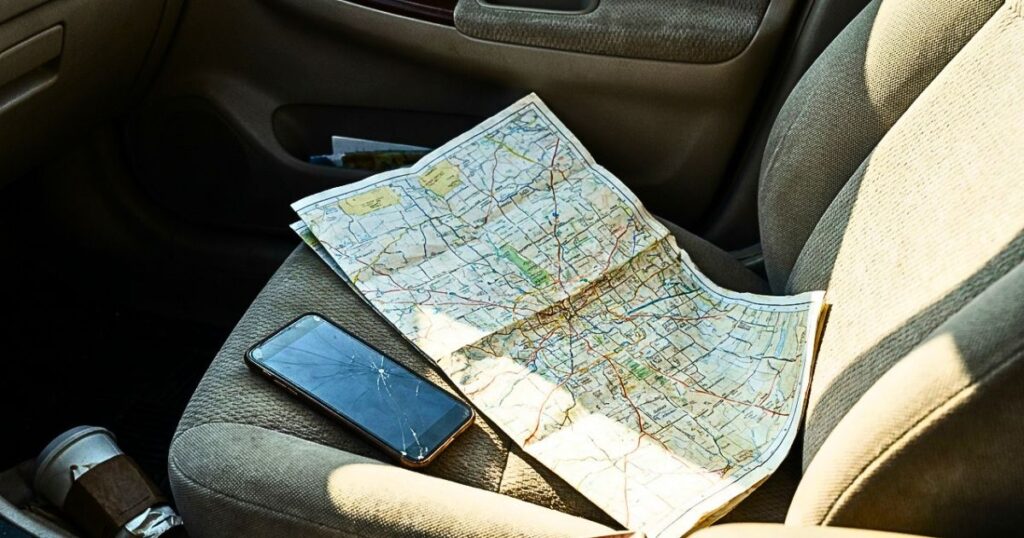
Nobody wakes up and decides to forget how to read a paper map, do long division by hand, or remember more than three phone numbers. These things fade because they stop being necessary often enough to stay sharp. GPS didn’t destroy our sense of direction — it just removed the daily practice that used to keep it reliable.
The same pattern shows up in smaller, less discussed places. Spell check quietly erodes confidence in spelling words that used to be second nature. Autocomplete shortens the mental work of finishing a thought before typing it. Recipe apps that measure and time everything for you can make cooking feel less like a skill you’re building and more like a set of instructions you’re following exactly once and forgetting immediately after.
There’s an interesting pattern in which skills fade fastest: the ones that depended on repetition rather than understanding. Knowing why a recipe works, for instance, tends to stick around even without much practice, because it’s conceptual rather than procedural. Knowing exactly how long to sear something without checking a timer is procedural, built entirely through repeated hands-on practice, and it disappears far more easily the moment a device starts doing the counting instead.
These losses are hard to notice day to day, which is part of the same quiet pattern behind “Why We Check Our Phones More Than We Talk to People Now” — small shifts that never announce themselves until you look back and realize how different the habit has become.
None of these losses are dramatic on their own. The concern isn’t that any single convenience is dangerous. It’s that they accumulate quietly, and most people don’t notice the erosion until they’re suddenly without the tool and surprised by how much they relied on it.
Why This Isn’t Really About Laziness
It’s tempting to frame this as a story about people getting lazy, but that framing misses what’s actually happening. Cognitive effort is expensive, and human brains are wired to conserve it wherever possible. Offloading a task to a tool isn’t a moral failing — it’s exactly what brains have always done, whether the tool was a written calendar, a calculator, or a smartphone.
There’s a useful distinction between offloading a task and losing the ability to perform it. Most people who rely on a calculator can still do basic arithmetic by hand if forced to, just more slowly and with less confidence. That’s offloading. What’s different about some modern convenience tech is how rarely people are ever forced back into the manual version long enough to keep it fresh. A calculator gets put away and a pencil comes back out occasionally. A phone’s navigation app almost never does, because there’s rarely a reason to open a paper map “just to keep the skill sharp.”
The difference now is scale and speed. Previous generations offloaded specific, narrow tasks to specific tools. A calculator handled arithmetic; nothing else. Today’s convenience tech tends to handle broad categories of thinking at once — navigation, memory, decision-making, even the first draft of an opinion. When one device can quietly take over that much cognitive territory, the aggregate effect on daily capability is larger than any single previous tool ever managed.
This is worth separating from nostalgia. There’s no evidence that memorizing twenty phone numbers made anyone a better thinker in some abstract sense. What matters is which skills get used often enough to stay reliable, and which quietly become theoretical knowledge you technically possess but can’t produce reliably on demand. The skill isn’t erased from memory so much as it’s demoted to something you could probably do again with enough time, patience, and a few frustrating false starts.
The Situations Where This Actually Matters
Most of the time, offloading a skill to convenience tech has no real cost. Nobody needs to do mental math when their phone can do it faster and more accurately. The stakes only appear in situations where the tool fails or isn’t available, and the underlying human skill has to step back in.
A dead phone battery during a road trip becomes a real problem for someone who never learned to read a physical map, a scenario researchers at institutions like MIT have studied when looking at how habitual GPS use affects spatial memory over time. A power outage during a storm reveals how many people no longer know a single phone number by memory, including their own family’s. A spelling mistake that spell check would normally catch slips through in a moment that actually matters — a cover letter, a work email, a text that can’t be unsent.
There’s also a quieter version of this that shows up outside of emergencies entirely. Someone who has never cooked without a recipe app open on the counter can feel genuinely lost the first time they need to improvise a meal from whatever’s left in the fridge. A driver who has never navigated without turn-by-turn directions can feel disoriented in a familiar neighborhood the one time their phone’s signal drops. These aren’t emergencies in any serious sense, but they reveal the same underlying pattern — a skill that was assumed to still be there, tested for the first time in years, and found to be thinner than expected.
These moments are rare enough that most people never think about them until they happen. That’s part of what makes this trend easy to dismiss and hard to actually plan for. The failure case isn’t common, but when it arrives, it tends to arrive at an inconvenient time, precisely because that’s when people reach for the tool they normally rely on and find it unavailable.
The Small Habit of Staying Sharp on Purpose
A handful of people have started treating this differently — not by rejecting convenience tech, but by deliberately keeping a few manual skills alive on purpose, almost like light exercise for abilities they don’t want to lose entirely. Someone who navigates by GPS all week might glance at a printed map before a big trip, just to remind their brain what the process feels like without a screen narrating every turn. A parent might have kids do a page of math by hand a few times a week, not because it’s more efficient than a calculator, but because the skill itself seems worth keeping in working condition.
This isn’t about nostalgia or distrust of technology. It’s closer to how people who drive automatic cars every day sometimes still choose to learn manual transmission, not because they expect to need it often, but because they don’t want the skill to disappear entirely from their life. The convenience tool stays the default. The manual version becomes a deliberate, occasional choice rather than an automatic habit — which turns out to be enough to keep it from fading completely.
Whether this kind of deliberate practice is worth the effort probably depends on the skill in question and how much someone would actually miss it if it quietly disappeared. Nobody needs to keep their long division sharp for its own sake. But being able to find your way home without a screen, or spell a difficult word without red squiggly lines helping along the way, might be worth the occasional, deliberate practice it takes to keep from losing it entirely.
Kids Are Growing Up With a Different Baseline Entirely

For adults, this is a story about skills fading from a baseline that once existed. For children growing up now, there often isn’t a “before” to fade from. A kid who has never navigated without GPS isn’t losing a skill — they’re simply never acquiring it in the first place, which is a meaningfully different situation.
This raises a genuinely open question that doesn’t have a tidy answer yet: are today’s kids missing out on something valuable, or are they simply freeing up mental space that previous generations spent on tasks that convenience tech now handles better than any human ever could? Reasonable people land on both sides of that question, and it likely depends heavily on which specific skill is being discussed.
Basic literacy and arithmetic still get taught deliberately, precisely because adults recognize their long-term value even with calculators and spell check widely available. Navigation, memorization, and some forms of mental math haven’t received the same deliberate protection, mostly because their necessity feels genuinely reduced rather than just conveniently avoided.
Where This Trend Is Actually Headed
The honest answer is that convenience tech isn’t going to reverse course, and there’s little reason to expect it should. The more interesting question is which skills society decides are worth deliberately preserving despite not strictly needing them anymore, the way some schools still teach cursive handwriting long after it stopped being practically necessary.
That decision won’t be made all at once or by any single authority. It’ll happen the way most quiet cultural shifts happen — through individual households, schools, and communities each deciding, mostly without discussing it explicitly, which old skills still feel worth the effort and which ones they’re comfortable letting convenience quietly take over. The parking sensor isn’t going away. The only real choice left is how much we let it replace the feel of the wheel in our hands.
Frequently Asked Questions
Is convenience technology actually making people less capable, or just less practiced? Most evidence points to reduced practice rather than a genuine loss of underlying capability. Skills like navigation or mental math tend to feel rusty rather than fully lost, and often return quickly with renewed use.
Should parents worry about kids never learning skills that convenience tech replaces? It depends heavily on the specific skill. Foundational abilities like reading, writing, and basic arithmetic are still taught deliberately because their long-term value is well established, while more situational skills like memorizing phone numbers are more reasonably left to fade.
What happens when convenience tech fails and the underlying skill is gone? These moments are rare but can be genuinely inconvenient, such as being unable to navigate during a dead-phone situation or catching a spelling error too late without spell check. This is one reason some people intentionally practice a few “backup” versions of skills they rely on tech for.
Is this trend unique to modern smartphones and apps? Not entirely — calculators, written calendars, and even writing itself have always offloaded some form of memory or calculation. What’s different now is the breadth of tasks a single device can take over at once, which is why the cumulative effect feels larger than with earlier tools.
