
I asked an AI chatbot for advice on something small nearly every day for about eight months, what to cook, how to word an awkward email, whether a purchase made sense, before noticing a pattern that bothered me: I’d started feeling mildly anxious making even trivial decisions without checking in first. That realization, not any single bad piece of advice, is what actually made me pull back, and the pullback changed how confident I feel making ordinary choices more than I expected.
How the Habit Actually Built Up
It started reasonably, using the chatbot for genuinely time-consuming tasks like drafting emails or summarizing long documents. Over months it quietly expanded into a default first step for almost any decision with more than one obvious option: what to say in a slightly tense text to a friend, how to phrase feedback to a coworker, even which of two similar recipes to cook for dinner. None of these individually seemed like a problem. The habit had crept in exactly one small decision at a time, which is probably why I didn’t notice the pattern until it was fully established.


The Moment I Actually Noticed Something Was Off
The specific trigger was mundane: I was choosing between two paint colors for a bookshelf, a genuinely trivial decision with no wrong answer, and I caught myself opening the chatbot to ask which one it thought looked better before I’d even really looked at the two colors myself. That was the moment it clicked that I wasn’t using the tool to save time on tasks I found difficult. I was using it to avoid the small discomfort of making a decision on my own, even decisions that had no meaningful stakes at all.
What I Actually Did to Test the Pattern
I set a personal rule for three weeks: no chatbot consultation on any decision I could reasonably make myself within a minute or two of thinking, reserving it only for tasks that were genuinely time-consuming, like drafting long documents or checking technical facts I couldn’t easily verify otherwise. The first several days were noticeably uncomfortable in a way that surprised me, a kind of low-grade hesitation before small choices that I hadn’t consciously felt before, presumably because the chatbot had become the default first move rather than a backup.
What Changed by the End of Three Weeks
The discomfort faded faster than I expected, and what replaced it was something I hadn’t anticipated: I started noticing my own preferences again in situations where I used to defer immediately. With the paint colors, and dozens of similarly small choices after that, I found I actually had opinions, they’d just gotten quieter from disuse. By the end of the three weeks, small decisions felt fast again in a way they hadn’t for months, not because I’d gotten faster at asking the chatbot, but because I’d stopped routing them through an extra step at all.
A Real Comparison: Two Similar Emails, Weeks Apart
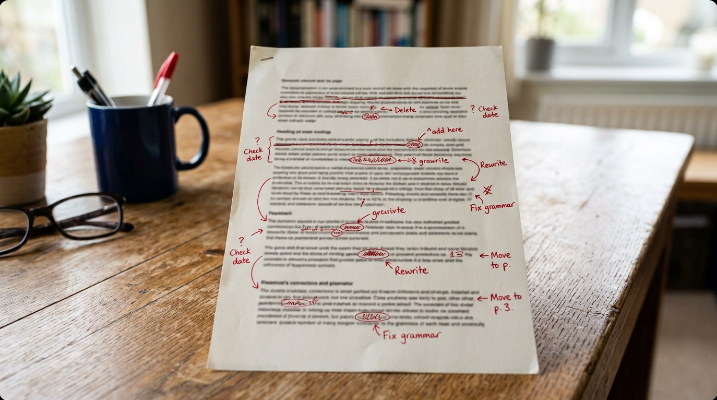
I got a clean before-and-after with two moderately awkward emails I needed to send a few weeks apart, one before this experiment and one during it. The first, chatbot-drafted from scratch, took about four minutes end to end but came back feeling slightly generic, and I still spent another few minutes editing it to sound like me. The second, written by me first and only run past the chatbot for a tone check afterward, took roughly the same total time but felt entirely mine, and a colleague later commented that it read more directly like something I’d actually say. The time cost was similar. The ownership of the outcome wasn’t.
What the Research on Automation and Skill Suggests
This pattern fits a broader finding in research on cognitive offloading: relying on an external tool for a task tends to reduce a person’s own engagement with that task over time, even when the tool is genuinely accurate and helpful, because the brain treats the tool’s availability as a reason to disengage from the underlying effort. Studies on this effect, going back to research on calculator use and more recently extended to AI assistance, generally find the effect is strongest for tasks practiced frequently, exactly the small, everyday decisions I’d been outsourcing, rather than for rare, high-effort tasks where offloading makes clearer sense.
Where Asking the Chatbot Still Makes Sense
I don’t want to overcorrect into treating all chatbot consultation as a problem, because plenty of my original use cases were genuinely good ones. Drafting a first pass on a long, unfamiliar document, checking a technical detail I have no independent way to verify, getting a second opinion on something I’ve already thought through myself, these all still save real time or add real value. The distinction that mattered wasn’t the tool itself, it was whether I was using it to extend my own thinking or to skip the thinking entirely.
The Rule I’ve Settled Into
What I actually do now is simple: form my own initial take first, on anything, no matter how small, before consulting the chatbot at all, and only use it afterward to refine, check, or extend that starting point. This small sequencing change, having an opinion before I ask for one, turned out to matter more than whether I used the tool at all. It kept the useful parts of the habit while removing the part that had quietly started replacing a small, ordinary form of confidence I hadn’t realized I was losing.
The Text I Almost Sent Without Reading It Twice
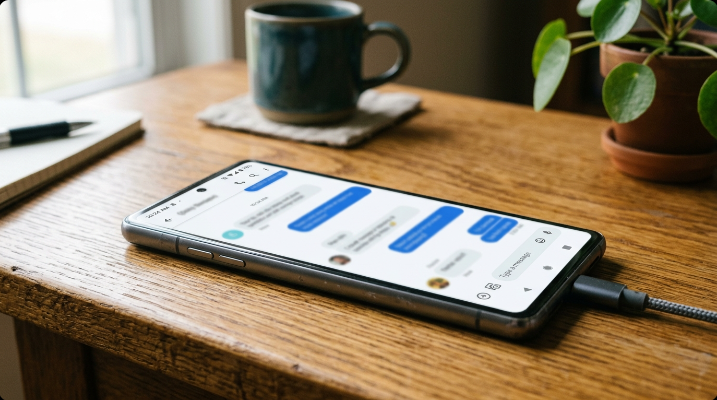
The clearest warning sign came from a text message, not an email. A friend had sent something a little pointed about a plan I’d canceled twice, and I dropped her message into the chatbot and asked it to draft a reply that would smooth things over. It came back polished, warm, appropriately apologetic, and I nearly copy-pasted it directly into the thread without changing a word. What stopped me was rereading it and realizing it didn’t actually sound like something I would say. It used a phrase, “I really value our friendship,” that I have genuinely never said out loud or in writing to anyone in my life. It read like a greeting card.
I rewrote the message myself instead, shorter and blunter and with an actual joke in it that referenced something specific between the two of us, and she responded warmly within minutes. The chatbot’s version wasn’t wrong exactly. It was generic in a way that would have worked fine for a stranger and felt slightly hollow for someone who’s known me for fifteen years. That gap, between technically appropriate and actually me, is easy to miss when you’re tired or in a hurry, which is exactly when I’d been leaning on the tool most.
That near-miss was what actually convinced me to run the three-week experiment, more than any abstract concern about overreliance. I didn’t want to become someone whose closest relationships were quietly being smoothed over by a tone the tool had decided was appropriately warm, rather than a tone that was actually mine.
What Writing Badly First Actually Taught My Brain
During the three weeks, I made myself write a rough draft of anything difficult, an email, a message, a short proposal, before I was allowed to open the chatbot at all, even just to check my draft. The first attempts were genuinely bad. Clumsy phrasing, buried points, sentences that ran on too long. But something happened by around the tenth attempt that surprised me: the second and third drafts I wrote on my own started getting noticeably better, without any AI feedback in between at all.
Writing badly first, it turns out, is not wasted effort the way I’d assumed. It’s the actual mechanism by which you figure out what you’re trying to say, the same way a sculptor apparently needs the rough block before the precise cuts. When I’d been going straight to the chatbot, I was skipping that entire discovery process and asking the tool to guess at a point I hadn’t fully worked out myself yet, which is part of why its drafts, however polished, sometimes missed what I actually meant. Making myself sit with a bad first draft turned out to be doing real cognitive work that a fast, competent AI draft had been quietly letting me skip.
The Manager Who Noticed Before I Told Anyone
About halfway through the three weeks, my manager mentioned, almost in passing, that my emails had started reading differently, more direct, a little rougher around the edges, less uniformly smooth than they’d been for the past several months. I hadn’t told anyone at work about the experiment. She wasn’t complaining. If anything she said it felt more like actually hearing from me, which stung a little, because it meant the chatbot-polished version of my writing had been noticeably, if subtly, generic to someone who read my messages regularly, even though no single email had ever seemed obviously off on its own.
That comment did more to convince me the experiment was worth continuing than any of my own private reflections had. It’s one thing to suspect your own writing has flattened out under heavy editing assistance. It’s another to have someone independently notice the flattening without knowing you’d changed anything, and then notice its absence just as quickly once you stopped.
I still use the chatbot regularly, just later in the process now, after I’ve already worked out what I actually think, rather than as the first move. It’s a genuinely useful editor. It’s a worse substitute for the thinking that should happen before editing even starts, and confusing those two roles was the actual mistake I’d fallen into.
What This Experiment Actually Taught Me
The real issue wasn’t that the chatbot gave bad advice, it rarely did. It was that constant, low-stakes consultation had quietly retrained me to distrust my own first instinct on things that never required outside input in the first place. Pulling back didn’t make me use AI assistance less overall, for the genuinely time-consuming tasks I still use it just as much. It just moved the boundary back to where it probably should have stayed, between things I actually need help with and things I was just afraid to decide on my own.
