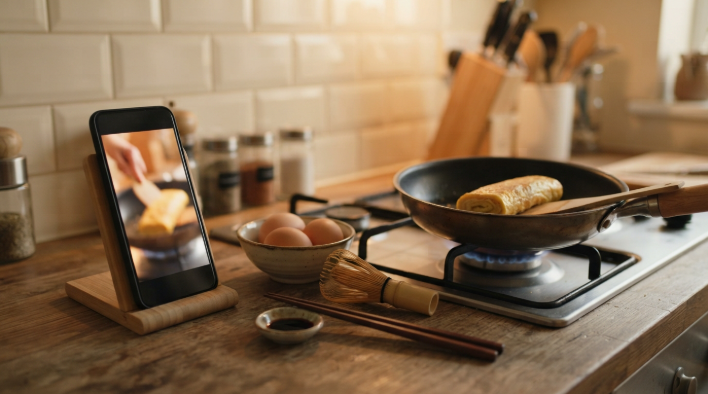
The video was forty-five seconds long. A pair of hands cracked eggs into a pan, swirled them with chopsticks, folded them into a glossy, perfect roll, and slid it onto a plate while upbeat music played. It looked effortless. I tried it that evening, and what came out of my pan looked like scrambled eggs that had lost an argument. That was the beginning of a year-long habit of learning to cook, mostly from short videos on my phone.
I am not a natural cook. For most of my adult life, I relied on a small rotation of simple meals, takeaways, and whatever was quick. Short cooking videos seemed like an easy way to expand that repertoire without buying cookbooks or taking classes. A year later, I cook far more often and far more confidently. But the path was bumpier than the videos suggested, and I learned a lot about what these clips are good for and where they fall short.
Why short videos are so appealing
The appeal of short cooking videos is obvious the moment you watch one. They are fast, visual, and satisfying. In less than a minute, you see a dish go from raw ingredients to a beautiful finished plate. There is no long introduction, no story about someone’s childhood, no scrolling past advertisements to find the recipe. Just food, happening quickly.
For a beginner, seeing technique is often more useful than reading about it. A recipe might say “fold gently,” but watching someone actually fold a batter shows you what gently means. Seeing the colour of properly browned onions, the texture of a sauce that has thickened enough, or the way dough should look after kneading is valuable in a way that words struggle to match.
And the variety is endless. Every cuisine, every skill level, every dietary need is covered. On any given evening, I could scroll for a few minutes and find dozens of ideas using ingredients I already had. That low barrier made me far more willing to try new things.
The first problem: speed hides the hard parts
My egg disaster taught me the first lesson quickly. Short videos compress time. A process that takes ten minutes of careful attention is shown in ten seconds of edited clips. You see the beginning and the end, but the tricky middle, where things can go wrong, is often cut out entirely.
The rolled omelette in that video required controlling the heat carefully, using the right amount of oil, and rolling at exactly the right moment, when the egg was set enough to hold together but still soft enough to stick. None of that was visible. The video showed the result of practice, not the practice itself.
I started noticing this in many videos. Dishes that looked like they took five minutes actually took forty. Steps were skipped because they were boring to watch, like waiting for water to boil or dough to rest. Quantities flashed on screen for a fraction of a second, or were not shown at all. These videos are designed to be entertaining first and instructional second, and that order matters.


The second problem: missing measurements and context
Many short cooking videos do not give precise measurements. Ingredients are poured in generous splashes and handfuls. Sometimes the full recipe is in the caption or comments, sometimes on a linked website, and sometimes nowhere at all. For experienced cooks, this is fine; they can estimate. For a beginner like me, it led to a lot of overly salty sauces and underseasoned soups.
Context was often missing too. A video might use an ingredient I had never heard of without explaining what it was or where to find it. It might use a pan size, oven type, or piece of equipment very different from mine, which changed cooking times significantly. Nothing in the video warned me about any of this.
Over time, I learned to treat short videos as inspiration rather than instructions. When I found a dish I wanted to make, I would look for a full written recipe for it, ideally from a reliable source with clear measurements and steps. The video showed me what the dish should look like and how some techniques worked. The written recipe told me what to actually do.
What short videos taught me well
Despite these problems, short videos taught me more than any cookbook ever had, simply because they got me into the kitchen. And some things they taught exceptionally well.
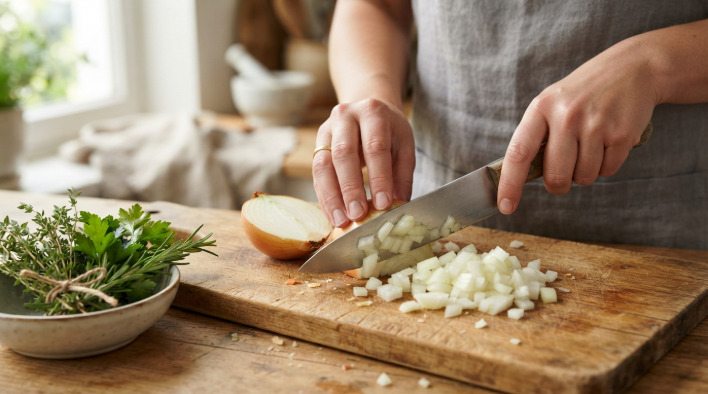
Knife skills were the biggest one. Short, focused videos showing how to dice an onion, how to hold a knife safely, and how to slice herbs without bruising them transformed how I cook. Things that used to take me ages became quick and easy. These videos worked because they were about a single technique, shown clearly and repeated.
Small tricks and shortcuts were another strength. How to peel garlic quickly, how to tell if pasta is done, how to rescue a sauce that has split, how to store fresh herbs so they last longer. These little pieces of knowledge are perfect for short videos, and they added up to a real difference in my cooking.
Videos also expanded my sense of what was possible. I tried dishes from cuisines I had never cooked before, discovered ingredients I now use regularly, and gained confidence to experiment. Watching someone make something unfamiliar look approachable made me more willing to try.
Knowing which creators to trust
After a few months, I started noticing that not all cooking creators are equal. Some focus mostly on looking impressive, with fast cuts, dramatic music, and dishes that seem designed for the camera rather than for eating. Others are clearly experienced cooks who explain why they do things, mention common mistakes, and show the less glamorous steps.
The creators I came to trust most shared a few habits. They listed full ingredients with measurements, either on screen or in the caption. They talked about what could go wrong and how to fix it. They often made the same dish more than once, showing variations. And, importantly, their food looked like something a real person would eat on a normal evening.
I followed a small group of these creators and unfollowed many of the more flashy accounts. My feed became less exciting but far more useful. It is a small choice, but it changed my feed from entertainment into something much closer to a cooking school.
The trap of the endless scroll
There was a less helpful side to the habit. Short cooking videos are part of endless feeds, and it is very easy to watch fifty recipes without cooking a single one. There were evenings when I spent half an hour scrolling for dinner ideas, got hungry, and ordered takeaway instead.
I also noticed that many of the most popular cooking videos are designed for visual impact rather than everyday cooking. Enormous cheesy dishes, elaborate desserts, and dramatic presentations get the most views. They are fun to watch, but they are not what most people want to cook on a weeknight. The algorithm kept showing me spectacle, while what I needed was simple, reliable food.
To fix this, I started saving videos into folders by category: quick weeknight meals, weekend projects, techniques, and baking. When I needed an idea, I looked through my saved folders rather than scrolling the main feed. That small change turned endless browsing into actual cooking.
Learning from failure, the old-fashioned way
The most important learning did not come from videos at all. It came from cooking the same dishes repeatedly and paying attention to what went wrong. My rolled omelette improved slowly over dozens of attempts. Each time, I adjusted the heat, the timing, or the amount of oil. The video gave me the goal. Practice got me there.
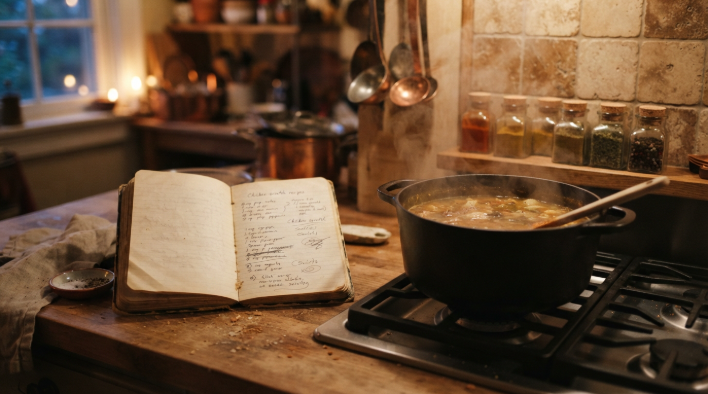
I also started keeping a small notebook in the kitchen, writing down what I changed in recipes and what worked. Less salt in this sauce. Longer in the oven for this bread. That notebook became more useful than any single video, because it was based on my kitchen, my equipment, and my taste.
And I learned to ask people. A friend who cooks well showed me in person how to make a simple curry, and in one evening I learned more than in a dozen videos. There is no substitute for someone standing next to you, pointing at the pan and saying “look, now it is ready.”
Cooking became less about recipes and more about understanding
Somewhere around the eighth month, something shifted. I stopped needing a video or recipe for every meal. I started understanding patterns: most soups begin by softening onions and garlic, most sauces need a balance of salt, acid, and fat, most vegetables roast well at a high temperature with a little oil. Once I understood those patterns, I could improvise with whatever was in the fridge.
Short videos helped me get there by showing many variations of similar techniques. After watching dozens of people make stir-fries, I understood the basic structure, even if every video was different. In that sense, the sheer volume of short videos was an advantage. They showed me the common ground beneath all those different dishes.
What I recommend to other beginners
If you want to learn to cook using short videos, I think they can be a genuinely good starting point, as long as you use them wisely. Watch them for inspiration and technique, not as complete recipes. When a dish interests you, find a full written version with proper measurements. Focus on videos that teach single skills, like knife work or basic sauces, because those skills apply to everything.
Save useful videos into organised folders so you are not relying on the feed. Start with simple dishes and repeat them until they feel easy. Keep notes on what works. And be patient with yourself. The people in those videos have made that dish many times before they filmed it. Your first attempt will probably not look like theirs, and that is completely normal.
A year later
I now cook at home most evenings. My repertoire has grown from a handful of basic meals to dozens of dishes I can make confidently. I still watch short cooking videos, but differently. I watch with a critical eye, noticing what has been cut out, checking for measurements, and saving the ones that are truly useful.
And the rolled omelette? I can make it now. Not quite as glossy as in that original video, and it takes me a lot longer than forty-five seconds. But it holds together, it tastes good, and I made it with my own hands after a lot of practice. That feels better than any video could.
