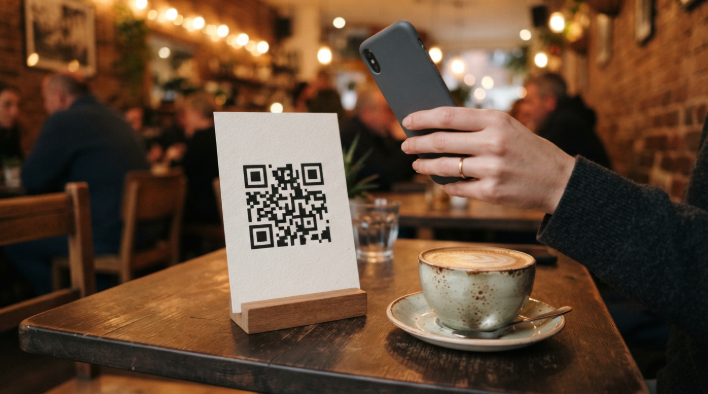
I was sitting in a small cafe last month, waiting for a menu, when I realized there was not going to be one. Instead, there was a little laminated card on the table with a black-and-white square printed on it and the words “Scan to order.” I scanned it, waited for a slow website to load, scrolled through blurry photos of sandwiches, entered my table number, and paid on my phone. The whole process worked. But I also noticed that I had not spoken to a single person since walking in.
QR codes have become one of the most ordinary features of daily life, so ordinary that most of us barely think about them anymore. They are on restaurant tables, parking meters, posters, product packaging, tickets, and receipts. A few years ago, they were widely considered a failed technology. Now they are everywhere. I wanted to understand how that happened, and what their spread says about the direction our digital world is moving.
The technology that almost disappeared
QR codes are not new. They were invented in the 1990s, originally to track parts in car manufacturing. The name stands for “quick response,” because they could be read much faster than traditional barcodes and could hold more information. For industrial use, they worked very well.
When smartphones arrived, marketers tried to bring QR codes to the public. For a while, they appeared on advertisements, magazines, and posters. But using them was awkward. Most phones needed a separate app to scan them, and the apps were often clunky. Scanning a code frequently led to a disappointing website that was not designed for mobile screens. Many people simply ignored them, and by the mid-2010s, QR codes had become something of a joke in marketing circles.
What changed was a small but important technical shift: phone cameras started reading QR codes automatically. Once you could simply point your ordinary camera at a code and tap a link, the friction mostly disappeared. The technology was ready. It just needed a reason for everyone to use it.
The moment everything changed
That reason arrived with the pandemic. Suddenly, businesses wanted to reduce physical contact. Paper menus that passed through many hands seemed risky. Contact tracing required people to register their visits. Payment without touching cash or card terminals became attractive. QR codes offered a cheap, simple solution to all of these problems at once.
Restaurants, cafes, and shops that had never used QR codes adopted them almost overnight. People who had never scanned one learned how in a matter of weeks. For many, it became a daily habit. And once that habit formed, it did not disappear when restrictions eased. Businesses had discovered advantages that went well beyond hygiene.
Why businesses kept them
From a business perspective, QR codes solved several problems. Digital menus could be updated instantly, without reprinting. Prices could change, dishes could be removed when ingredients ran out, and new items could be added in seconds. For small businesses operating on thin margins, those savings were meaningful.
Ordering and paying through QR codes also reduced the need for staff. Instead of a server taking orders and processing payments, customers could do it themselves. For businesses struggling to hire enough people, that was a significant advantage. Some reported that customers ordered more when using digital menus, perhaps because they could browse at their own pace or because suggestions for extras appeared automatically.
QR codes also provide data. When customers order through a digital system, businesses can see what people order, when, and how often. That information can help with planning and marketing. Of course, this also raises questions about privacy, which I will come back to.
The experience from the customer’s side
For customers, the experience is mixed. At their best, QR systems are convenient. You can order when you are ready, without waiting to catch someone’s attention. You can see photos of dishes, check allergy information, and split the bill easily. Paying without waiting for a card machine can save time at the end of a meal.
At their worst, they are frustrating. Websites load slowly, especially on weak mobile connections. Some systems require you to create an account or hand over an email address just to see a menu. Menus designed for large screens can be hard to read on a phone. And if your phone battery is dead, or you do not have a smartphone at all, you may be stuck.
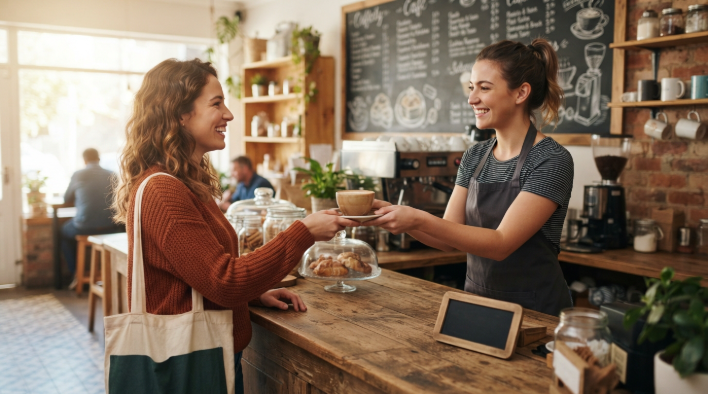
There is also something lost socially. In that cafe, I missed the small human exchanges that make eating out pleasant: asking a server what they recommend, a quick joke, a friendly thank-you. Some restaurants use QR codes alongside regular service, which works well. Others seem to use them to replace human contact almost entirely, and the experience feels colder for it.
QR codes beyond the restaurant table
Once I started paying attention, I found QR codes in places I had never really noticed. On the back of food packaging, linking to recipes and ingredient sourcing. On museum labels, offering audio guides. On posters at bus stops, leading to timetables. On medicine boxes, linking to digital leaflets. On shop windows, allowing customers to browse products when the store is closed.
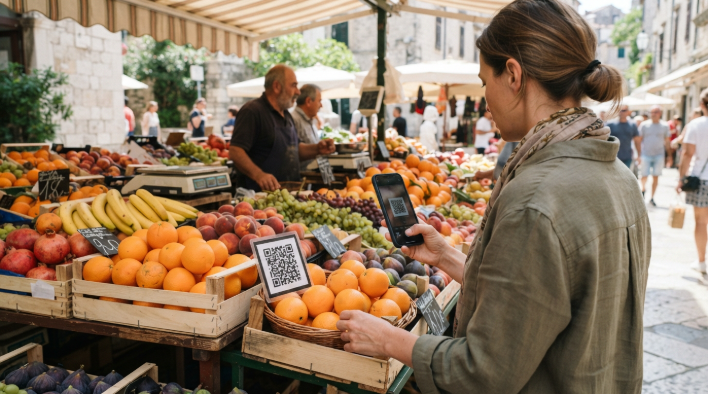
In some places, they have become part of how people pay for almost everything. In several countries, scanning a shop’s code with a phone has become a normal way to pay at market stalls, small shops, and even for tips. Street vendors display a printed code next to their goods, and customers pay in seconds without cash or card terminals. For small traders, this can be a much cheaper way to accept digital payments than buying expensive equipment.
Tickets are another area where QR codes have quietly taken over. Concert tickets, flight boarding passes, train tickets, and event entries increasingly arrive as codes on a phone screen. The paper ticket, once something people kept as a souvenir, is becoming rare. It is a small change, but it is one of many that show how deeply this simple square has woven itself into everyday life.
Who gets left behind
The spread of QR codes assumes that everyone has a smartphone, a working data connection, and the confidence to use it. That is true for many people, but not for all. Older people, people with limited incomes, people with certain disabilities, and visitors from other countries without local data can find QR-only systems difficult or impossible to use.
I watched an older man at a car park struggle with a QR-only payment machine, trying to download an app with a weak signal while a queue built up behind him. Eventually, someone helped him, but the experience clearly left him frustrated and embarrassed. Situations like this are becoming more common as more services go digital by default.
Many businesses and public services now offer alternatives, like printed menus on request or payment machines that accept cards. But not all do, and people who rely on those alternatives often have to ask for them, which can feel awkward. A digital world that works only for the digitally confident is not really working for everyone.
The security and privacy questions
QR codes also bring new risks. Because a QR code is just an image, it is easy to create one and stick it over a legitimate code. Scammers have used fake QR codes on parking meters, posters, and even restaurant tables to direct people to fraudulent payment sites. Since you cannot tell where a QR code leads just by looking at it, these scams can be surprisingly effective.
Staying safe involves some simple habits. Check the website address that appears when you scan a code before tapping it. Be cautious of codes that look like stickers placed over other codes. Avoid entering payment details on sites that look unfamiliar or poorly made. When in doubt, use an official app or pay another way.
Privacy is the other concern. Some QR ordering systems collect a lot of information: your name, email, phone number, order history, and sometimes your location. That data may be shared with third parties or used for marketing. It is worth checking what you are agreeing to, and choosing not to create accounts when you just want to order a sandwich.
What good QR design looks like
Some businesses use QR codes thoughtfully, and the difference is noticeable. The best systems load quickly, work without creating an account, display menus clearly on a small screen, and offer a printed alternative for anyone who wants one. They also put a short web address next to the code, so people can see where it leads and type it in if scanning does not work.
Good design also means using QR codes where they genuinely help rather than everywhere possible. A code linking to allergy information or a wine list is a helpful extra. A code that replaces all human service can feel like a cost-cutting measure disguised as progress. The technology is the same in both cases. What differs is whether it was designed around the customer or around the budget.
What QR codes say about the digital world
The story of QR codes is a good example of how technology often spreads. It is not always about the best invention winning. Sometimes an old, overlooked idea suddenly becomes useful when circumstances change, and then it becomes so embedded in daily life that we forget it was ever unusual.
It also shows how the physical and digital worlds are merging. A QR code is a bridge, a small printed square that connects a physical place to a digital service. More and more of our interactions in the real world now pass through our phones: ordering, paying, checking in, getting information. QR codes are one of the simplest and most visible examples of that shift.
And it shows how convenience and connection can pull in different directions. QR codes make many things faster and cheaper. They also reduce human contact and assume everyone is equally connected. Both of those things are true at once, and how we balance them will shape what everyday life feels like in the coming years.
How I use them now
I scan QR codes regularly, and most of the time I am happy to. They are useful for quick information, digital tickets, and convenient payments. But I have also become more thoughtful about them. I check where they lead before tapping. I avoid creating unnecessary accounts. And when I am in a restaurant where I would rather talk to someone, I simply ask whether I can order at the counter or with a server. The answer is almost always yes.
That little cafe with the scan-to-order card is still one of my favourites. The food is good, and the system works. But now, when I go, I usually order at the counter instead. I get a smile, a short chat about the weather, and a recommendation for the soup of the day. The QR code is still on the table, and it still works perfectly. I just like having a choice.
