
I created my first email address when I was a teenager. It included a nickname that seemed very clever at the time, a random number, and an enthusiasm for a band I have not listened to in years. I have had a more sensible email address for most of my adult life, but I have never managed to fully let go of the old one. It is still there, still receiving messages, still connected to accounts I barely remember creating.
A few weeks ago, I decided it was finally time to shut it down. I thought it would take an afternoon. Instead, it turned into a small archaeological project through my own digital history, and it made me realize how much of our online identity is tied to something as simple, and as fragile, as an email address.
The email address as a digital key
When most of us created our first email accounts, we thought of them as a way to send messages. Nobody told us that email addresses would become the foundation of our entire digital lives. Today, an email address is not just for communication. It is a username, a recovery method, a proof of identity, and a key that unlocks almost every online account we have.
Social media accounts, online shopping, streaming services, banking apps, government services, work tools, and countless forgotten websites are all tied to email addresses. If you lose access to an email account, you can lose access to everything connected to it, because the standard way to reset a password is to send a link to your email.
That makes old email addresses surprisingly powerful. Even if you never use one to send messages anymore, it may still hold the keys to accounts you care about. And if you neglect it, it can become a security risk.
Opening the time capsule
The first thing I did was log in and look through the inbox. It was a strange experience. Mixed in with thousands of promotional emails and spam were real messages from years ago: conversations with old friends, confirmation emails for my first online purchases, a job application I had completely forgotten about, and a few emails from relatives who are no longer alive.
I had not expected to feel emotional, but I did. Email, it turns out, is one of the most complete records of our lives that many of us have. Unlike social media, which tends to show curated highlights, email holds the ordinary details: receipts, arrangements, questions, and replies. Reading through it was like looking at an old diary I did not know I had kept.
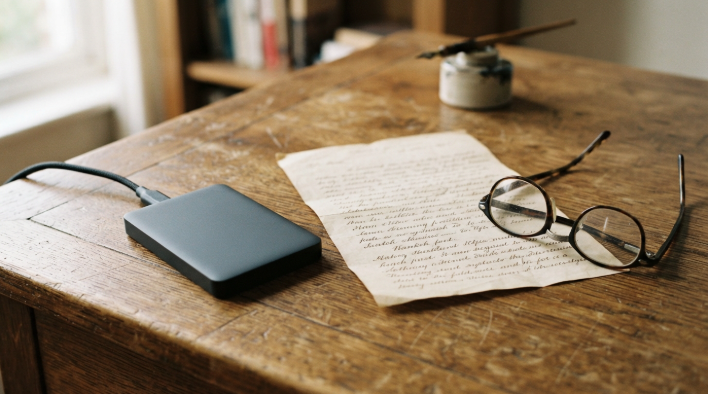
Before doing anything else, I exported the whole mailbox. Most email services offer a way to download all your messages, and I stored a copy on an external drive. Whatever happened to the account, I wanted to keep those memories.

Finding every account that depended on it
The next task was harder: figuring out which accounts were connected to the old address. I started by searching the inbox for words like “welcome,” “confirm your account,” “verify,” and “password reset.” Each search revealed accounts I had forgotten existed.
Some were obvious and important: an old social media account, an online shopping account with saved addresses, and a gaming account with purchases I still use. Others were completely forgotten: forums I had joined once, newsletters I had subscribed to years ago, a photo-sharing site that had long since changed owners, and dozens of shopping sites where I had made a single purchase.
My password manager helped too. Many saved logins still used the old email address as the username. Going through them one by one, I made a list of every account I wanted to keep, and every account I wanted to delete.
Moving, deleting, and letting go
For the accounts I wanted to keep, I changed the email address to my current one. Most services made this fairly easy, usually through account settings with a verification email sent to both addresses. A few required contacting customer support, and one or two simply did not allow the email address to be changed at all, which meant creating a new account and losing some history.
For accounts I no longer needed, I deleted them. This turned out to be one of the most satisfying parts of the process. Each deleted account meant less personal information scattered across the internet, and one less potential target for hackers. Some sites made deletion easy. Others hid it behind several menus or required emailing support. A handful of old sites no longer existed at all, which meant my data was either gone or sitting in some forgotten database I could do nothing about.
The process took several weeks, done a little at a time. It was tedious, but it was also clarifying. I now have a much clearer picture of where my digital identity lives, and far fewer forgotten accounts scattered around the web.
The newsletters that followed me for fifteen years
One of the more amusing discoveries was just how many newsletters and marketing lists had been faithfully sending messages to my old address for years. A shop I bought one pair of shoes from in my twenties was still emailing me weekly. A travel site I had used once for a single trip sent daily deals. A forum I had not visited in over a decade still sent monthly digests.
I spent an entire evening unsubscribing. Most emails had an unsubscribe link at the bottom, and most of them worked. A few led to confusing pages or did not seem to work at all, and for those I simply marked the messages as spam. By the end, the incoming flood had slowed to a trickle.
It was a reminder of how easily we give our email addresses away, and how long companies hold on to them. Every single one of those subscriptions had started with a small moment of convenience: a discount code, a free download, a quick sign-up. Each one quietly stayed with me for years.
Why old email addresses are a security risk
Part of my motivation for this project was security. Old, neglected email accounts are attractive targets for hackers. They often have weak passwords created years ago, no two-step verification, and owners who rarely check them. If someone gains access to such an account, they can use it to reset passwords for other accounts linked to it.
There have been many large data breaches over the years, and old email addresses often appear in them. When I checked my old address on a well-known breach notification service, it showed up in several leaks from sites I had forgotten about. Some of those leaks included old passwords. Fortunately, I had long since stopped using those passwords, but it was a sobering reminder of how much information about us is already out there.
Before closing the account, I made sure it had a strong, unique password and two-step verification enabled, in case the closure process took time. Leaving an old account open but unprotected is probably the worst option of all.
The difficult decision to close it
Once everything important had been moved, I faced the final decision: whether to delete the email account completely. It felt strangely difficult. This address had been part of my life for more than half of it. Some old friends might still have it in their contacts. Somewhere, a forgotten account might still depend on it.
I also learned something important while researching: with some email providers, deleted addresses can eventually be made available again to new users. If that happened, someone else could potentially receive messages intended for me, or even use the address to try resetting passwords on accounts I had missed. That risk made me hesitate.
In the end, I decided on a middle path. Rather than deleting the account immediately, I set up an automatic forward to my current email and an auto-reply telling people about my new address. I will check the forwarded messages for a year. Anything that still arrives will tell me about accounts or contacts I have missed. After that, I will decide whether to close it for good or keep it as a quiet, locked-down placeholder.
What this taught me about digital identity
This project made me realize how little thought most of us give to the foundations of our digital lives. We create accounts casually, with whatever email address is convenient at the time, and rarely think about the long-term consequences. Years later, we are left with a web of dependencies that is hard to untangle.
It also showed me how much of our personal history lives in systems we do not fully control. Email providers can change their policies, services can shut down, and accounts can be lost. Keeping copies of what matters, and knowing which accounts depend on which email address, is a small but important part of looking after our own digital lives.
Advice for anyone with an old email address
If you have an old email address you no longer use, I would suggest not simply ignoring it. At the very least, log in, change the password to something strong and unique, and turn on two-step verification. Download a copy of anything you might want to keep.
Then, if you have time, search for accounts connected to it and decide which ones to move and which to delete. Take it slowly. It does not need to be done in one day. Set up forwarding so nothing important is missed, and think carefully before deleting the account entirely.
And for the future, consider using one stable email address for important accounts, ideally one you expect to keep for many years. Some people even use a separate address just for shopping and newsletters, keeping their main address cleaner and more secure.
Saying goodbye to a younger self
On the last day I spent working on the old account, I read through some of those early emails one more time. Messages from friends about weekend plans. Long, earnest emails I had written to people I now barely remember. A message from my grandmother, typed carefully in capital letters, asking how my exams went.
That old email address, with its silly nickname and random number, belonged to a younger version of me. Letting it go feels a little like closing a chapter. But I have kept the memories, secured the accounts, and moved my digital life to a more stable home. And somewhere on an external drive, those capital letters from my grandmother are safely saved, exactly as she typed them.
