At the end of a month not long ago, I looked at my bank statement and could not account for a surprising amount of money. There was nothing dramatic on it, no big purchase I had forgotten. Just dozens of small payments: coffees, snacks, delivery fees, app subscriptions, a few impulse buys online. Each one had been a quick tap of my phone or card. Together, they added up to more than I spent on groceries.
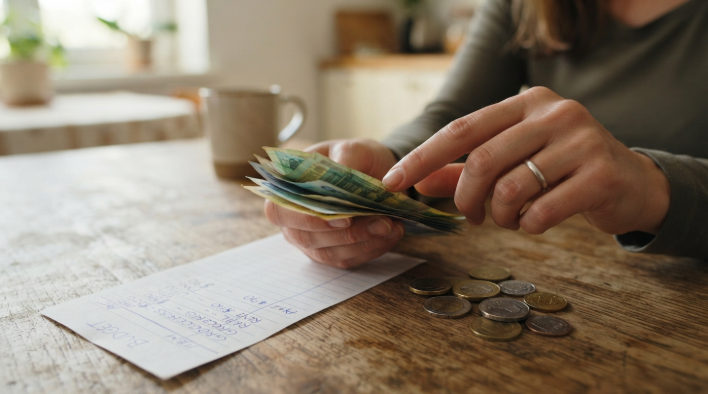
So I tried an old-fashioned experiment. For two weeks, I paid for everything I reasonably could with physical cash. I withdrew a fixed amount at the beginning of each week, put it in my wallet, and left my cards and phone payments alone except for bills and the rare purchase where cash was not accepted. I expected it to be inconvenient. I did not expect it to change how I felt about money so quickly.
The pain of paying is real
Economists and psychologists have a name for something I felt on the very first day: the pain of paying. The idea is that handing over money creates a small feeling of loss, and that feeling acts as a natural brake on spending. The more visible and physical the payment, the stronger the feeling.
With cash, that feeling is impossible to miss. On my first morning, I bought a coffee and handed over a note. I watched it disappear into the till, and I received a small pile of coins back. It was a completely ordinary transaction, but it felt different from tapping my phone. I actually noticed that the coffee cost money. With contactless payments, I had stopped noticing.
Digital payments are designed to be frictionless, and that is mostly a good thing. They are fast, convenient, and secure. But friction is not always bad. A little friction gives you a moment to decide whether you really want something. Contactless payments removed that moment almost entirely.
Watching the money shrink
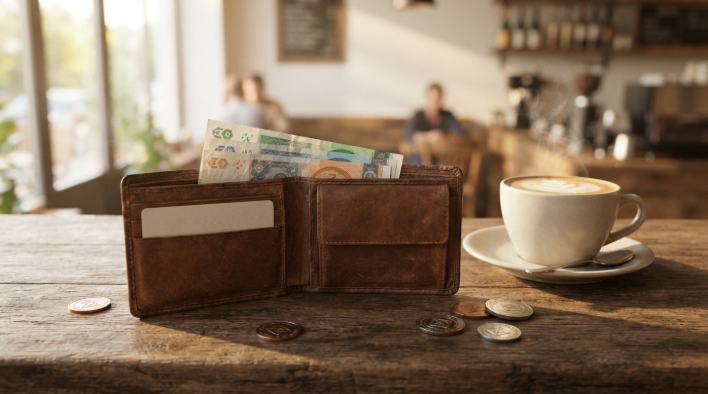
The most powerful part of the experiment was seeing my money physically decrease. At the beginning of the week, my wallet felt comfortably full. By Wednesday, it was noticeably thinner. By Friday, I was counting what was left and thinking carefully about the weekend.
That visual feedback did something no banking app had ever done for me. I could see, without opening anything or checking any balance, exactly how much I had left to spend. And because the amount was fixed, every purchase came with a very clear trade-off. If I bought lunch out today, I would have less for the weekend. It sounds obvious, but when money is abstract numbers on a screen, those trade-offs are much easier to ignore.
I found myself making small, sensible decisions without much effort. I made coffee at home more often. I skipped a couple of snacks I did not really want. I thought twice about a takeaway on a tired evening and cooked something simple instead. None of these felt like sacrifices. They felt like choices, which is different.
The inconveniences were real too
It would be dishonest to pretend that paying with cash was smooth. The world has moved a long way toward digital payments, and I ran into that constantly. A few cafes near my office no longer accept cash at all. One car park only took card or app payments. Some market stalls were happy with cash, but a food truck I like only had a card reader.
Online shopping was simply not possible with cash, which, to be fair, was part of the point. The experiment effectively paused my impulse online purchases, and I did not miss them as much as I expected. Several things I had been about to buy no longer seemed necessary by the time the two weeks were over.
Carrying cash also required a bit of planning. I had to find cash machines, sometimes pay a fee to use one, and keep track of coins, which pile up quickly. I lost a few coins in my jacket pockets and found myself digging through my bag for exact change. None of this was serious, but it was a reminder of why so many people moved away from cash in the first place.
What I noticed about the people around me
Paying with cash made me notice how rare it has become. In many shops, I was clearly the only customer that day paying with notes. A cashier at a small bakery thanked me and mentioned that cash was helpful for them because card fees added up. A younger shop assistant took a moment to count change, and joked that she did not get much practice anymore.
It also made me think about the people for whom cash is not a choice but a necessity. Some older people are less comfortable with digital payments. Some people do not have bank accounts or smartphones. Some people deliberately use cash because it is the only way they can reliably control a tight budget. When places stop accepting cash, those people are the ones who are left out.
This is an ongoing debate in many countries, with some governments considering rules to protect access to cash. I do not have strong opinions on the policy side, but living with cash for two weeks made me much more aware of how difficult a cashless world could be for some people.
The subscriptions I could not pay with cash
One unexpected benefit of the experiment was that it made my recurring digital payments stand out. Because I was paying for daily things with cash, the only card transactions left on my statement were bills and subscriptions. Seen on their own, without the noise of dozens of small purchases around them, they were much easier to examine.
I found two subscriptions I had forgotten about entirely: a streaming service I had signed up for to watch one series, and a premium version of an app I no longer used. Neither was expensive on its own, but together they were costing me more each month than several of the coffees I had been so carefully rationing.
Cancelling them took about five minutes. It was a reminder that the money we do not see leaving is often more important than the money we do. Cash made my daily spending visible. Stripping away that daily spending made my automatic spending visible too.
What the numbers actually showed
At the end of the two weeks, I compared my spending with the same period the month before. I had spent noticeably less on discretionary things: food out, snacks, coffee, and impulse purchases. The biggest drop was in small purchases that I would have barely noticed with contactless payment.
My essential spending, like groceries and bills, stayed roughly the same, which makes sense. The difference was entirely in the small, frequent, almost unconscious purchases. Those were exactly the payments that cash made visible, and visibility turned out to be the whole game.
I want to be careful not to exaggerate. Two weeks is a short time, and part of the change was probably just the novelty of the experiment. But the direction was clear, and it matched what I had felt every day: when money is physical, I pay more attention to it.
Bringing the lessons back to digital payments
After two weeks, I went back to using cards and my phone for most payments. Cash was simply too inconvenient for the way my life is set up. But I did not want to lose what I had learned, so I tried to recreate some of the benefits of cash within my digital habits.
The most useful change was a weekly spending budget in a separate account. At the start of each week, I transfer a fixed amount into it, and my everyday card is linked to that account. When it runs low, I can see it clearly, just like a thinning wallet. It is not quite as vivid as physical cash, but it recreates the same basic idea: a limited amount for the week, with visible trade-offs.
I also turned on instant notifications for every card payment. Each time I pay for something, my phone tells me how much I spent and what is left in the account. It is a tiny bit of friction added back into the process, and it keeps me aware of each purchase in a way I had lost.
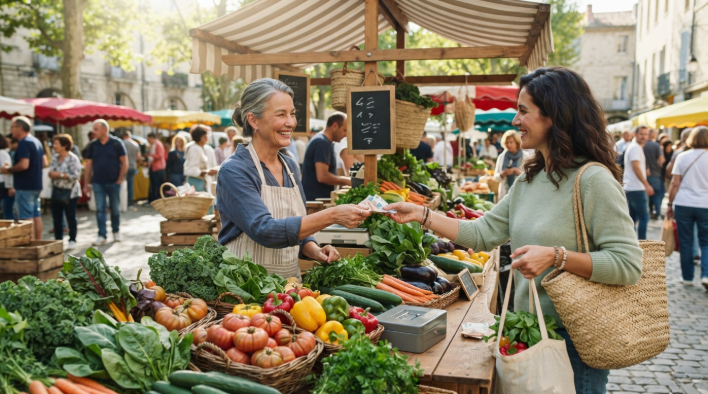
Finally, I started using cash deliberately for certain categories. I still take cash for weekend markets and small local shops. It helps those businesses, and it keeps those purchases grounded in the physical feeling of paying.
A note on safety and security
Carrying more cash than usual did make me slightly more careful. I kept only the week’s amount in my wallet and left nothing extra at home in obvious places. Cash cannot be recovered if it is lost or stolen, which is one area where cards and phones are clearly better, since payments can be blocked and fraud can often be refunded.
That trade-off is worth keeping in mind for anyone trying this. Withdraw only what you need for a few days, keep it in one place, and avoid counting large amounts in public. Cash brings back awareness, but it also brings back the old risks that digital payments helped remove.
Why convenience is not always the goal
The biggest thing this experiment taught me is that convenience is not always what we need. Technology is very good at removing friction, and in many areas of life, that is exactly what we want. But some friction serves a purpose. The small pause before paying, the moment of noticing, the feeling of money leaving your hand: these were not flaws in the old way of paying. They were features we did not know we relied on.
Digital payment systems are designed to make spending easy, and businesses benefit when spending is easy. That is not a conspiracy; it is just how commerce works. But it means that if we want to spend thoughtfully, we sometimes need to add friction back on purpose, because nobody else will do it for us.
Would I recommend trying it?
If you ever look at your bank statement and feel confused about where your money went, I think a short cash experiment is worth trying. It does not need to be dramatic. Even one week of paying for daily small purchases with cash can show you patterns you did not know existed.
Choose a fixed amount, withdraw it, and try to live within it for everyday spending. Notice how it feels. Notice which purchases you skip and whether you miss them. Then, when you go back to digital payments, think about which of those feelings you want to keep and how you might recreate them.
My wallet is lighter again these days, with only a few notes for markets and small shops. But my bank statement is a little shorter too, and each line on it feels like something I actually chose. That feels like a good trade for two weeks of counting coins.
