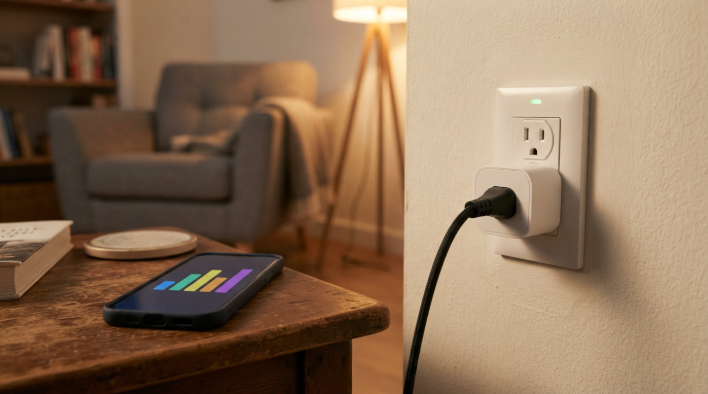
I bought my first smart plug for a completely lazy reason. I wanted to turn on a lamp in the living room without getting up from the sofa. It cost about the same as a takeaway lunch, took five minutes to set up, and did exactly what I wanted. What I did not expect was that the little energy-monitoring graph in its app would slowly change how I thought about electricity in my entire home.
Over the next few months, I bought a handful more plugs with energy monitoring and moved them around the house like a detective planting listening devices. I plugged them into the fridge, the television setup, the washing machine, my desk, the old freezer in the garage. What they told me was sometimes surprising, sometimes obvious in hindsight, and occasionally a little embarrassing. Here is what I learned.
Electricity is invisible, and that is the problem
Most of us have a rough idea of how much we spend on electricity each month, because the bill tells us. What we almost never know is where that electricity actually goes. A monthly bill is a single number. It does not tell you that your old freezer is responsible for a big chunk of it, or that your entertainment system quietly draws power all night.
That invisibility makes it very hard to make good decisions. People often focus on things they can see and feel, like turning off lights when leaving a room. That is a good habit, but modern LED bulbs use relatively little power. Meanwhile, the devices that consume the most often run silently in the background, never drawing attention to themselves.
A smart plug with energy monitoring changes this. It measures how much power a device uses in real time and adds it up over days and weeks. Suddenly, electricity stops being an abstract number on a bill and becomes something you can point to. This device, right here, costs this much.
The first surprise: standby power
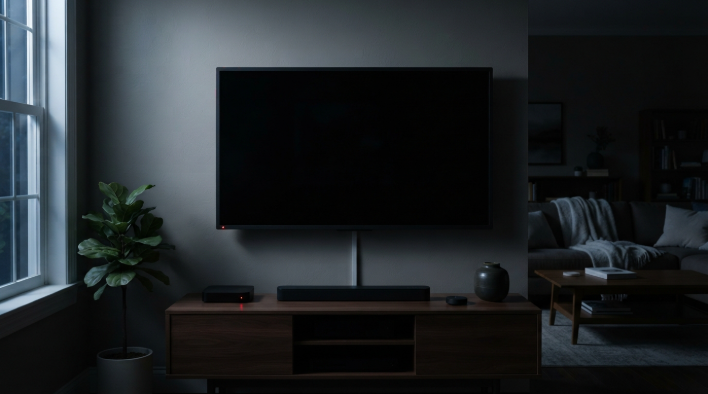
The first place I plugged a monitor was behind the television, where the TV, a streaming box, a games console, and a soundbar all shared a power strip. When everything was switched off, I expected the reading to be close to zero. It was not. The whole setup was drawing a small but steady amount of power, around the clock.
This is standby power, sometimes called phantom load. Many devices never fully turn off. They stay in a low-power state so they can respond to remotes, download updates, or start up faster. Individually, each device only uses a little. But added together, and multiplied by every hour of every day, it adds up to a noticeable amount over a year.
The games console was the biggest offender, because it was set to a mode that kept it ready to download updates in the background. Changing a single setting reduced its standby consumption dramatically. I also set the smart plug to cut power to the whole entertainment setup late at night and turn it back on in the morning. It took about ten minutes to arrange, and it quietly saves money every day.


The second surprise: the old appliances
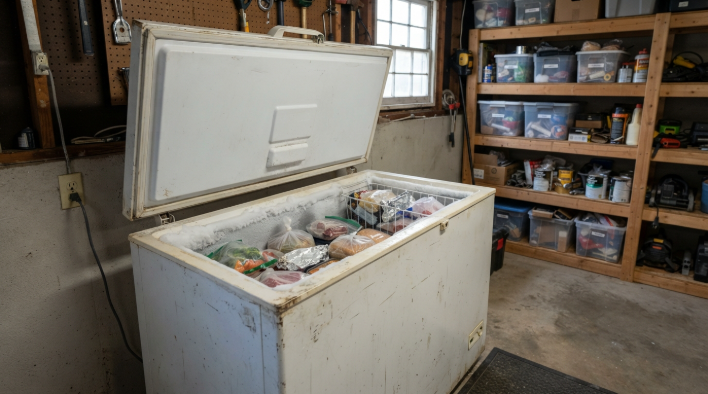
The real shock came from the garage. We had an old chest freezer out there, inherited from a relative, that we mainly used for bulk food and ice. It worked fine, so I never thought about it. When I put an energy-monitoring plug on it, it turned out to be one of the biggest electricity users in the house.
Older appliances, especially refrigerators and freezers, can be dramatically less efficient than modern ones. Insulation degrades, seals wear out, and older compressors simply use more power. Because these appliances run all day and all night, every year, even a moderate inefficiency adds up to a large cost over time.
After a few weeks of monitoring, I did some simple math. The extra electricity the old freezer used compared with a modern efficient model would pay for a new freezer within a few years. And honestly, when we looked inside, half of what was in there was forgotten food we did not need. We ended up clearing it out, replacing it with a smaller efficient model, and the difference showed up clearly on our next few bills.
The third surprise: the things I worried about did not matter much
Not every discovery was dramatic. I had always felt slightly guilty about leaving my laptop charger plugged in, or charging my phone overnight. When I measured them, their consumption was tiny. Phone chargers with nothing attached use almost nothing. My laptop, even while charging, used far less than I imagined.
This was useful in its own way. It stopped me from worrying about things that did not matter, and redirected my attention to things that did. Energy-saving advice often treats every device equally, but the actual numbers are very uneven. A handful of appliances, usually those that heat, cool, or run continuously, account for most of the consumption in a typical home.
Heating water, drying clothes, cooking, and keeping things cold are the heavy hitters. Electronics, lighting, and chargers are usually much smaller. Knowing this helped me focus on the changes that would actually make a difference rather than chasing tiny savings.
How it changed my habits without much effort
The most interesting effect of the smart plugs was psychological. Simply seeing the numbers made me more aware. When I noticed that the tumble dryer used a significant amount of electricity per load, I started hanging clothes to dry more often in good weather. Nobody told me to. The number was just there, and it nudged me.
I also started running the washing machine at lower temperatures, since heating water is where much of its energy goes. Modern detergents work well at lower temperatures for most everyday loads, and the plug confirmed the difference in consumption clearly.
The automations helped too. Besides the nighttime shutoff for the entertainment system, I set a schedule for a small heater in my home office so it only ran during my working hours, instead of being accidentally left on all evening. These are small changes, but they do not rely on willpower. The plugs just handle them.
Getting the rest of the household on board
Energy habits are rarely a one-person project. I live with other people, and my graphs were only useful if they changed how everyone used the house, not just me. At first, my enthusiasm was met with polite indifference. Nobody else was especially excited to hear how many watts the soundbar drew in standby.
What worked better was showing rather than telling. I put the phone with the energy app on the kitchen table one evening and let people guess which appliance used the most. Almost everyone guessed wrong, and the conversation that followed was far more persuasive than any lecture from me. The freezer in the garage became a small household joke, and replacing it turned into a shared decision rather than my personal project.
The automations also helped, because they removed the need for anyone to remember anything. Nobody had to change their behavior for the entertainment system to shut down at night. It simply happened. In my experience, the energy savings that last are the ones that do not depend on people being disciplined every single day.
The limits of smart plugs
Smart plugs are not a perfect tool, and it is worth being honest about their limits. Most of them are designed for normal household devices and have a maximum power rating. They are generally not suitable for high-power appliances like ovens, large heaters, or anything hard-wired into the electrical system. Always check the rating before plugging something powerful into one.
They also consume a little power themselves, since they need to stay connected to the network. It is a small amount, but it means that putting a smart plug on something that barely uses electricity may not actually save anything. And cheaper plugs vary in accuracy, so it is best to treat the readings as a good estimate rather than a laboratory measurement.
There are also privacy and security considerations. Smart plugs connect to the internet and often rely on the manufacturer’s app and servers. Choosing a reputable brand that provides security updates matters, as does using a strong password for your home network. For people who prefer more control, some plugs can work locally with home automation systems without relying on cloud services.
Whole-home monitoring as the next step
After a few months with individual plugs, I became curious about monitoring the whole house. Many electricity providers now offer smart meters or in-home displays that show total consumption in near real time. Some let you see your usage by the hour through an app.
Combining the two turned out to be useful. The whole-home view showed me when usage spiked, and the individual plugs helped me figure out which devices were responsible. Watching the baseline, the amount of power the house uses when nothing seems to be on, was especially enlightening. Lowering that baseline, mostly by dealing with standby power and the old freezer, made the biggest long-term difference.
What I would recommend to anyone curious
If you are interested in understanding your own electricity use, one energy-monitoring smart plug is a surprisingly good place to start. Move it around the house, leaving it on each device for at least a few days to capture normal use. Start with appliances that run constantly, like fridges and freezers, and with any collection of electronics that shares a power strip.
Write down what you find. After a few weeks, you will have a rough map of where your electricity goes, which is far more useful than any general list of energy-saving tips. You might find, like I did, that one or two devices are responsible for a surprising share of your bill, and that fixing them is easier than you expected.
A small gadget with a bigger lesson
I still use my original smart plug to turn on the living room lamp from the sofa. It remains one of the most satisfyingly lazy things in my home. But the energy graphs taught me something more valuable than convenience. They showed me that many of our biggest costs are the ones we never see, running silently in the background while we worry about the small things in front of us.
That lesson applies well beyond electricity. But for now, I am happy to have learned it through a few inexpensive plugs, a garage freezer, and a games console that no longer spends its nights waiting for updates nobody asked for.
