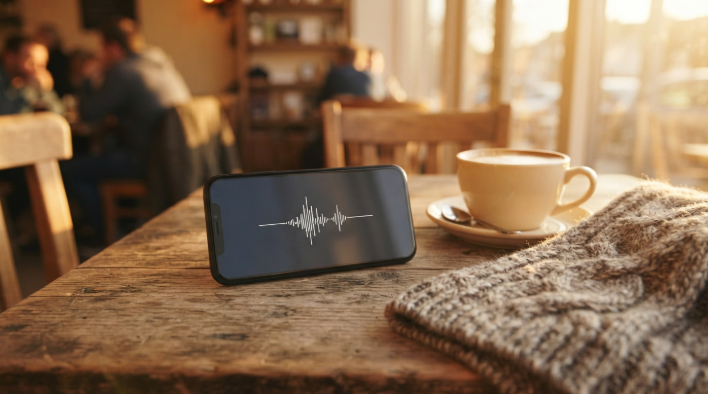
Last week I received a four-minute voice note from a friend. It started with a question about whether I wanted to meet for coffee on Saturday. It then wandered through a story about her landlord, a complaint about the weather, a half-finished thought about a film she had watched, and ended with, “Anyway, let me know about Saturday.” I listened to the whole thing while walking to the shops, laughing at a couple of points. Then I realized I had to listen to the beginning again, because I had already forgotten what time she had suggested.
Voice notes have quietly become one of the main ways the people in my life communicate. Some friends barely text anymore. My family group chat is now half audio. Even a few colleagues have started sending short voice messages instead of writing. I wanted to understand why this shift happened, what we gain from it, and what we lose, because like most people, I have strong and slightly contradictory feelings about voice notes.
How voice notes went from niche to normal
Voice messaging has existed for a long time, but for years it felt like a slightly odd feature most people ignored. That changed as messaging apps made it effortless: hold a button, speak, let go. No need to call, no need to type. In many parts of the world, especially where typing in local languages on a phone keyboard is awkward, or where people communicate more comfortably by speaking than writing, voice notes became popular much earlier than elsewhere.
Over time, the habit spread. Younger users adopted it as a more expressive alternative to text. Parents and grandparents found it easier than typing on small screens. People who were driving, cooking, or walking discovered it let them communicate without stopping what they were doing. Today, sending a voice note feels as ordinary as sending a text, and in some friendship groups, more ordinary.
Part of the appeal is that it fits a middle space between texting and calling. A phone call demands that both people be available at the same moment. A text is convenient but flat. A voice note lets you speak naturally, with all the warmth of your voice, but lets the other person listen whenever it suits them. It is asynchronous conversation with a human sound.
What voice notes do better than text
The biggest advantage of voice notes is tone. Text messages are notoriously easy to misread. A short reply can seem cold, a joke can sound like criticism, and a neutral statement can feel passive-aggressive. We invented emojis partly to patch this problem, but they only go so far.
Voice carries all the things text strips away: warmth, humor, hesitation, excitement, sarcasm, affection. When my friend tells a story in a voice note, I can hear her laughing. When my mother sends a message, I can hear whether she is tired or happy. That emotional information is valuable, especially in relationships where we do not see each other often.
Voice notes are also faster to create for most people. Speaking is quicker than typing, particularly for long or complicated thoughts. For someone explaining a situation, telling a story, or sharing news, a voice note can be far easier than composing several paragraphs of text on a small keyboard. For people with certain disabilities, or anyone who finds typing difficult, they can be much more accessible.
And there is a kind of intimacy to them. Hearing someone’s voice, even recorded, feels closer than reading their words. In long-distance friendships and families spread across countries, voice notes can bridge some of that distance in a way that text does not.



What voice notes do worse
Of course, the complaints about voice notes are just as real. The most common one is that they shift effort from the sender to the listener. Recording a rambling five-minute message is easy for the person speaking. Listening to it, especially when you just need one piece of information, takes time and attention.
Voice notes are also hard to skim. With a text, you can glance and immediately see the important part. With audio, you have to listen in order, often waiting through tangents to reach the point. If you need to find a detail later, like an address or a time, you have to listen again rather than just scrolling up.
Context matters too. Voice notes are difficult to listen to in many situations: in a quiet office, in a meeting, on public transport without headphones, or late at night next to a sleeping partner. A text can be read anywhere. A voice note often has to wait for the right moment, and that sometimes means important messages go unheard for hours.
There is also the problem of replying. A long voice note with several questions scattered through it is hard to answer properly. I often find myself listening, forgetting half of what was asked, and replying only to the last thing mentioned. Which, of course, is how my friend’s coffee invitation almost got lost behind the landlord story.
The unwritten etiquette we are all figuring out
Because voice notes became popular quickly, we never really agreed on the rules. Different people have very different expectations, and that causes small, quiet frictions.
Some people believe voice notes should be short, under a minute, and focused. Others treat them like podcasts, sending long monologues that cover several topics. Some people love receiving them; others dread them. Some reply to voice notes with voice notes; others always reply by text. There is no universal standard, only a patchwork of personal preferences and friendship-group norms.
From conversations with friends, a few informal rules seem to be emerging. Keep work-related voice notes short, or avoid them entirely unless you know the other person likes them. Put important details, like times, dates, and addresses, in a text as well. If a voice note is long, say at the beginning what it is about. And never send a voice note when a simple yes or no would do.
I have also noticed that some people send a short text before or after a voice note, like “sending you a long one, no rush,” which is a thoughtful way to set expectations. It acknowledges that the listener is giving up some of their time.
Technology is trying to fix the problems
Messaging apps have clearly noticed the complaints. Many now let you play voice notes at faster speeds, which is a huge help with long messages. Some offer automatic transcription, turning audio into text so you can skim it or read it in a quiet place. Others let you pause and resume recording, or preview a message before sending it.
Transcription, in particular, changes the equation. If a voice note can be read like a text when needed, most of the practical downsides disappear, while the sender still gets the ease of speaking and the listener still gets the option of hearing their voice. The accuracy is not perfect, especially with accents, background noise, or mixed languages, but it improves steadily.
I started using playback speed and transcription regularly, and they have made me much more patient with long voice notes. I can read the transcript to find the important part, then listen to the audio if I want the emotion behind it. It is the best of both worlds, at least when it works.

What voice notes say about how we communicate now
Looking at the bigger picture, I think voice notes reflect a broader change in how we want to connect. For a while, text dominated our digital lives. It was efficient, quiet, and easy to manage. But it also made our conversations flatter and more transactional. Voice notes feel like a partial correction, a way to bring the human voice back without the demands of a live phone call.
At the same time, they reflect our reluctance to be available in real time. Many people, especially younger people, feel anxious about unexpected phone calls. A call demands an immediate response and offers no chance to prepare. A voice note lets you speak when you are ready and lets the other person listen when they are ready. It is connection on your own terms.
That combination of wanting warmth but also wanting control seems to define a lot of modern communication. We want to feel close to people, but we also want to manage our time and attention carefully. Voice notes sit right in that tension, which is perhaps why they have become so popular and why they cause so much mild irritation at the same time.
How I use them now
After thinking about all this, I have settled into a few personal habits. I send voice notes mostly to close friends and family, for stories, updates, and anything where tone matters. I try to keep them under two minutes, and if they include practical details, I follow up with a short text containing just those details.
For work, I almost never send voice notes, unless a colleague has made it clear they prefer them. Written messages are easier to search, easier to skim, and easier to respond to precisely. When I receive long voice notes, I use faster playback or transcription without guilt. Listening efficiently is not the same as not caring.
And I have learned to appreciate the ones that ramble. My friend’s four-minute message about the landlord, the weather, and the film was inefficient as communication. But as a glimpse into her week, told in her voice, with her laugh in the middle of it, it was lovely. Some messages are meant to deliver information. Others are meant to keep a friendship warm. Voice notes are very good at the second kind.
A voice worth keeping
One last thought stayed with me while writing this. A few months ago, a friend of mine lost her grandmother. Among the things she treasured most afterward were old voice notes on her phone: short, ordinary messages asking whether she had eaten, reminding her to call, telling her about the garden. None of them were important at the time. Now they are irreplaceable.
Text messages preserve words. Voice notes preserve people. That may be the strongest argument for them, and one worth remembering the next time a long, rambling voice message lands in your inbox. It might be a bit much to listen to today. Someday, it might be exactly what you want to hear.
