
For years my rule was simple and, in retrospect, not especially well thought out: buy new, buy once, avoid the hassle of wondering what condition a used machine was actually in. That rule held until my laptop died eight months into a stretch where money was tighter than usual, and I found myself actually reading through refurbished listings for the first time instead of scrolling past them toward the new-device section out of habit.
What Changed My Mind, Specifically
The thing that actually shifted my thinking wasn’t a sudden conversion to frugality. It was noticing how specific and verifiable the good refurbished listings had become compared to what I remembered from years earlier, when “refurbished” mostly meant a vague promise and a slightly lower price with no real detail behind it. The listings I found this time specified battery cycle count, cosmetic grade with actual photos of wear, which components were original versus replaced, and a real warranty period, not the “as-is, no returns” language that used to define the category.
That specificity is what actually made the decision feel safe rather than risky. A vague discount on an unknown machine is a gamble. A documented battery health percentage, a stated grading standard, and a 90-day warranty is a purchase decision I can actually evaluate the same way I’d evaluate a new one, just with different numbers attached.


What I Actually Looked For
I ended up building a short checklist before buying, mostly out of nervousness the first time through. Battery health was the first thing I checked, since a laptop can look pristine and still have a battery that’s most of the way through its useful life, which is expensive to fix and easy to overlook in photos. I wanted anything above roughly 85% reported capacity, treated as a floor rather than a nice-to-have.
Second was the grading system itself, understanding what the seller actually meant by “excellent” or “good” condition, since these terms aren’t standardized across sellers the way I’d assumed. Some grading scales are cosmetic only, describing scratches and wear with no comment on internal component health. Others fold performance testing into the grade. I learned to read the fine print of what a specific seller’s grade actually certifies, rather than assuming all “excellent” ratings meant the same thing.
Third, and this turned out to matter more than I expected, was who was doing the refurbishing. A manufacturer-certified refurbished program, where the original maker inspects and re-certifies the machine, is a meaningfully different proposition than a third-party reseller who may or may not have real diagnostic standards. I ended up paying slightly more for the manufacturer-certified option specifically because the accountability chain was clearer if something went wrong.
What Actually Arrived, Versus What I Expected
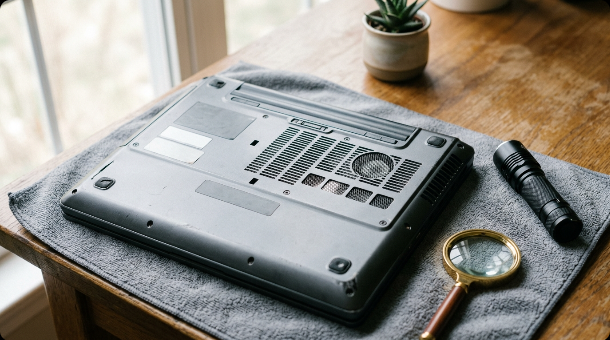
I want to be honest that the unboxing moment was slightly less exciting than a new laptop, in a way that surprised me even though I’d braced for it. There were faint, barely visible marks on the underside that the listing had disclosed but that I’d mentally underweighted while imagining the machine. Nothing that affected function, nothing I could even see without deliberately looking for it under specific light, but a small reminder that “refurbished” is a real category with real trade-offs, not just a cheaper version of new with no differences at all.
What actually mattered, the parts I use every day, exceeded my expectations. The battery health was exactly as reported. Performance was indistinguishable from new for everything I actually do with it. The included warranty gave me real peace of mind the first few weeks, when I was still half-expecting some hidden problem to surface, and it never did.

The Money, Actually Broken Down
The specific number that made this decision easy in hindsight: I paid a little over half of what the equivalent new configuration would have cost, for a machine with a battery reported at 91% health and a full warranty. Even accounting for the slightly higher price of going through a manufacturer-certified program rather than the cheapest third-party listing available, the gap between refurbished and new was large enough that it would have taken real effort to justify paying full price once I’d actually done the comparison side by side.
That gap is the part I think gets undersold in conversations about refurbished electronics generally. It’s not a modest discount for a modest compromise. For a laptop that’s a generation or two behind the absolute newest release, which is genuinely fine for the vast majority of everyday use, the savings can be substantial enough to change what’s actually affordable, not just what’s a nice deal.
Where I’d Be More Cautious
I wouldn’t apply the same confidence to every category of refurbished electronics equally. Laptops, in my experience this year, benefit from relatively standardized components and diagnosable failure points, battery health being the clearest single signal of overall condition. Other device categories don’t always have as clean a single indicator, which makes we more cautious generally about assuming the same logic transfers automatically. I’d also be more careful buying refurbished for anything I planned to push hard immediately, heavy rendering work, intensive gaming, sustained loads that stress components in ways typical daily use doesn’t. For that kind of use, the margin for a component that’s quietly closer to end of life matters more, and I’d lean toward new or at minimum a shorter-cycle refurbished unit with a longer warranty.
What I’d Tell Someone Considering This for the First Time
Start with the manufacturer’s own certified refurbished program if one exists for the brand you want, even if it costs somewhat more than third-party alternatives, because the accountability and documented testing standards are worth the premium, especially the first time you’re trying this. Read the grading definitions specifically rather than assuming a five-star or “excellent” label means what you think it means, since sellers define these terms differently. And check the warranty length and what it actually covers before comparing price, because a shorter or narrower warranty should factor into the discount you’re expecting, not just the sticker price on its own.
Where I’ve Landed
I’m typing this on the refurbished laptop right now, eight months in, with no regrets and a battery health number that’s held steady. The rule I used to have, buy new to avoid the hassle, turned out to be solving a problem that mostly doesn’t exist anymore in a market that’s become far more transparent than I gave it credit for. I still wouldn’t buy blind from an unrated third-party listing with no documentation. But the documented, certified end of the refurbished market has earned a permanent place in how I think about buying electronics going forward, not just as a fallback for tight months.
The Return Process I Ended Up Testing, Unfortunately
I want to include this part because most accounts of buying refurbished skip straight to the happy ending, and I think that skips something useful. A second refurbished laptop I bought a few months later, for a family member, did arrive with a genuine problem: a trackpad that registered phantom clicks intermittently, not something visible in any listing photo or disclosed grading. This is exactly the scenario the warranty exists for, and it was the real test of whether the “documented, accountable” pitch actually held up under pressure rather than just sounding good in a listing description.
It held up. The return process was genuinely straightforward: a diagnostic confirmation, a prepaid shipping label, and a replacement unit within about a week, no argument about whether the defect was pre-existing or somehow caused after delivery. I mention this not to suggest refurbished electronics are flawless, they’re not, but to say that the actual test of a good refurbished program isn’t whether every unit is perfect, it’s whether the system built around imperfect units functions the way it’s supposed to when something does go wrong. In this case, it did, and that experience did more to cement my confidence in this category than the first, entirely smooth purchase had.
How This Changed My Buying Habits More Broadly
The unexpected side effect has been how it changed my default assumption across other categories entirely, not just laptops. I’ve started checking for certified refurbished options before defaulting to new for cameras, monitors, and a few other categories where the same logic seems to apply: standardized components, diagnosable condition, and a real accountability chain if a manufacturer or authorized reseller stands behind the listing. It hasn’t worked out every time, some categories genuinely don’t have the same mature refurbished infrastructure yet, and I’ve gone back to buying new in those cases without much hesitation. But the reflexive “just buy new to be safe” instinct is gone, replaced by an actual evaluation each time, which feels like a more honest way to spend money than defaulting to whichever option requires the least thought.
The Specs Question I Underrated at First
One mistake I made on the first purchase, minor but worth naming, was focusing so heavily on condition and warranty that I underweighted how far behind current the specific configuration actually was. Refurbished inventory skews toward slightly older models by definition, since it takes time for a returned or trade-in unit to move through the refurbishment pipeline. That’s fine for most everyday use, but it’s worth actually checking whether the specific processor generation and memory configuration you’re looking at still meets your real needs, rather than assuming any refurbished unit from a reputable program is automatically a safe choice regardless of specs. I got lucky that the configuration I bought was still comfortably capable for what I do. I’d check that deliberately next time rather than assuming it, since the warranty and condition grading say nothing about whether the underlying hardware generation still fits your actual workload.
None of these caveats changed the overall verdict for me, they just sharpened it. Refurbished, done through the right channel with the right documentation, isn’t a compromise you settle for when new isn’t affordable. For a lot of everyday computing needs, it’s simply the better-informed purchase, and the only reason I didn’t reach that conclusion years earlier was that I’d never actually looked closely enough to notice how much the category had matured.
