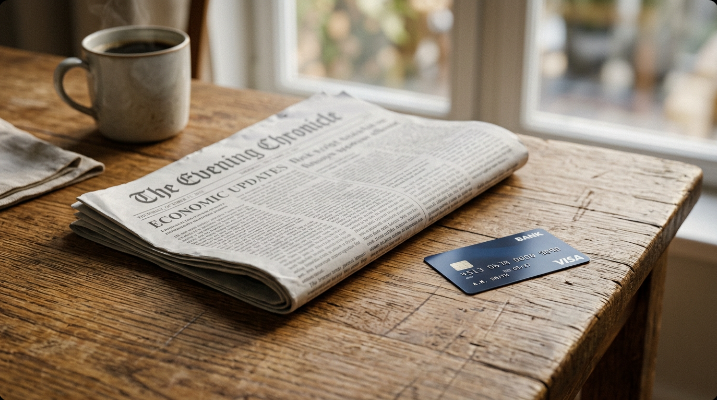
I canceled my last news subscription in roughly 2014 and spent a decade proudly getting my news for free, stitched together from social feeds, aggregator apps, and whatever headline a friend happened to share. Last month I paid for a digital news subscription again, and the thing that finally pushed me over the line wasn’t a big investigative story. It was realizing I couldn’t remember the last time I’d read a full article about a topic I actually cared about, only headlines and other people’s summaries of headlines.
What “Free News” Actually Looked Like Day to Day
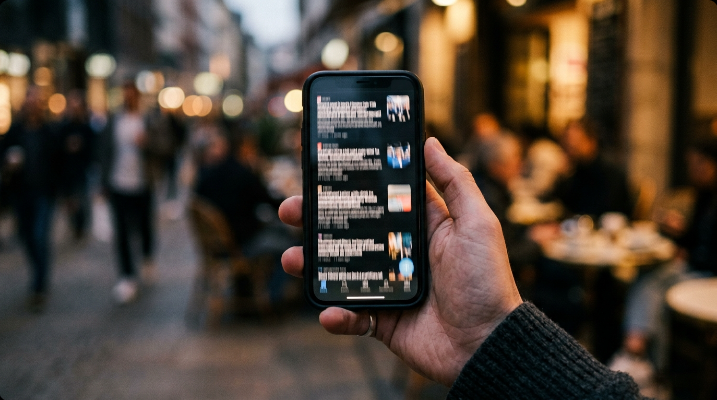
My free-news decade wasn’t really newsless, it just meant my information came exclusively through intermediaries: a social feed’s algorithm, an aggregator’s front page, a friend’s hot take with a screenshot attached. I genuinely believed I was well-informed, because I recognized headlines about most major events almost as soon as they happened. What I didn’t notice was how rarely I read past the headline, and how much of my actual understanding of any given story came from a comment section reacting to it rather than the reporting itself.


The Moment I Actually Noticed the Gap
The specific trigger was a local ballot measure I had strong opinions about, based on what I was sure was solid understanding, until a coworker who subscribed to the local paper mentioned a detail from the actual reporting that completely changed how the measure would affect my own property taxes. I’d formed a confident opinion from headlines and secondhand commentary, and I’d gotten an important detail flatly wrong. That was embarrassing in a very specific, personal way, not an abstract “misinformation is bad” way, and it’s what actually got me to open my wallet.
What I Didn’t Expect About Reading Full Articles Again
The most surprising part of resubscribing wasn’t the quality difference, though that was real. It was how much slower and more effortful reading a full article felt after a decade of headline-and-summary consumption. My attention kept wanting to bail out after two paragraphs, the way it does scrolling a feed, and I had to consciously push through that pull for the first couple of weeks. That friction itself was informative: it suggested my reading habits had adapted to a format, headlines and summaries, in a way that had nothing to do with how much I cared about the underlying topics.
The Specific Difference in What I Now Understand
Comparing my grasp of a major ongoing story before and after resubscribing was stark. Before, I could recite the basic shape of the story, the two or three headline facts everyone knew, but I genuinely couldn’t have explained the second-order details, the disagreements between experts, the parts that were still uncertain. A month into paying for actual reporting, I noticed I was catching nuance and caveats that never survive the headline-and-aggregator pipeline, the kind of detail that changes how confident you should actually be in a given claim.
What the Research on News Consumption Suggests
This matches a pattern that media researchers have been documenting for years: studies on incidental news exposure, meaning news encountered passively through social feeds rather than sought out deliberately, consistently find it correlates with broader awareness of headlines but shallower actual knowledge of the underlying issues, compared to people who read full articles from a smaller number of sources. Survey research on news avoidance and headline-only reading has also found a growing share of people report reading only headlines for a majority of stories they encounter, a pattern researchers have started calling news snacking, which tracks uncomfortably well with what my own decade looked like in practice.

A Real Comparison: Two Elections, Ten Years Apart
I have an unusually clean before-and-after here because I followed two different local elections roughly a decade apart, one right after I canceled my subscriptions and one right after I resubscribed. In the first, I voted based almost entirely on candidate social media posts and a couple of viral summary threads, and I later learned, from a friend who’d read the actual coverage, that I’d misunderstood a key policy position of the candidate I voted for. In the second, reading full reporting including a couple of pieces I disagreed with, I ended up voting differently than my gut reaction from headlines alone would have predicted, because the full context changed my assessment in a way a headline never could have.
Where Free News Sources Still Have Real Value
I don’t want to overstate the case against free news entirely, because social feeds and aggregators are genuinely useful for breadth: they’re how I still find out that something happened at all, across a wider range of topics than I could ever pay to follow individually. The problem isn’t that free sources exist, it’s that I’d let them become my only source, for even the handful of topics I actually cared enough about to want real understanding of, not just awareness that something occurred.
How I’ve Actually Split My News Diet Now
What I settled on is a fairly narrow paid subscription, one outlet, covering the handful of topics I actually want deep understanding of, combined with the same free aggregator habits as before for everything else where headline-level awareness is genuinely enough. This isn’t about virtue or civic duty in the abstract. It’s a practical recognition that for the two or three subjects where being wrong actually costs me something, a vote, a financial decision, an argument with someone I respect, headline-level understanding wasn’t actually good enough, even though it felt like it was for ten years.
The Article That Made the Subscription Worth It
There was one specific article, about six weeks into my new subscription, that made the whole decision feel justified rather than theoretical. It was a long investigative piece about a local zoning decision that was going to affect a development near my own neighborhood, the kind of story that free aggregators would have reduced to a single wire-service paragraph, if they covered it at all. The paid version ran to nearly four thousand words, with public records the reporter had filed requests for, interviews with three city council members, and a timeline that made clear how the decision had actually been made behind a series of small procedural votes nobody had noticed.
I went to the next public meeting armed with specifics I never would have had otherwise, and I wasn’t alone. At least two other people referenced the same article when they spoke. That’s a small, local example, but it clarified something abstract into something concrete: the subscription wasn’t paying for the ability to read more headlines. It was paying for the kind of reporting that requires someone to spend three weeks filing records requests and sitting through boring meetings, work that free, ad-supported models simply cannot sustain at scale because the economics don’t support the hours involved.
I hadn’t thought about local accountability journalism specifically when I decided to resubscribe. I was thinking about national politics and general information quality. But it turned out the most tangible value showed up close to home, in a story that directly affected a decision in my own city and that I would have had no real way to understand without it.
What I Underestimated About Headline-Only News
Before resubscribing, I would have said I understood the news reasonably well, because I checked headlines multiple times a day across several free apps. Going back to reading full, paid articles revealed how much that habit had actually been giving me a false sense of being informed. A headline conveys a claim. It rarely conveys the uncertainty, the caveats, or the competing interpretations that the actual reporting underneath it usually contains, and those caveats are often the most important part.
A specific example: I’d read dozens of headlines over the years about a particular economic indicator moving up or down, and I’d absorbed a rough sense of “good” or “bad” from each one without ever reading the actual explanation of why the number moved or how reliable the measurement even was. Reading full paid coverage of the same kind of story now, I regularly find that the honest answer is “economists are genuinely split on what this means,” a nuance that never survives being compressed into a headline built to be skimmed in half a second on a lock screen.
That gap between headline-level and article-level understanding isn’t a new problem, but a decade of relying almost entirely on the former let it compound quietly. I don’t think I was uninformed exactly. I think I was confidently under-informed, which in some ways is worse, because it doesn’t feel like a gap that needs filling.
There’s also a cost side to this I want to be honest about, because the subscription isn’t free money spent on principle. I’m paying roughly what I used to spend on two streaming services for a single publication, and I had to actually cancel one of those streaming subscriptions to make the math work for my household budget. That trade-off won’t be available or worth it for everyone, and I don’t think paying for news is a moral requirement so much as a decision that turned out to fit my particular reading habits and local concerns better than I expected going in.
I also underestimated how much a subscription changes the incentive on the publisher’s side, not just my own reading habits. A newsroom funded by subscribers has to keep me reading and trusting them month after month, not just win a single click with an alarming headline. That’s not a guarantee of quality, plenty of subscription outlets still chase outrage, but it’s a meaningfully different incentive than one funded entirely by ad impressions on whatever headline performs best in the first ninety seconds after publishing.
What This Decade Actually Taught Me
The uncomfortable realization wasn’t that free news is bad, most of what I read for free was factually accurate as far as it went. It was that I’d mistaken headline recognition for actual understanding for ten straight years, and never had a reason to notice the difference until a wrong opinion, stated confidently to someone who knew better, made the gap impossible to ignore. Paying again didn’t change how much news I consume. It changed how much of it I actually understand.
