I asked my teenager for their phone one evening, ostensibly to look something up, and ended up scrolling their For You feed for almost twenty minutes before I remembered why I had picked it up in the first place. What I saw was not shocking in any dramatic sense, no scandal, nothing I needed to have a serious conversation about. It was something quieter and, in its own way, more unsettling: a stream of content so precisely tuned to a version of my kid that I barely recognized, and yet was clearly, unmistakably them.
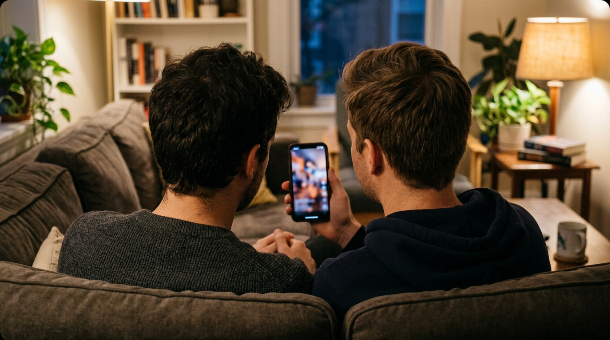
That first accidental glimpse turned into a deliberate week-long experiment. With their reluctant permission, I sat with them most evenings and watched the feed scroll by, sometimes asking questions, mostly just observing. I wanted to understand what they were actually seeing all day, not the sanitized version they might describe if I asked directly, but the real, unfiltered thing the algorithm had built specifically around them. What I found explained a lot, not just about the app, but about my kid, and honestly about myself.
The Feed Is Not a Window, It Is a Mirror That Talks Back
The first thing that struck me was how quickly the feed had assembled an accurate emotional portrait of my teenager, one built entirely from behavior rather than anything they had explicitly told it. Videos about a specific niche hobby they had only mentioned to me once, in passing, months earlier. Content addressing anxieties they had never fully articulated to me directly but had clearly lingered on long enough for the algorithm to notice. It was less like watching a stream of content and more like watching a very patient, very attentive mirror slowly assemble a picture of someone based purely on where their attention lingered.
This is different from how I experienced media as a teenager, and different even from how I experience my own feeds now as an adult who came to this technology later in life. My kid has never known an information environment that was not actively, constantly adjusting itself around their specific patterns of attention. For them, this is not a strange or notable feature of the internet. It is simply what the internet is, the way water is simply what a fish swims in, invisible precisely because it is total.


The Speed Was the Part I Was Not Prepared For
I expected the content itself to be the main story, and some of it was genuinely interesting, funny in ways I had not anticipated, occasionally more thoughtful than I expected. But the thing that actually stuck with me was the sheer velocity of it. Videos rarely lasted more than a few seconds before a thumb flicked past. Entire narratives, jokes, arguments, product pitches, emotional appeals, all compressed into a span of time shorter than it takes to read this sentence, one after another, with almost no friction between them.
Watching that pace for an extended stretch left me feeling slightly disoriented, a kind of mild vertigo that I do not think my teenager experiences at all, because their attention has been shaped by this exact rhythm for years. I found myself wondering what it does to a developing sense of patience, or narrative, or sustained attention, to spend hours a day inside a format that actively punishes anything that takes more than a few seconds to land. I do not have a confident answer to that question. I only have the unsettled feeling of watching it happen in real time, to someone I love, in a medium I only partially understand.
What the Feed Got Right About Them
It would be dishonest to frame this entirely as alarming, because some of what I saw was genuinely reassuring. The algorithm had picked up on interests I was glad to see reinforced, a growing curiosity about a subject they are considering studying, creators whose videos were, by any reasonable standard, thoughtful and well made. There is a kind of quiet flattery in watching a machine correctly identify the better parts of someone’s curiosity and feed them more of exactly that.
This complicated my instinct to treat the whole exercise as purely worrying. The feed is not simply optimizing for the worst version of my teenager’s attention. It is optimizing for whatever keeps them watching, and it turns out that a meaningful portion of what keeps my particular kid watching is content that is actually good for them, in the sense that it reflects curiosity, humor, and identity formation happening in real time. The algorithm does not care whether that is good for them. It only cares that it works. The fact that those two things sometimes overlap is a relief, but it is also, I think, mostly a coincidence.

The Content I Was Not Expecting to See
Not everything I watched was reassuring. There were stretches of content clearly engineered around insecurity, comparison, and a kind of low-grade anxious self-monitoring that I recognized immediately, having felt versions of it myself, just delivered through much slower media when I was that age. Watching my kid absorb a rapid, near-constant stream of that particular flavor of content made the abstract worry I had about “screen time” suddenly feel much more concrete and specific. It was not screen time in general that concerned me. It was this particular emotional register, delivered at this particular speed, for hours at a stretch.
I want to be careful not to overstate this. My teenager seems, by most visible measures, to be doing fine, navigating a complicated media environment about as well as anyone their age reasonably can. But watching the raw feed made visible something that conversation alone never fully captures, which is the sheer density of emotional material a young person now processes in a single ordinary evening, most of it arriving faster than any single piece could be consciously reflected on before the next one replaces it.
What I Actually Changed After the Week Was Over
I did not come away from this experiment wanting to ban the app or stage some dramatic intervention. What I did come away with was a much better set of questions to ask, grounded in specifics rather than vague parental anxiety about “social media” as an undifferentiated category. I can now ask about a particular creator I saw repeatedly, or a specific kind of content that seemed to linger a little too long in the feed, rather than asking something broad and easy to deflect like “how was your day online.”
I also came away with more respect for how much my teenager is already managing on their own, consciously or not, simply by existing inside this environment every day. They did not ask for an information ecosystem this fast, this personalized, or this emotionally precise, and yet they are the ones who have to build whatever internal filters are necessary to live inside it. Watching their feed for a week did not give me easy answers. It gave me a much clearer picture of exactly what they are working with, which, it turns out, is most of what I actually needed.
The Comment Sections Were Their Own Education
I had not planned to pay much attention to the comment sections under each video, assuming they would be mostly noise. Instead, I found myself reading them almost as carefully as the videos themselves, because they revealed something the videos alone could not: how a huge, anonymous crowd of peers reacts, in real time, to the exact same content my teenager was absorbing. Some of it was funny and harmless. Some of it was surprisingly earnest, strangers offering each other genuine support under videos about difficult topics. And some of it was exactly the kind of casually cruel commentary that would never survive in a face-to-face conversation but flourishes easily behind a username and a blank profile picture.
Watching my kid scroll past these comment sections without any visible reaction made me realize how normalized this particular texture of online interaction has become for them. What would have stopped me cold as a teenager, a stranger’s harsh one-line judgment on something deeply personal, barely registers as noteworthy to someone who has spent years scrolling past thousands of similar comments. I am not sure whether that represents resilience, desensitization, or some combination of both, and I suspect the honest answer is that it depends entirely on the specific comment and the specific day.
The Ads Were More Revealing Than I Expected
Somewhere in the middle of the week, I started paying closer attention to the advertisements woven into the feed, and they turned out to be an unexpectedly precise summary of everything the algorithm had concluded about my teenager as a consumer. Products targeting exactly their specific insecurities, promotions for services aimed squarely at interests they had only expressed through scattered, incidental engagement. It was strange to watch commercial targeting operate with this much precision on someone who is, legally and developmentally, still very much a kid.
None of the ads were shocking or inappropriate in any obvious sense. What unsettled me was the accuracy, the sense that an advertising system somewhere had built a more detailed, data-driven model of my teenager’s specific vulnerabilities than most adults in their life probably have. That is not a reason to panic, but it is a reason to stay curious about what exactly is being sold, and to whom, every single time that feed refreshes.
What I Would Tell Other Parents
If there is one thing I would pass along from this whole experiment, it is that watching the feed yourself teaches you something that no summary, article, or worried headline about social media ever quite manages to convey. It is one thing to know abstractly that algorithms personalize content. It is another thing entirely to sit beside your own kid and watch the specific, individualized version of that personalization unfold in real time, built out of their actual attention rather than some generic demographic bucket.
I would not recommend approaching it as surveillance, and I do not think it works if it feels like one. It worked for us because my teenager agreed to it, sat with me, and occasionally explained context I would have otherwise missed entirely, why a certain creator mattered, what a particular inside joke referenced. That collaborative framing turned what could have been an invasive exercise into something closer to a shared translation project, two people from different media generations trying to understand the same screen. I do not think I fully succeeded. But I understand my kid’s daily information diet in a way I simply did not before, and that alone made the week worth it.
