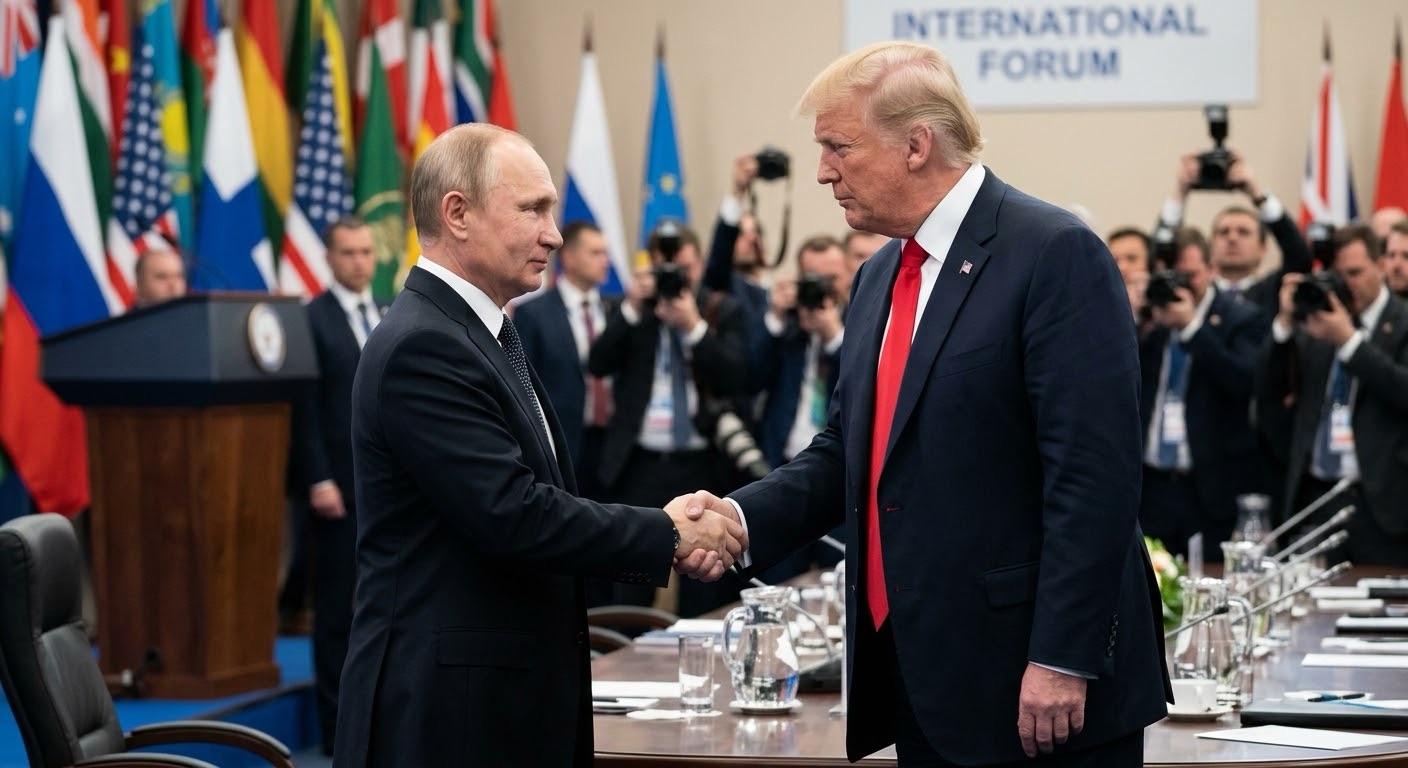
Two days after the CIA director made a rare, unannounced trip to Moscow that multiple U.S. outlets described as a warning to Russia, President Trump stood in the Oval Office and told reporters the opposite of what everyone assumed the trip was about: there was no warning, nothing unusual happened, and Putin isn’t going to attack NATO anyway.
What Trump Said
President Donald Trump said Thursday that Russian President Vladimir Putin will not attack a NATO country, and downplayed media reports that CIA Director John Ratcliffe had traveled to Moscow earlier in the week to warn Russian officials against such an attack, according to Al Arabiya English. “He’s not going to attack a NATO territory,” Trump told reporters in the Oval Office.
Earlier the same day, Trump told Axios in a phone interview that there would be no such attack, and that Ratcliffe had not been dispatched to Moscow to deliver any particular message. “Ratcliffe sees his Russian counterpart once every six months or once every year. They have a very good relationship. There was no message and there was nothing unusual,” Trump said, according to Axios. Asked later by reporters to confirm reports that Ratcliffe had delivered a warning, Trump said, “I don’t want to comment on that, but they’re not going to attack,” per AFP, carried by France 24. Bloomberg reported Trump separately said he’d had “good talks” with Putin and that “he’s not going to be attacking a NATO territory.”
Axios reported that Sergei Naryshkin, director of Russia’s foreign intelligence service, confirmed Thursday that he had met with Ratcliffe during the Moscow visit, describing the talks as “a regular part of their work” involving “intelligence matters,” and said “there was nothing out of the ordinary.” The Kremlin separately dismissed U.S. media reports about a possible Russian attack on NATO as “scare stories,” according to Euronews, which quoted Kremlin spokesman Dmitry Peskov saying such reports “have nothing to do with reality.” Peskov added that Russia would prefer to achieve its objectives by peaceful means but would continue what Moscow calls its “special military operation” in Ukraine absent that opportunity.
The Washington Examiner reported that Ratcliffe’s trip came just after additional Russian drones entered NATO airspace over Romania and Poland and were shot down, and noted the visit occurred amid separate concerns that Russia was not taking Treasury Secretary Scott Bessent’s threat of secondary sanctions over Iran seriously. Asked about Russia’s posture on the Strait of Hormuz amid the Iran war, Trump said Russia had “behaved quite well,” according to the Washington Examiner. The Washington Times reported that Ratcliffe’s trip was specifically intended to warn Russian officials against attacking Eastern European NATO members, particularly Estonia, Latvia, and Lithuania, and noted that while Putin has not explicitly threatened a conventional invasion of a NATO country, Western intelligence agencies have warned Russia may test the alliance through limited incursions or hybrid attacks.
Trump’s Thursday remarks follow earlier comments from U.S. envoy Steve Witkoff, who said after an Alaska summit between Trump and Putin that Russia had agreed to allow the U.S. and European allies to offer Ukraine an Article 5-style security guarantee as part of a potential deal to end the war, and had also agreed to enact a law committing not to violate the sovereignty of other European countries, according to CBS News.
The Reassurance Nobody Actually Asked For
There’s something worth noticing in how quickly and emphatically Trump moved to shut this story down. A sitting president doesn’t typically need to preemptively insist an adversary “isn’t going to attack” unless there’s already meaningful anxiety in the room that he might. The Ratcliffe trip, the Romanian and Polish airspace incursions, and the specific naming of Estonia, Latvia, and Lithuania as concerns in other outlets’ reporting all point to real, active intelligence-community unease that Trump’s Oval Office comments were clearly designed to smooth over in public, regardless of what was actually discussed in Moscow.
What makes the reassurance harder to simply accept at face value is the pattern surrounding it: this is a White House that has also downplayed Russia’s compliance with Iran sanctions, described Russia’s Hormuz behavior as good despite Moscow’s alliance with Tehran, and continues to frame every Putin interaction in warm, personal terms even as drones keep entering NATO airspace. Confidence delivered this consistently, on this many fronts, starts to look less like an intelligence assessment and more like a diplomatic strategy: keep the temperature down publicly, regardless of what the private warnings actually said. Whether that strategy holds depends entirely on whether Putin reads Trump’s public reassurance as a genuine read of his intentions, or as license to keep testing the alliance’s edges a little further each time.