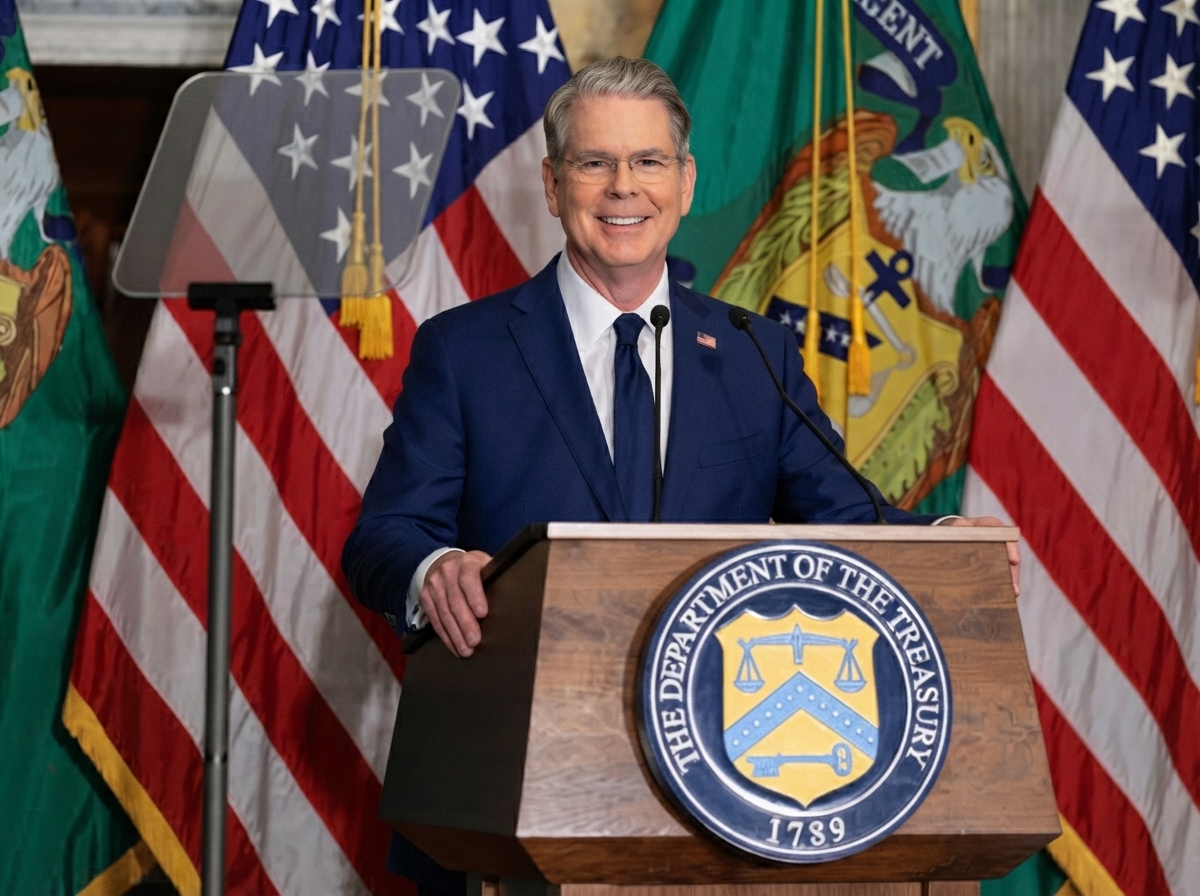
“The clock just started ticking.” That’s how the U.S. Treasury Secretary chose to end a threat aimed not just at Iran, but at every bank, shipping company, and government still doing business with it — a warning that landed with almost no reaction from global markets, which is either a sign nobody believes he’ll follow through, or a sign everyone already priced it in months ago.
What Bessent Announced
Treasury Secretary Scott Bessent held a press conference at the Treasury Department on Monday to unveil what the administration is calling “Operation Economic Outcast,” according to CBS News. The campaign targets more than 60 individuals, entities, and vessels tied to Iran, and expands secondary sanctions across five sectors: digital assets, gold, aviation, technology, and shipping, per Yahoo News.
Bessent said directly that any entity facilitating money laundering on behalf of Iran “will be removed from the U.S. dollar system,” adding that “the clock just started ticking,” a line multiple outlets, including NBC News, the Times of Israel, and Raw Story, reported him repeating nearly verbatim across the briefing. He singled out Iran’s state-owned Bank Melli by name, saying, according to yourNEWS, that “every branch of Bank Melli must be shuttered and dark.”
CBS News reported that Bessent said many of the secondary sanctions won’t take effect immediately, describing a “cure period” during which countries and companies can wind down their dealings with Tehran before facing consequences. Asked why the administration wasn’t moving faster, Bessent told CBS News, “Why would I want to blow up the global financial system? We believe that it is important to level set and give people a cure period, but they should know that that will move very quickly and that we are serious.” He added that he expects an announcement of a major financial institution being sanctioned by the end of this week, though he declined to name it.
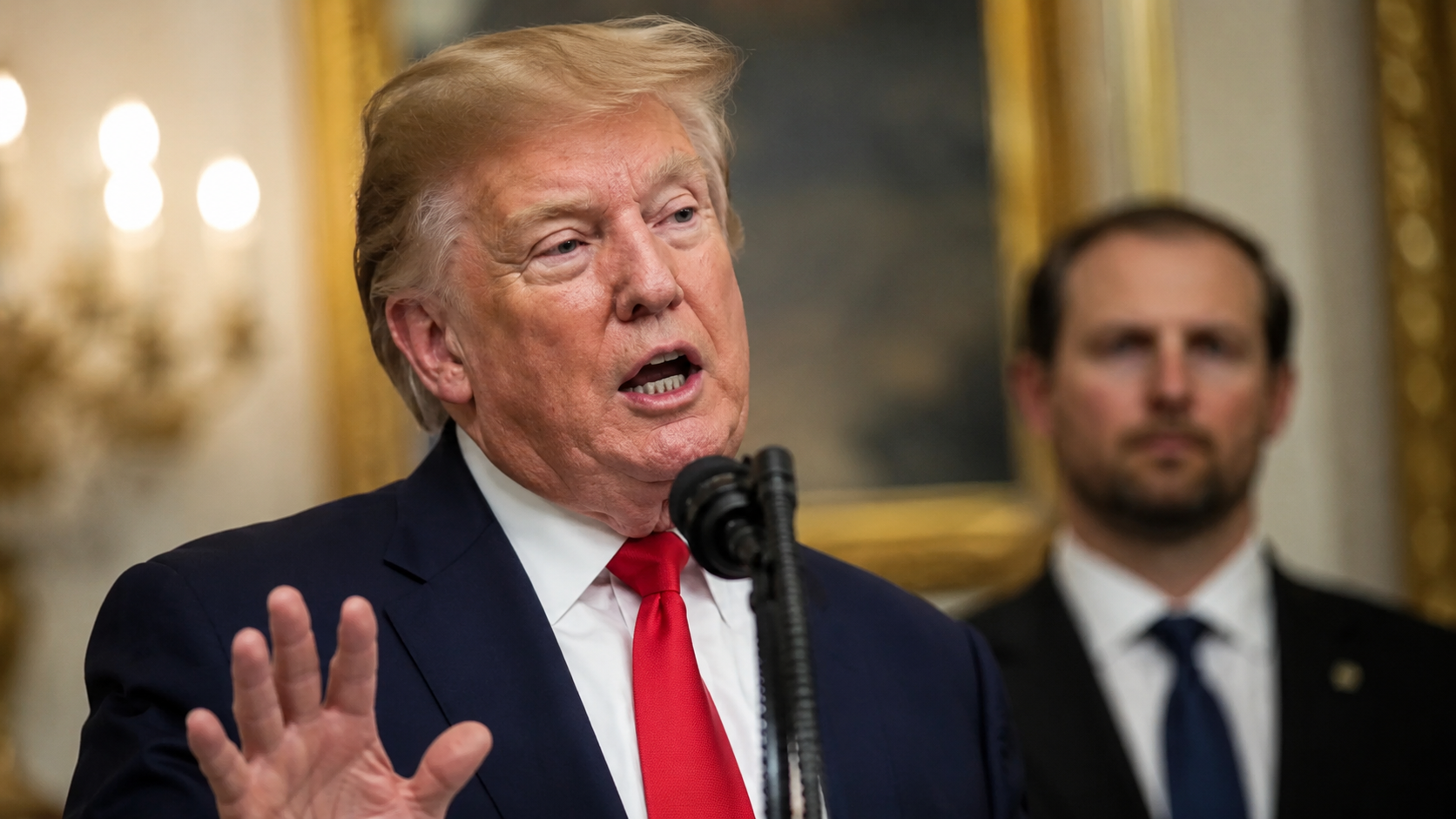
Writing Sunday in the Financial Times ahead of the announcement, Bessent called the plan “the single greatest financial offensive ever marshaled against an adversary,” and described it as the start of “an economic D-Day.” President Trump wrote separately on Truth Social that “Iran is completely collapsing,” according to CBS News, a claim he has repeated for months.
CNBC reported the plan immediately raised questions about whether Washington would extend the pressure to China, which NPR reported purchases roughly 90% of Iran’s oil exports. Bessent did not name China directly in his remarks, and CNBC noted the U.S. and China have maintained a fragile trade truce following an escalatory trade dispute last year. NBC News reported that markets showed little reaction to Bessent’s comments, and that he did not lay out any immediate concrete actions against specific countries beyond the entities already named.
The Line Everyone’s Skipping Past
Buried in Bessent’s own answer is the tell: he explicitly said he doesn’t want to “blow up the global financial system.” That’s not a throwaway line, it’s an admission of the actual constraint on this entire operation. The U.S. dollar system’s power as a weapon depends entirely on the rest of the world continuing to treat it as indispensable, and every time Washington threatens to cut a major economy or a systemically important bank out of it, it also tests how much of that indispensability is real versus assumed. Markets shrugging off Monday’s announcement isn’t proof the threat lacks teeth, it’s more likely proof that traders don’t believe the U.S. will actually follow through against China, the one country whose exclusion would genuinely reshape global trade rather than just punish Tehran further.
That’s the real story hiding behind the “economic D-Day” branding: this is a policy built around selective enforcement, not blanket enforcement, because blanket enforcement against Iran’s actual largest customer risks consequences the U.S. isn’t prepared to absorb. A “cure period” for smaller banks and shipping registries is a reasonable, calibrated tool. Silence on China, despite China being the single largest reason Iran’s oil economy still functions, tells you where the real limits of this offensive sit. Expect the headlines to keep escalating faster than the actual enforcement does.