
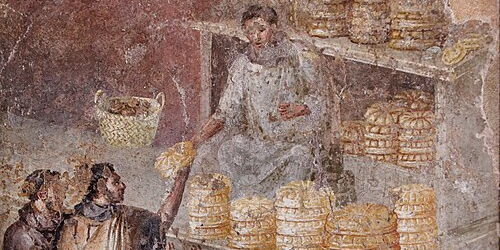
No Roman senator ever stood up and proposed putting a third of the city on permanent government bread. It happened one incremental vote at a time — and by the time anyone tried to reverse it, reversing it got someone killed.
A thread posted to X by user @Handre, which has circulated widely since being published, lays out a timeline of Rome’s grain dole to argue a broader point about how welfare programs expand. According to the thread, Rome began distributing subsidized grain to 40,000 citizens in 73 BC under a law historians identify as the lex Terentia Cassia, passed by consuls Marcus Terentius Varro Lucullus and Gaius Cassius Longinus. By 46 BC, the thread states, Julius Caesar found roughly 320,000 people registered to receive a monthly grain ration — an eightfold increase in under three decades.
That 320,000 figure is corroborated by outside sources. A paper published in the Cato Journal by economist Bruce Bartlett states that by Caesar’s time, around 320,000 people were receiving free grain, a number Caesar reduced to roughly half through what the X thread describes as verification audits designed to strip ineligible recipients — reportedly cutting the rolls to around 150,000. Multiple historical sources confirm that Rome’s grain distributions shifted from a subsidized, purchase-based system to a fully free dole under the tribune Clodius in 58 BC, a change historians link to a sharp rise in the number of people moving to Rome specifically to qualify for it.
The thread argues that the mechanism behind the expansion wasn’t a single deliberate policy decision but ongoing political competition: each magistrate seeking public support expanded eligibility, and each expansion made the next one politically easier to justify. The thread frames this as a self-reinforcing cycle, in which the program’s beneficiaries, the administrators who ran it, and the grain merchants who supplied it all developed a stake in its continuation. It also notes the dole depended on grain imports from Sicily, Sardinia, and Egypt, funded through taxation and the proceeds of military conquest — and that when conquest revenue slowed, the financial obligation to feed Rome’s registered citizens did not.
The thread credits Caesar’s rollback as one of his more fiscally coherent decisions, while noting the Senate assassinated him regardless, and that his successors allowed the rolls to expand again over time.
Worth Taking Seriously, But Not the Whole Story
The historical bones of this argument hold up: the numbers are real, the political dynamic described, each expansion normalizing the next, is a recognizable pattern in how entitlement programs behave in any era, not just Rome’s. Anyone looking at modern debates over subsidies, benefits, or transfer payments should recognize the mechanism being described, because it isn’t unique to antiquity. Programs built to solve an immediate crisis rarely stay that size once a political constituency forms around defending them.
Where this argument overreaches is in treating the grain dole as a tidy causal story for Roman decline. Most historians studying Rome’s fall point to a tangle of factors, military overextension, currency debasement, administrative fragmentation, and external invasion, that dwarf the fiscal weight of the annona in the empire’s later centuries.
The dole was politically significant and fiscally real, but crediting it as the mechanism that made “every subsequent reform politically impossible” flattens a genuinely complicated collapse into a single-cause morality tale. The lesson about political entrenchment is worth keeping. The lesson that welfare alone toppled Rome is not one the historical record actually supports.