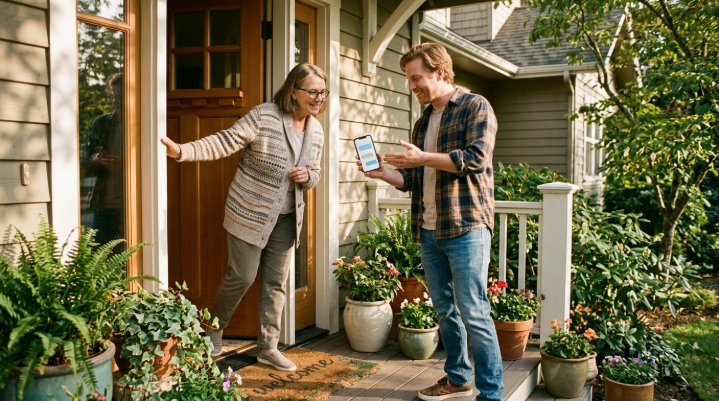
My neighbor moved in last spring. She is warm, she waves every morning, and for the first few months, we communicated almost entirely through smiles and hand gestures, because we do not share a language. She speaks a language I have never studied, and her English is limited to a handful of polite phrases. One afternoon, when a delivery for her was left at my door, I tried to explain what had happened and failed completely. That evening, I decided to try something I had been curious about for a while: using an AI translation app for a real conversation.
Over the next few months, the app sat between us in dozens of conversations, some practical and some surprisingly personal. It helped in ways I did not expect, and it also showed me exactly where machine translation still falls short. Here is what I learned from talking to my neighbor through a phone.
The first conversation felt like magic, and a little awkward
The first time we tried it, I held my phone between us on her doorstep. I spoke a sentence, the app displayed and read out a translation, and then she replied into the same phone. Within a minute, we had sorted out the delivery problem that had defeated us earlier. She laughed, clearly relieved, and then asked me, through the app, how long I had lived on the street.
That second question was the moment it stopped being a tool and started being a conversation. We stood there for twenty minutes. I learned where she grew up, that she has two grown children in another country, and that she loves gardening. She learned that I work from home and that I have never managed to keep a houseplant alive. None of that would have happened without the app.
It was also awkward. Conversations through translation have a strange rhythm. You speak, then wait. The other person listens to a machine voice, then speaks, then you wait again. Eye contact becomes difficult because both of you keep glancing down at the screen. Jokes land a few seconds late, if at all. It felt less like chatting and more like taking turns on a slow walkie-talkie.
What the translation got right
For practical topics, the translation was remarkably reliable. Times, dates, directions, requests for help, questions about the bins or the building: all of these came through clearly. When she asked if I could water her plants while she visited family, we arranged the details without any confusion. When her heating stopped working, I was able to help her call the building manager and explain the problem.
The app also handled simple, sincere emotions surprisingly well. “Thank you so much, you are very kind” came through as exactly that. “I miss my children” needed no interpretation. Straightforward feelings, expressed in plain sentences, crossed the language gap without much loss.
I also noticed that the technology has improved a lot compared with translation tools I used years ago. Older systems often produced word-by-word translations that sounded robotic or made no sense. Modern AI translation considers whole sentences and context, which makes the result far more natural. Most of the time, my neighbor understood me on the first try.

Where it struggled: humor, idioms, and warmth
The limitations showed up as soon as conversations got more relaxed. I have a habit of using idioms without thinking. When I said something “cost an arm and a leg,” my neighbor looked genuinely alarmed until I explained. When I made a dry, sarcastic joke about the weather, the translation came out as a completely serious complaint, and she looked sympathetic instead of amused.
Humor turned out to be the hardest thing to translate. A lot of humor depends on timing, tone, wordplay, and shared cultural references, and the app could not carry most of that. After a few failed jokes, I learned to keep my sentences simple and literal, which made me feel like a slightly flatter version of myself.
Formality was another issue. Many languages distinguish between formal and informal ways of addressing someone, and the app sometimes chose a tone that did not match the moment. My neighbor later told me, through a mix of the app and gestures, that some of my early messages sounded very formal, almost like a letter from an office. We both found that funny once we figured it out.
Learning to speak for the machine
Over time, I unconsciously changed how I spoke. I used shorter sentences. I avoided slang. I said one idea at a time and paused before the next. I stopped saying “it” and “that” without making clear what I meant. Essentially, I learned to speak in a way that was easy for the machine to translate.
My neighbor did the same. Her messages became clearer and more structured. In a sense, we developed a shared simplified dialect that worked well with the app. It was efficient, but it also reminded me that every tool shapes the way we use it. The app was not just translating our words. It was quietly changing them.
Interestingly, this made me a clearer communicator in general. Speaking simply forced me to think about what I actually meant. I noticed it carrying over into work emails, which became shorter and more direct. Not every effect of the technology was a loss.
The things that mattered more than words
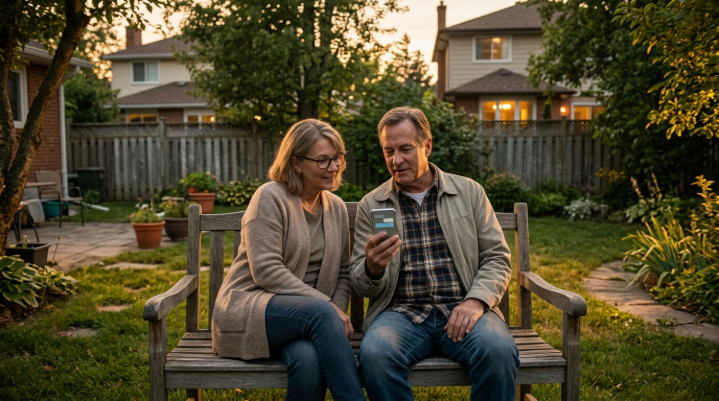
What surprised me most was how much of our friendship did not depend on the translation at all. She brings me vegetables from her garden. I help her carry heavy shopping bags up the stairs. We sit on the bench outside on warm evenings, sometimes talking through the app, sometimes just sitting. Some of our best moments happened with the phone in my pocket.
Body language, tone of voice, kindness, and shared routines carried a huge amount of meaning. When she was upset after a difficult phone call with her family, I did not need a translation to understand. I just sat with her for a while. The app was a bridge for words, but it was not the whole relationship.
I think this is easy to forget when we talk about translation technology. We often imagine it as the thing that will finally allow people from different cultures to connect. It helps, enormously. But connection has always depended on more than vocabulary, and that has not changed.

Cultural context is not in the dictionary
Some of our misunderstandings had nothing to do with words. Early on, I invited my neighbor for coffee “sometime this week,” which is the kind of loose invitation people often make where I live. The app translated it perfectly. She arrived at my door the very next morning, dressed nicely, with a small cake. In her culture, an invitation like that is taken seriously and acted on quickly. I had not even bought coffee.
We laughed about it later, but it taught me that translation only covers the surface. Expectations about time, politeness, hospitality, and directness differ between cultures, and no app tells you about them. A perfectly translated sentence can still carry a very different meaning on the other side.
After that, I started asking more questions. When she mentioned a holiday or a custom, I asked what it meant to her. When something I said seemed to land strangely, I asked whether it sounded rude. These conversations about how we each communicate turned out to be some of the most interesting ones we had, and the app handled them well because the questions themselves were simple and sincere.
Privacy and trust in the middle of a conversation
At one point, I started to wonder where all our conversations were going. Many translation apps process speech on remote servers, which means our words, including some quite personal ones, might be stored or analyzed somewhere. When my neighbor told me about her health worries, I suddenly felt uncomfortable that a company might be listening.
I looked into the settings and found that the app offered an option to download languages for offline translation, which processes speech on the phone instead of sending it away. The quality was slightly lower, but for sensitive conversations, it felt like the right choice. I also learned to turn off conversation history, so our chats were not saved indefinitely.
It is worth checking these settings in any translation app you use, especially for medical, legal, or financial conversations. For truly important situations, like a doctor’s appointment or signing a contract, a professional human interpreter is still the safer and more reliable option. An app can misunderstand a single word, and in some contexts, a single word matters a great deal.
Slowly learning the language for real
Something unexpected happened after a few months: I started picking up words of her language. Seeing her words on screen next to my own, hearing the translations read aloud, I began to recognize common phrases. Good morning. Thank you. How are you. See you tomorrow.
She noticed and was delighted. Now, I greet her in her language every morning, badly but enthusiastically, and she greets me in English. We have started a slow, informal exchange where she teaches me a word and I teach her one. The app is still there for complicated conversations, but our simple daily exchanges now happen without it.
I think this might be the best outcome of all. The technology did not replace learning. It made us comfortable enough with each other to start learning together. It lowered the barrier just enough for a real relationship to grow, and that relationship gave us both a reason to go further.
What I would tell anyone trying this
If you have a neighbor, colleague, or new friend who speaks a different language, I would encourage you to try an AI translation app. It can open conversations that would otherwise never happen. Keep your sentences short and literal, avoid idioms and sarcasm, and be patient with the slow rhythm.
Check the privacy settings, use offline mode for personal topics, and do not rely on it for situations where a mistake could be serious. Most importantly, remember that the app is a starting point, not the destination. Smiles, small kindnesses, and a few clumsy words in someone else’s language still do a lot of the work.
My neighbor’s tomatoes were excellent this year, by the way. She told me so through the app, and then she handed me a bag of them, which needed no translation at all.
