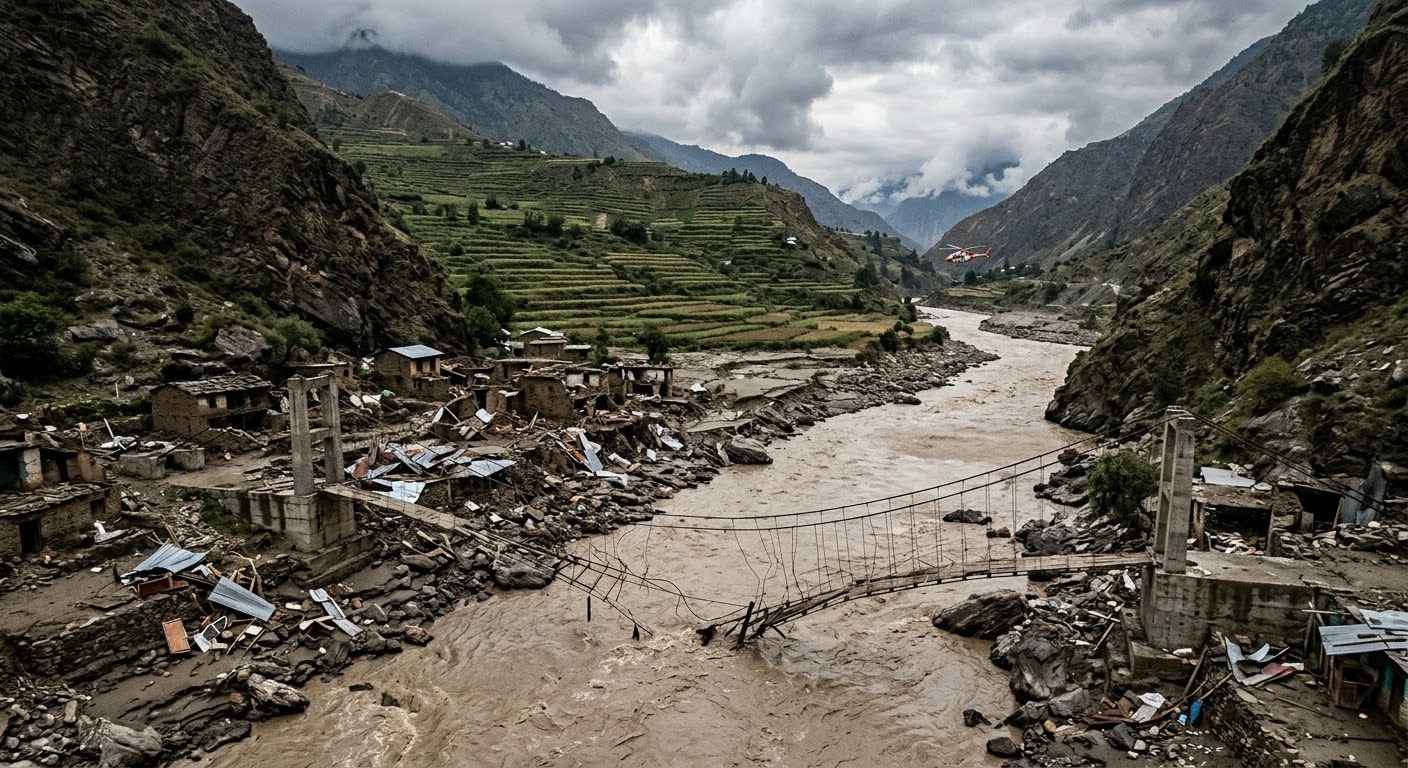
Five days after a wall of ice and mud tore through the Himalayas, the number everyone is watching has stopped being about how many died and started being about how many still can be saved. Underground, in flooded hydropower tunnels, that number is 90 — and it’s shrinking the wrong direction with every passing hour.
The Latest Numbers
Nepal’s disaster agency said Monday that 903 deaths had been counted in the country, with 4,247 people, including 592 foreign nationals, still missing, according to the Associated Press, cited by ClickOrlando. That marks a sharp rise from the 794 deaths Nepali police had reported earlier the same day, per ABC News Australia, and from the 734 figure CNN reported over the weekend, up from a previous total of 670.
Across the border in Tibet’s Gyirong County, Chinese authorities reported at least 16 deaths and 546 people missing as of Sunday, with state media saying 261 of the missing were foreign nationals, according to CNN. The Express Tribune, citing Reuters, put the combined death toll on both sides of the border at nearly 800 as of Sunday, with more than 3,000 missing, a figure that continued climbing into Monday. The Red Cross has estimated more than 90,000 people are likely to have been affected by the disaster overall, according to the Express Tribune.
Brig. Gen. Raja Ram Basnet, Nepal’s army spokesman, said search and rescue crews are working across hills, settlements, and river areas, according to ClickOrlando. Officials say at least 90 people remain trapped in multiple tunnels at hydropower plants, with intensified rescue efforts focused on the Trishuli-3A hydropower site in Nuwakot, per both ClickOrlando and ABC News Australia, which reported at least 933 hydropower workers were believed trapped in tunnels at various points during the response.
CNN reported that a barrier lake formed near the flood zone at the Nepal-China border following the initial landslide has since overflowed and begun discharging water, according to Chinese officials at a regional press conference broadcast on state media CCTV. Officials described the overall situation as stable and said the possibility of a complete breach was relatively low, though a separate lake identified by Nepal’s disaster authority near the original flood site was reported to be rising, raising concern it could burst and trigger further downstream flooding, according to Al Jazeera.
Al Jazeera reported that many of those caught in the disaster were pilgrims traveling toward Mount Kailash and Lake Mansarovar in Tibet, and that more than 5,000 Nepalese army and police personnel are searching for survivors and recovering bodies, with helicopters delivering tents, food, and emergency supplies to communities cut off by the floods. Chinese Foreign Minister Wang Yi told his Nepalese counterpart in a Saturday call that the mudslide was the two countries’ “most severe cross-border disaster,” according to the Express Tribune, which also reported China has linked the event to the effects of climate change.
Assistant Foreign Minister Matt Thistlewaite said Monday that the number of unaccounted-for Australians had risen to 43, according to ABC News Australia, which reported additional missing Australians were identified over the weekend, including residents of Sydney, Townsville, and Melbourne.
The Numbers Will Keep Rising. What Happens in Those Tunnels Won’t Wait.
At this stage of a disaster this size, rising death tolls mostly reflect rescue teams finally reaching places they couldn’t get to earlier, not new casualties occurring in real time. That’s grim, but it’s also useful context: the jump from 670 to over 900 in a matter of days is largely a story about access, not about the disaster getting worse. What should worry people watching this closely is the tunnel situation specifically, because unlike surface search-and-rescue, trapped workers in flooded hydropower tunnels are on a hard clock that has nothing to do with how quickly authorities can reach them logistically.
The secondary hazard, a barrier lake that’s already discharging water on one side of the border and rising on the other, is the detail worth watching most closely in the days ahead. Disasters like this rarely end cleanly with a single event; they tend to produce exactly this kind of aftershock, a new lake, a new blockage, a new flood risk downstream from the first one. Nepal and China both now have a narrow window to manage that secondary risk before it becomes its own headline, on top of a death toll that, five days in, still hasn’t finished climbing.