Six months into a war that has already cut a fifth of the world’s oil traffic to a trickle, Iran finally put its demands on paper. The catch is the first one on the list — and it’s the one Washington has shown zero appetite to give.
Iran’s Conditions
Iran is preparing a formal list of conditions for reopening the Strait of Hormuz after mediators asked Tehran to lay them out, Mohsen Rezaei, secretary of Iran’s Supreme National Security Council, said Thursday, according to Reuters. Rezaei said ending the regional war is among the conditions, telling Iran’s IRNA news agency, “The US must first take practical steps to fulfil Iran’s conditions, and then Iran will proceed to open the Strait of Hormuz,” per Al Jazeera.
A spokesperson for Iran’s Revolutionary Guard Corps said Wednesday that Tehran would not allow the strait to reopen unless Washington lifts what Iran describes as a blockade of Iranian ports, pays compensation for war damages, and removes sanctions, according to Al Jazeera. Separate remarks attributed to Rezaei, reported by Yahoo News citing WANA, a state-linked Iranian outlet, framed the position even more starkly: the strait “will not reopen” unless the United States withdraws from the Persian Gulf entirely, with Rezaei arguing that regional security “should be managed by the countries of the region themselves.”
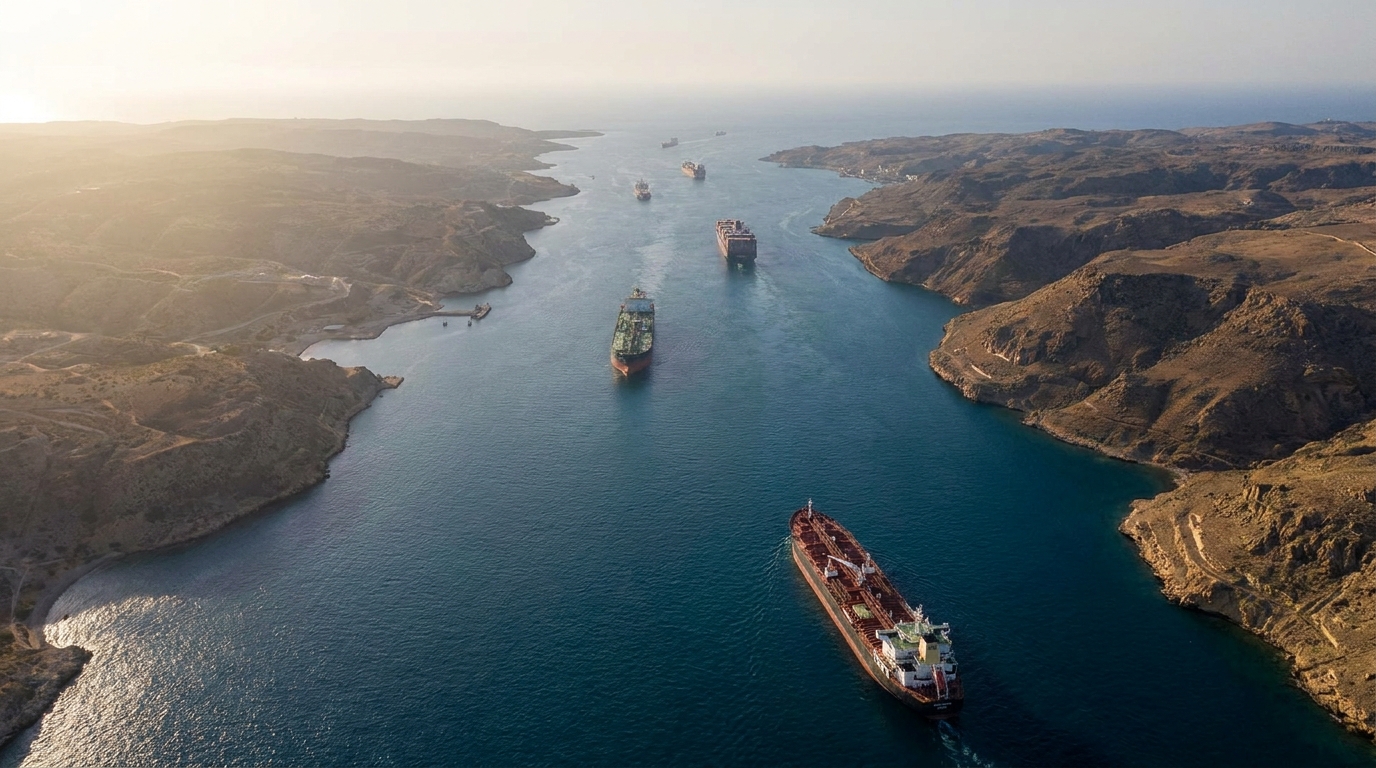
Rezaei said Iran and Oman have already agreed on a shipping corridor through the strait, with parts of the route running through Omani waters and parts through Iranian waters, and that ships would use a designated central channel once the U.S. meets Iran’s conditions, according to Reuters. Al Jazeera reported that Qatar’s Foreign Ministry said the two sides had also discussed a temporary corridor through the strait and a joint mine-clearing project, and that Qatar’s prime minister traveled to Tehran this week to discuss the Hormuz framework, the third mediating country to visit in a week following delegations from Pakistan and Oman.
Business outlet Voice of Emirates reported that Rezaei said any binding memorandum of understanding with Washington must enforce a full military cessation across multiple fronts, including Gaza, Lebanon, and Syria, not just the Iran-U.S. conflict directly, and that Iranian officials confirmed ongoing work on alternative oil export routes designed to bypass Western maritime pressure regardless of how the Hormuz talks conclude. The same outlet reported that informed diplomatic sources indicated the Trump administration remains unwilling to revive the June memorandum of understanding, under which Iran had agreed to clear mines and allow free passage for 60 days in exchange for sanctions relief and an end to the port blockade.
Before the war began on February 28, the strait carried roughly one-fifth of global oil and liquefied natural gas shipments, according to Reuters and the U.S. Energy Information Administration. Shipping through the waterway has largely stopped since, and previous ceasefire agreements announced in April and June, both intended to restore maritime traffic, failed to hold.
Tehran Just Made Washington’s Options a Lot Simpler
What’s actually new here isn’t that Iran wants the war to end, everyone already knew that. What’s new is that Tehran has now formally tied its most valuable point of leverage, the strait that carries a fifth of the planet’s oil, directly to a ceasefire condition Washington has repeatedly declined to prioritize. That’s a meaningful escalation in clarity, if not in substance: Iran is no longer treating Hormuz and the broader war as separate negotiating tracks. It’s telling mediators, and by extension the U.S., that there is no version of reopened shipping that doesn’t run through ending the fighting first.
That puts the Trump administration in an uncomfortable spot of its own making. Bessent’s “economic D-Day” sanctions campaign was built around squeezing Iran financially until it capitulates on Hormuz specifically, but Rezaei’s conditions suggest Tehran now sees financial pressure and the shipping blockade as leverage it’s willing to hold onto regardless of the sanctions pain, precisely because the war itself, not the sanctions, is what Iran actually wants resolved. If Washington keeps treating this as a purely economic standoff while Iran treats it as fundamentally a ceasefire negotiation, both sides can keep talking past each other indefinitely, and the strait that a fifth of the world’s oil depends on stays exactly where it’s been for six months: closed.